
Senate votes to limit Trump’s Iran war powers in rare rebuke
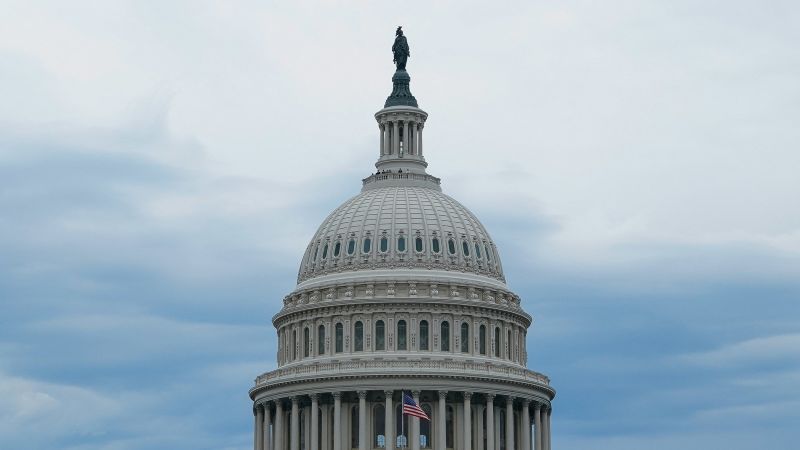
Senate Votes to Limit Trump’s Iran War Powers in Rare Rebuke
Senate votes to limit Trump s Iran – On Tuesday, the U.S. Senate passed a resolution directing the president to withdraw military forces from the conflict with Iran, marking a rare but notable display of bipartisan opposition to President Donald Trump’s policies. The measure, which received a narrow 50-48 vote, represents a significant shift in congressional sentiment and underscores growing concerns over the administration’s approach to the Middle East. Despite Trump’s ongoing efforts to assert executive authority, the resolution signals a cross-party effort to assert legislative control over military engagements.
Building Momentum in War Powers Campaign
Democrats have long advocated for curtailing Trump’s use of war powers, pushing for votes in both the House and the Senate to limit his ability to deploy troops without congressional approval. This effort has gained traction in recent weeks, as some Republican lawmakers have begun to align with Democratic priorities, adding pressure on the administration. The resolution’s passage reflects the culmination of months of political maneuvering, with lawmakers from both parties increasingly focused on ensuring accountability for military actions.
The vote was notable for the participation of GOP senators who have historically opposed such measures. Rand Paul, Susan Collins, Lisa Murkowski, and Bill Cassidy joined Democrats in supporting the resolution, a move that surprised many observers and highlighted the fractured nature of the Republican caucus. However, Democratic Senator John Fetterman stood alone in his opposition, casting a dissenting vote. The absence of two prominent Republicans, Mitch McConnell and Dave McCormick, who had previously resisted advancing similar resolutions, played a critical role in the outcome. Their absence allowed the measure to pass with the required majority.
Trump’s Reaction to the Vote
President Trump swiftly criticized the resolution, calling it “poorly timed and meaningless” on his social media platform, Truth Social. He accused the Senate of providing “aid and comfort to the Enemy,” suggesting that the vote undermines national security efforts. “Four Republican Losers voted with the Dumocrats, and Iran asked my people, ‘what does that all mean?’” Trump wrote, framing the resolution as a symbolic gesture rather than a substantive policy change. “These Senators have just made my job more difficult, but I will get it done, one way or the other,” he added, signaling his determination to proceed with the administration’s agenda.
Trump’s comments were directed at the four Republicans who supported the resolution, whom he labeled as “grandstanders” for their alignment with Democrats. The president’s frustration was evident, as he argued the vote was an attempt to distract from the ongoing negotiations with Iran. “They’re not doing anything meaningful,” he said, implying that the resolution’s impact would be minimal in the real-world context of military operations.
Legal and Political Implications of the Resolution
The resolution, which passed the House earlier this month, is classified as a concurrent resolution. Unlike a formal law, such a measure does not require the president’s signature and lacks binding legal force. A White House official dismissed the Senate vote as “having no significance,” attributing its adoption to the absence of key Republicans. “Concurrent resolutions do not go to the president and have no force of law,” the official said, emphasizing that the measure is more symbolic than actionable.
However, some Democratic lawmakers argue that the resolution serves as a legal tool to assert congressional authority over the war. A House Democratic aide, who has been instrumental in advancing the measure, told CNN that the resolution could be interpreted as a binding directive, creating a legal framework to hold the executive branch accountable. “Even though the ceasefire with Iran ended on April 7th, the resolution still provides a clear message about the need for legislative oversight,” the aide explained, highlighting the broader political strategy behind the vote.
A Pattern of Legislative Action
This marks the tenth time the Senate has considered a war powers resolution related to Iran since the start of the year, reflecting a sustained effort to rein in executive power. While the current measure passed with a slim margin, previous votes have often been closely contested, indicating a growing divide within Congress. An earlier Senate-led resolution, which advanced last month, remains unpassed in a follow-up vote, as Democrats work to secure broader support for the measure.
Democrats have framed the resolution as a necessary step to ensure transparency and oversight, even in the aftermath of the U.S.-Iran agreement and ongoing negotiations with Tehran. “It’s important to have a vote now to confirm that we’re not allowing the conflict to restart without Congress being involved,” said Senator Tim Kaine, a vocal advocate for the measure. He emphasized that the resolution serves as a preventive tool, reinforcing the idea that legislative involvement is crucial during periods of political stability.
Despite the Senate’s decision, the resolution’s effectiveness remains uncertain. The White House has pointed out that the measure does not require presidential approval and cannot override existing military actions. Nevertheless, the symbolic weight of the vote cannot be overlooked, as it sends a clear message to the administration about the Senate’s willingness to challenge its policies. The resolution’s passage also highlights the shifting dynamics within the Republican Party, with some lawmakers choosing to prioritize legislative processes over executive dominance.
Historical Context and Ongoing Debates
The vote comes at a pivotal moment in U.S. foreign policy, with tensions between the administration and Congress reaching a new high. The resolution’s focus on the Iran conflict reflects broader debates over the use of military force and the role of Congress in decision-making. While Trump has consistently defended his approach, the bipartisan support for the resolution suggests a consensus among some lawmakers that the executive branch has overstepped its authority in recent years.
The concurrent resolution’s passage in the House and Senate underscores the growing alignment between the parties on the need for checks and balances. With the measure having already cleared the House, the Senate’s approval marks a critical milestone in the effort to limit Trump’s war powers. However, the resolution’s lack of legal force means it remains a political statement rather than a binding law. This has led to debates about its practical impact, with critics arguing that it lacks the teeth to enforce meaningful change.
As the resolution moves forward, its implications for future military actions will be closely watched. The narrow vote in the Senate and the House highlights the fragility of bipartisanship in this context, as well as the challenges of achieving consensus on foreign policy. While the measure does not immediately alter the status quo, it sets the stage for potential legislative action in the coming weeks, particularly as Democrats seek to build on this momentum. The story has been updated to include further developments in the ongoing political battle over Iran and the administration’s response to the vote.