
Police officers who defended US Capitol on January 6 sue to stop Trump’s ‘anti-weaponization’ fund
Police Officers Who Defended US Capitol on January 6 Sue to Stop Trump’s $1.8 Billion ‘Anti-Weaponization’ Fund
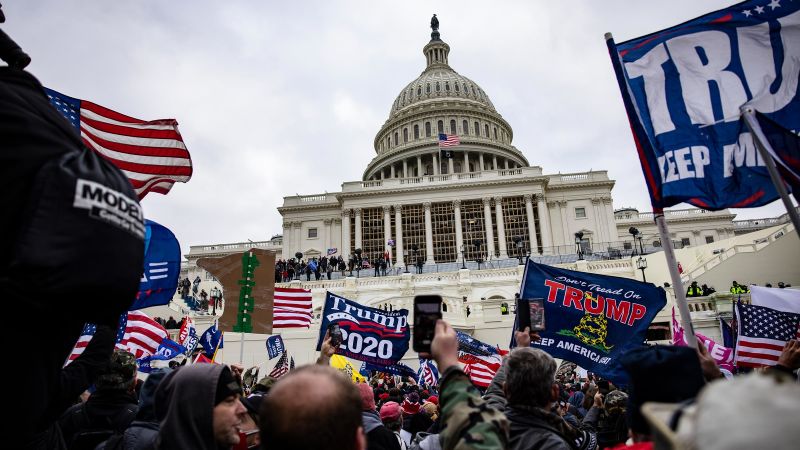
Police officers who defended US Capitol – Former and current law enforcement personnel who safeguarded the U.S. Capitol during the January 6, 2021, attack have filed a lawsuit against the Trump administration, aiming to halt the launch of a $1.8 billion fund meant to support allies of the former president who allege they were unfairly targeted by earlier administrations. The suit, filed in federal court by Harry Dunn, a former member of the U.S. Capitol Police, and Daniel Hodges, a current officer with the Washington, DC, Metropolitan Police Department, asserts that the fund’s creation breaches constitutional provisions and federal statutes. The officers argue the initiative will provide financial backing to individuals involved in the Capitol breach and bolster various paramilitary groups across the nation.
Legal Arguments in the Lawsuit
The legal action asserts that the fund violates a key clause of the 14th Amendment, which prohibits the government from reimbursing debts “incurred in aid of insurrection or rebellion against the United States.” According to the plaintiffs, the administration’s decision to establish the fund constitutes an unlawful use of taxpayer money, particularly given its connection to a separate $10 billion lawsuit Trump initiated against the Internal Revenue Service earlier this year. This case, Trump v. IRS, was settled with a $1.776 billion payment, which the lawsuit claims was improperly directed toward rewarding his supporters rather than addressing the legal merits of the case.
Lawyers for Dunn and Hodges emphasize that the fund’s existence could validate past acts of violence by paramilitary groups, including the Proud Boys, as lawful. They argue that by funding these organizations, the government is effectively endorsing their role in the January 6 attack. “The fund’s payments will not only finance the violent operations of rioters and paramilitaries but also legitimize their actions as justified,” the suit states. Additionally, the officers contend that the initiative sends a clear message to those who have committed violent acts against law enforcement: they need not fear legal consequences, as the government may instead reward them.
“If allowed to begin making payments, the fund will directly finance the violent operations of rioters, paramilitaries, and their supporters who threatened plaintiffs’ lives that day, and continue to do so,” the lawyers wrote in the 29-page legal document. “Militias like the Proud Boys will use money from the fund to arm and equip themselves. The fund will grant their past acts of violence legal imprimatur,” the lawsuit adds. “And, most chillingly, the fund will signal to past and potential future perpetrators of violence against Dunn and Hodges that they need not fear prosecution; to the contrary, they should expect to be rewarded,” the filing continues.
Connection to Trump’s IRS Lawsuit
The lawsuit highlights the link between the fund and Trump’s legal battle against the IRS. It claims that officials violated the Administrative Procedure Act by creating the fund without following a specific federal law requiring the attorney general’s approval for payments made in a lawsuit’s settlement. “The payment of $1.776 billion into the Anti-Weaponization Fund to settle Trump v. IRS was patently not ‘in the interest of the United States,’” the legal team wrote. “Rather, it was a misappropriation of taxpayer funds orchestrated by the President to reward his allies and the rioters who committed violence in his name.”
According to the suit, the fund was established as part of the settlement process for Trump’s $10 billion claim against the IRS. The administration, however, expanded the fund’s scope beyond just compensating those harmed in the IRS dispute. By doing so, the plaintiffs argue, the government has conflated a legal remedy with a tool for political retribution. “This fund’s creation allows the President to bypass normal legal procedures and directly subsidize individuals who participated in the January 6 attack,” the lawsuit states.
Acting Attorney General and Vice President Comments
The case gained attention after acting Attorney General Todd Blanche, who served as Trump’s personal attorney, testified before a Senate appropriations panel. Blanche acknowledged that the five-member commission reviewing claims for the fund would consider all factors, including the guilt of those who assaulted law enforcement. “I will definitely encourage the commissioners to take everything into account when determining who should get compensation,” he said. However, he also expressed no hesitation in allowing those convicted of violent acts against officers to receive payouts from the fund.
“You feel they should get compensation after being convicted of violent acts?” Democratic Senator Jeff Merkley pressed. “My feelings don’t matter, senator,” Blanche replied.
Vice President JD Vance further reinforced the administration’s stance on the fund, stating that it was not a blanket rejection of claims made by individuals accused of attacking law enforcement. “We do have people who were accused of attacking law enforcement officers,” Vance told reporters at the White House. “That doesn’t mean that we’re going to completely ignore some of the claims they’re going to make.” Despite this, the fund’s eligibility criteria appear to prioritize political alignment over individual accountability.
Implications of the Fund
The lawsuit underscores broader concerns about the fund’s potential impact on democratic institutions. Dunn and Hodges stress that their actions on January 6 were critical to maintaining the integrity of the Capitol and upholding the rule of law. “They bring this case to do so once again,” their legal team wrote, emphasizing the need for a clear judicial review of the fund’s constitutionality. The officers argue that allowing the fund to proceed would set a dangerous precedent, enabling the government to subsidize violent behavior and shield individuals from legal consequences.
The legal challenge also raises questions about the separation of powers. While the attorney general’s office will appoint the five members of the compensation commission, Trump retains the authority to remove them at will. This dynamic, the plaintiffs suggest, could lead to a situation where the fund’s decisions are influenced by political considerations rather than objective legal standards. “The fund’s implementation is not just a financial issue—it’s a constitutional one,” the lawyers assert. “By using taxpayer funds to reward those who engaged in insurrection, the administration is undermining the principle that violent acts against law enforcement must be held accountable.”
The case is now awaiting a federal judge’s ruling, with the plaintiffs seeking a declaration that the fund’s creation was unlawful and a mandate to reverse any payments already made. As the legal battle unfolds, the fund’s fate will be closely watched by both supporters and critics of the Trump administration’s approach to justice and accountability. CNN’s Kit Maher contributed to this report. This story has been updated with additional details.