Judge says Trump can’t use Social Security data for voter roll purges

Judge Halts Trump Administration’s Use of Social Security Data in Voter Roll Purges
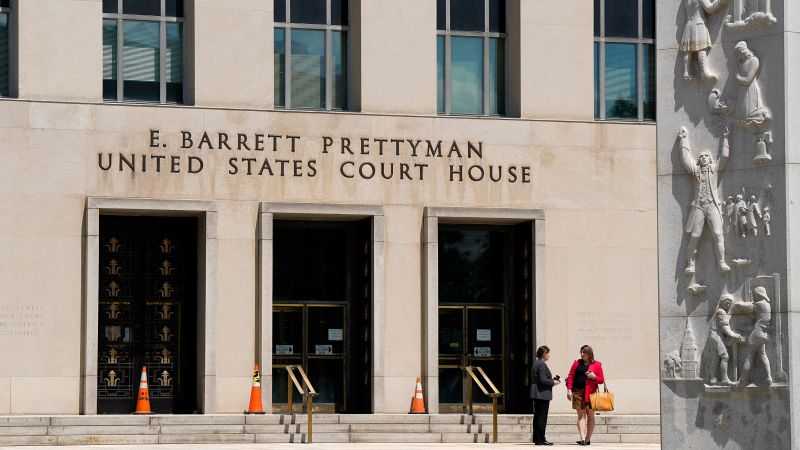
Judge says Trump can t use Social – Monday’s ruling by US District Judge Sparkle Sooknanan marked a pivotal moment in the ongoing debate over voter roll integrity, declaring that the Trump administration’s use of Social Security data to purge voter lists violated federal privacy laws. The decision, which temporarily blocks the expanded system, has sparked renewed discussions about the balance between securing electoral processes and safeguarding individual rights. Sooknanan, appointed by President Joe Biden, emphasized that the administration’s actions represent a systemic overreach, undermining the constitutional guarantee of voting access.
SAVE System: A Tool for Verification and Controversy
The case revolves around the SAVE program, a federal initiative designed to verify citizenship for public benefits. Originally, it served as a critical resource for agencies like Social Security to confirm the eligibility of beneficiaries. However, the program’s role expanded when it was made available to election officials, enabling them to cross-check voter registration databases for noncitizens. This dual-purpose function has become a focal point for critics, who argue that its misuse could lead to the wrongful removal of qualified voters from the rolls.
Under Trump’s second term, the administration overhauled SAVE to include additional data sources, such as Social Security records and information from other federal agencies. This enhancement allowed for more aggressive identification of potential noncitizen voters. The move was part of a broader strategy to tighten electoral oversight, as outlined in an executive order targeting voter verification. Yet, the judge found that this expansion crossed into territory where privacy rights were compromised, citing a deliberate disregard for legislative safeguards.
Legal Battle Over Privacy and Voter Integrity
Sooknanan’s order prohibits the use of the revised SAVE system until further review. In her ruling, she highlighted the administration’s awareness of the program’s privacy violations, stating that they proceeded with the overhaul despite knowing it contravened federal laws. “The federal government has knowingly trampled on the privacy rights of American citizens in a manner that threatens the sacred right to vote,” she wrote, adding that the court cannot remain passive in the face of such encroachments.
The legal challenge was spearheaded by several voter advocacy groups and a privacy organization, which contended that the SAVE system’s data consolidation could misidentify citizens as ineligible voters. They pointed to potential inaccuracies in the program, such as outdated or incomplete records, as a risk to fair elections. “This data was unlawfully consolidated,” said Skye Perryman of Democracy Forward, one of the plaintiff groups. “It violates privacy laws meant to protect sensitive personal information.”
The administration’s actions have also led to a contentious campaign to collect unredacted voter registration files from all states. This initiative, according to CNN, aims to enable federal authorities to scrutinize state-level rolls against the SAVE database. States that resist the process face the threat of financial penalties, which has intensified pressure to comply with federal directives. The ruling may provide some relief, but the broader implications of the SAVE system’s expansion remain uncertain.
Reaction from the Department of Homeland Security
James Percival, the Department of Homeland Security’s general counsel, criticized the decision, calling it a partisan move. “It’s amazing how hard the Left will fight to stop us from solving problems they insist do not exist,” he said on X, arguing that the SAVE system is essential for combating fraudulent voting. Percival’s comments reflect the administration’s stance that the program is a necessary tool to ensure election accuracy, even as legal challenges persist.
The ruling comes amid a flurry of lawsuits targeting the SAVE program’s application. While the court’s decision is a setback for the Trump administration, it does not necessarily halt all efforts to use the system. The executive order in question, issued during Trump’s second term, still directs the Department of Homeland Security to compile lists of voting-age citizens for each state. This directive, combined with the administration’s push to standardize voter verification, underscores the ongoing tension between federal oversight and state autonomy in elections.
Broader Implications for Democracy
Advocates for voting rights have framed the ruling as a victory for democratic integrity. “As the Trump-Vance administration continues its attack on the right to vote, this is an important win for the American people and our democracy,” said Skye Perryman of Democracy Forward. The case highlights the potential for federal data tools to be leveraged in ways that could disenfranchise citizens, particularly in communities where voter registration is already complex.
The SAVE system’s expansion raises questions about the scope of federal power in electoral matters. Critics argue that the program’s broad access to personal data, including Social Security information, creates a risk of overreach. They warn that without proper oversight, the system could be used to target specific groups, such as immigrants or low-income voters, who might be more vulnerable to errors or bias. The ruling, therefore, not only addresses immediate privacy concerns but also sets a precedent for how federal agencies might handle data in future elections.
While the decision halts the current implementation of the SAVE system, its long-term impact remains to be seen. The administration’s aggressive tactics, including financial incentives for states to adopt the program, suggest that the battle over voter roll integrity is far from over. The case underscores the importance of maintaining a balance between preventing fraud and protecting the rights of all eligible voters, a challenge that will likely continue to shape electoral policy in the coming months.
As the legal proceedings unfold, the SAVE program serves as a symbol of the broader ideological clash over voter access and federal control. The judge’s emphasis on privacy rights highlights the need for accountability, ensuring that tools designed to protect elections do not inadvertently suppress votes. With the system’s expansion now on hold, the focus shifts to how states and advocacy groups will navigate this new landscape, striving to uphold the fundamental principles of democratic participation.