
Josh Shapiro says he has ‘profound’ differences with Mamdani-backed candidate
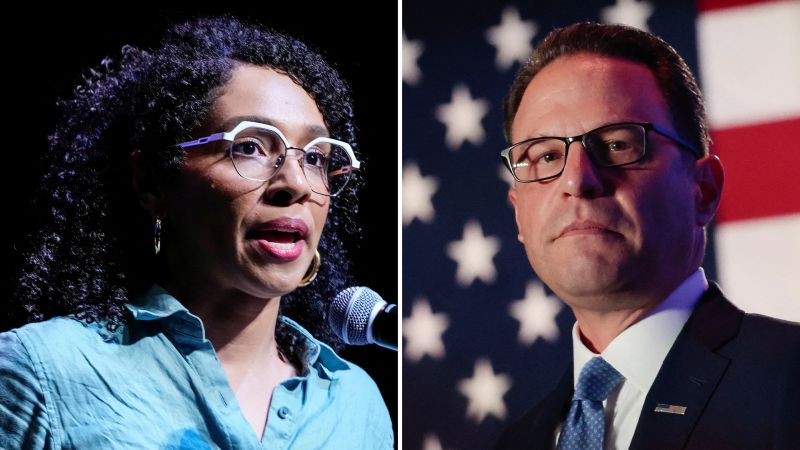
Democratic Party Divides Surface as Shapiro Challenges Mamdani-Backed Candidate
Josh Shapiro says he has profound – During a Thursday interview with CNN’s Dana Bash, Pennsylvania Governor Josh Shapiro expressed notable disagreements with a candidate endorsed by New York City Mayor Zohran Mamdani in Tuesday’s primary elections. The comments come amid growing tensions within the Democratic Party, as internal rifts over key issues threaten to impact the upcoming midterm campaigns. Shapiro specifically highlighted Darializa Avila Chevalier, a 32-year-old democratic socialist who secured her party’s nomination in a recent race against Rep. Adriano Espaillat, the chairman of the Congressional Hispanic Caucus.
Avila Chevalier’s Campaign and Key Positions
Avila Chevalier’s primary victory in her district was centered on the U.S.-Israel relationship, a topic that has become increasingly polarizing in recent months. Her platform, which includes calls for abolishing police and prisons, nationalizing major industries, and seizing private property, has drawn sharp criticism from some Democrats. Additionally, her campaign was linked to a deleted X account that featured thousands of posts and reposts advocating for the dissolution of Israel’s right to exist, further fueling debate over her alignment with the party’s broader agenda.
“I’ve seen a lot of similarities not just in the way things are done, but also in the very institutions that are enacting that violence,” Avila Chevalier said during a debate against Espaillat. “The tear gas that was being dropped on Palestinians in Gaza in 2014 was the same tear gas that was being dropped on Black protesters in Ferguson in 2014.”
Her stance was reinforced by participation in a pro-Palestinian rally the day after Hamas’ October 7, 2023, attack on Israel, which resulted in 1,200 casualties and over 250 hostages. The event, held in solidarity with Palestinian communities, was widely criticized by figures such as Brad Lander, another Mamdani-backed candidate who had previously defeated Rep. Dan Goldman. Lander described the rally as “spoke about Hamas in ways that I just thought were vile,” signaling a split within the party’s leadership.
Shapiro’s Stance on the Candidate’s Ideology
When asked about Avila Chevalier’s platform, Shapiro emphasized his ideological divergence, stating that the candidate’s positions contrasted sharply with his own. “Her district voted for her,” he said, “but I have profound differences from that particular candidate based on the citations you read there.” While acknowledging the voters’ choice, Shapiro argued that the candidate’s views on issues like nationalizing industries and advocating for the abolition of borders and prisons would not align with his priorities as a governor.
“She’s not someone who seemingly I would agree with on many things or that we share similar values,” Shapiro added. “She ran on the Democratic ticket, I guess, as a socialist. But as a candidate, she’s not representing the core values I believe in.”
Avila Chevalier, however, defended her actions, asserting that she attended the rally to protest what she described as an “outsized reaction” to Hamas’ attack. “I’ve never celebrated the death of any human being,” she explained, “but I attended the October 8 rally to express concern that the response might lead to the death of thousands upon thousands of people in Gaza.” Her argument underscores a broader tension between progressive activism and pragmatic governance within the Democratic Party.
Partisan Dynamics and Midterm Strategy
Shapiro’s remarks highlight the Democratic Party’s struggle to unify its base ahead of the midterms. As a potential 2028 presidential contender, he has positioned himself as a leader who can bridge divides, emphasizing the need for actionable policies that improve everyday lives. “What we need to do as a party is drill down on how we can take those words, turn them into action,” he said, contrasting with candidates who he claims focus more on rhetoric than results.
His push for flipping up to four Republican-held U.S. House seats in Pennsylvania reflects a strategic effort to maintain party cohesion in a politically divided climate. Shapiro, known for his strong support of Israel, has also advocated for a two-state solution, a stance that could resonate with both moderate and progressive voters. This balanced approach has allowed him to maintain a broad base of support, as he described in a recent interview: “The people of Pennsylvania have given me goodness, and that’s what I’m focused on right now.”
Broader Implications for the Democratic Party
The debate over Avila Chevalier’s candidacy has reignited discussions about the party’s ability to unify its factions. Shapiro’s comparison to the 1992 election, when Democrats nominated Bill Clinton and faced a divided electorate, suggests he sees this as a critical moment. “I think we’re ready to have a battle over what we believe in,” he said, “something that hasn’t happened since the 1992 campaign.” This framing implies that the midterms could serve as a referendum on the party’s direction, with Avila Chevalier’s candidacy symbolizing a shift toward more radical progressive policies.
Meanwhile, Avila Chevalier’s involvement in campus protests at Columbia University, where she organized demonstrations against Israel’s actions in Gaza, has drawn attention to her role in shaping the party’s younger, more activist wing. Her argument that the U.S. response to the Hamas attack mirrors the violence experienced by Palestinians has gained traction among some Democrats, particularly those critical of Israel’s military campaigns. However, it has also sparked concerns about the party’s ability to present a cohesive message to voters.
Shapiro’s Political Evolution and Message
Shapiro’s emphasis on faith and family as guiding principles in his political career has been a consistent theme. When pressed about whether a Jewish politician could succeed in a national Democratic primary, he reiterated his commitment to these values, stating, “I’ve been very open about how faith and family guide me in this life of service.” This personal touch aims to connect with voters who value traditional Democratic values while also addressing concerns about the party’s leftward shift.
Despite his focus on Pennsylvania’s needs, Shapiro’s broader ambitions suggest he is positioning himself as a national leader. His critique of Avila Chevalier’s platform aligns with his efforts to reinvigorate the Democratic Party’s appeal, particularly in key swing states. “I’m not going to focus on what happens in 2028,” he said, “but what I can tell you is that as I run for governor in 2022 and now for reelection, I’ve consistently championed policies that prioritize the people of Pennsylvania.”
Context and Future Outlook
Avila Chevalier’s candidacy is part of a larger trend of progressive candidates challenging establishment figures within the Democratic Party. Her victory over Espaillat, a long-time representative of the Congressional Hispanic Caucus, signals a generational shift and a willingness to embrace more radical positions. However, her platform has also raised questions about the party’s ability to maintain unity, especially in states like New York where Mamdani’s endorsements carry significant influence.
CNN has sought comment from Avila Chevalier’s campaign, aiming to clarify her stance on the US-Israel relationship and the implications of her X account’s deleted content. Meanwhile, Shapiro’s comments have sparked discussions about the role of ideology in shaping the party’s future. As the midterms approach, the debate over whether Democrats should prioritize progressive activism or pragmatic policies will likely intensify, with candidates like Avila Chevalier and Shapiro representing opposing visions of the party’s identity.
The outcome of this ideological clash could determine not only the success of individual campaigns but also the broader direction of the Democratic Party in the years to come. With Avila Chevalier’s campaign highlighting the party’s leftward movement and Shapiro’s efforts to reinforce its traditional values, the midterms are poised to become a pivotal moment in shaping the party’s future strategy. As both sides continue to mobilize their bases, the challenge remains to balance bold rhetoric with effective governance in a rapidly changing political landscape.