
WHO chief reassures ‘worried’ Tenerife residents ahead of hantavirus ship arrival expected Sunday
WHO Chief Reassures ‘Worried’ Tenerife Residents Ahead of Hantavirus Ship Arrival Expected Sunday
Global Health Leader Addresses Concerns Over Hantavirus Outbreak on Cruise Ship
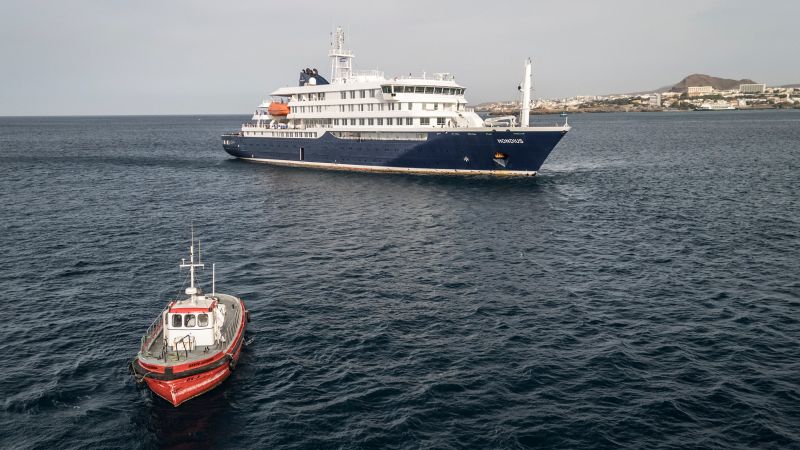
WHO chief reassures worried Tenerife residents – The World Health Organization’s (WHO) director general, Tedros Adhanom Ghebreyesus, has taken steps to calm anxieties among residents of Tenerife, Spain, as the arrival of a cruise ship infected with hantavirus approaches. The MV Hondius, which has seen three fatalities due to the disease, is set to dock at Granadilla port on Sunday at 5:30 a.m. local time. Tedros, who is present on the island to oversee the evacuation, acknowledged the “worried” sentiment among locals but emphasized that the hantavirus outbreak is not comparable to the previous pandemic. In a letter to Tenerife’s residents, he clarified that the virus, typically transmitted through contact with rodent droppings, poses a “low” risk to the broader population. “We did not make this assessment lightly,” Tedros stated, underscoring the thoroughness of the WHO’s evaluation. His remarks come amid growing anticipation for the ship’s arrival, which has prompted questions about public health protocols and safety measures.
Spain’s Preparedness and Evacuation Strategy
Spanish officials have outlined a meticulous plan to manage the ship’s docking and the subsequent transfer of passengers. The MV Hondius will arrive at the port early Sunday, where nearly 150 individuals—primarily infected guests and crew—will be transported ashore. According to cruise operator Oceanwide Expeditions, disembarkation will begin around 8 a.m., with groups carefully controlled to minimize exposure. Passengers will be moved using “sealed, guarded vehicles,” ensuring they remain isolated from residential areas until repatriation to their home countries. “This will not be a risk to you or your families,” Tedros said during a news conference with Spain’s Minister of Health, Monica Garcia, on Saturday. His assurance was bolstered by the involvement of 358 Spanish security agents in the operation, as reported by the interior minister, Fernando Grande-Marlaska. The authorities have also prioritized the ship’s positioning at a safe distance from the dock, as determined by maritime and port officials.
US CDC’s Role in Risk Assessment
The U.S. Centers for Disease Control and Prevention (CDC) has dispatched experts to monitor the situation upon the ship’s arrival. These professionals will conduct individual risk assessments for American passengers, evaluating their likelihood of transmitting the Andes variant of hantavirus. An official from the U.S. Department of Health and Human Services noted that the risk to the general public remains “extremely low,” citing the CDC’s extensive experience with the virus. A source close to the operation revealed that American passengers will be repatriated via a charter aircraft equipped with a biocontainment unit, similar to those used during the early stages of the Covid-19 crisis. The ship will anchor at a designated location within the port, chosen for its safety and logistical advantages. Once ashore, passengers will disembark in small inflatable boats, organized by nationality.
Medical Protocols for Infected Individuals
Following the initial debarkation, 14 Spanish passengers will be transported to a military hospital for further examination. The health ministry announced that these individuals will remain in individual rooms, without visitors, and undergo PCR testing upon arrival and again after seven days. “Active monitoring will also be conducted, including twice-daily temperature checks to detect any symptoms early,” the ministry stated in a release. The evacuation plan reflects a coordinated effort between Spain and international partners. Germany, France, Belgium, Ireland, and the Netherlands have committed to sending aircraft to retrieve their nationals from the MV Hondius, according to Reuters. This collaboration underscores the global concern over the outbreak and the need for swift, organized action.
Local Resistance and Public Sentiment
The arrival of the hantavirus-infected ship has sparked tensions in Spain, particularly among residents of the Canary Islands. Fernando Clavijo, the regional leader, had initially opposed the ship’s docking, citing fears about the potential spread of the disease. However, his government has since endorsed the operation, framing it as a necessary measure to protect public health. Port workers in Tenerife have also raised concerns, holding protests earlier this week over a lack of communication regarding the risks. Despite these apprehensions, the authorities have maintained that the evacuation process is well-structured. Tedros, who arrived in Tenerife on Saturday evening, visited the port to assess preparations and reaffirmed confidence in the plan. “We will do everything tomorrow to make the operation a success,” he said during the press conference, highlighting the urgency and determination of the response.
Public Health Implications and Regional Impact
The hantavirus outbreak has drawn attention to the importance of rapid containment strategies. While the disease is less contagious than SARS-CoV-2, its severity in certain cases—such as the Andes variant—requires careful handling. The WHO’s reassurance aims to ease fears, but the situation remains a focal point for health officials and the public. Residents have been advised to stay informed and follow guidelines to prevent transmission. The focus of the evacuation is not only on removing infected individuals but also on ensuring the safety of the local community. As the MV Hondius prepares to arrive, the coordinated efforts between Spain’s health ministry and international agencies reflect a unified approach to managing the crisis.
Context and Ongoing Monitoring
The outbreak on the MV Hondius has raised questions about the spread of hantavirus beyond its initial containment. The Andes variant, known for its higher fatality rate, has been linked to cases in South America and now appears to have affected passengers on a transatlantic voyage. The CDC’s involvement is critical in assessing whether the virus has spread to other regions or if it remains isolated. The evacuation process is being closely monitored, with officials emphasizing transparency and preparedness. Spanish authorities have prioritized the use of sealed vehicles and individualized medical care to reduce the risk of cross-contamination. As the ship’s arrival nears, the success of the operation will serve as a test of the region’s ability to respond to infectious disease threats.
Conclusion and Future Outlook
The MV Hondius’ arrival marks a pivotal moment in the global management of the hantavirus outbreak. Tedros’ reassurance, combined with Spain’s organized evacuation plan, aims to restore public confidence. While the situation remains under control, the event highlights the importance of international cooperation in addressing health emergencies. The final outcome of this operation will depend on the seamless execution of protocols, ensuring that the infected passengers are safely isolated and the broader community remains protected.
“You will not encounter them. Your families will not encounter them.”
Tedros’ statement, delivered during the Saturday news conference, serves as a reminder of the precautions in place. The blend of local and international expertise underscores a shared commitment to safeguarding health, even in the face of uncertainty. As the world watches, the steps taken in Tenerife may set a precedent for future outbreaks and their containment.