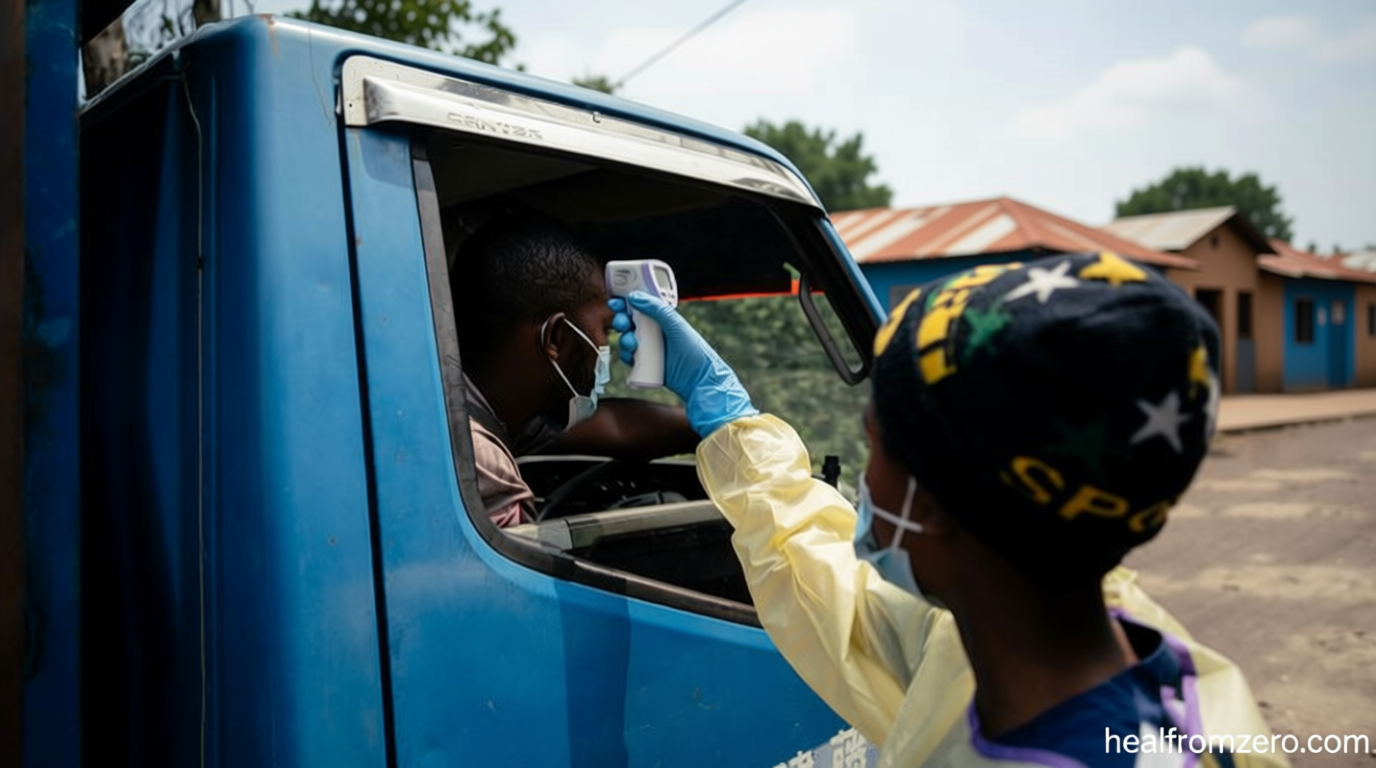
Stop worrying about Ebola: Protect yourself from contagious viruses you may actually encounter


Stop Worrying About Ebola: Focus on the Viruses You’re More Likely to Encounter
Stop worrying about Ebola – Recent news headlines have highlighted a new wave of viral activity, with Ebola once again in the spotlight. While these reports can heighten public anxiety, experts caution that the risk for the average traveler remains minimal. “The headlines are scary, but the actual threat to everyday people is nearly negligible,” said Dr. Thomas Moore, a clinical professor of medicine at the University of Kansas School of Medicine-Wichita. Yet, despite this, people often fixate on the latest virus in circulation, a phenomenon Dr. Ronald Nahass, president of the Infectious Diseases Society of America, refers to as the “germ du jour.”
Why Viruses Like Ebola Often Feel More Dangerous Than They Are
According to Nahass, the allure of viruses such as Ebola lies in their visibility during outbreaks. “A virus is intangible: You can’t see it, can’t feel it until you’re sick,” he explained. This invisibility makes them a persistent source of unease, especially in light of lingering fears from the Covid-19 pandemic. “It’s the invisible enemy,” he added. “Our collective trauma from the last global health crisis has made us hyper-aware of new threats, even when they’re less likely to impact us directly.”
“Fear over one virus shouldn’t translate to worry about another, because each has its own unique way of spreading and behaving,” said Dr. William Schaffner, a professor of infectious diseases, health policy, and prevention at Vanderbilt University Medical Center in Nashville, Tennessee. He used a relatable analogy: “Think of all your cousins. They may share the same last name, but each one is distinctive and individual.”
While Ebola’s spread requires close contact with bodily fluids, such as blood or saliva, its transmission is far less efficient than many people assume. For instance, in Africa, the virus often spreads through local burial traditions, where mourners touch the body of a deceased loved one still carrying the pathogen. “This is a critical point,” Schaffner noted. “Infections occur during caregiving in the home, not through casual contact in a crowded setting.”
Contrast this with the scenario of someone flying on a plane from Central or East Africa. “A healthy person infected with Ebola on an airplane poses no risk to others,” Schaffner clarified. “It’s only when they become symptomatic—feverish, coughing, or vomiting—that the virus becomes contagious.” This concept, however, is not always easy to grasp, as people tend to associate viral presence with immediate danger.
Understanding the Spread of Hantavirus: A Less Common Threat
Shifting focus to hantaviruses, which are another source of public concern, experts note that most strains in North America are not transmissible between humans. Infection typically happens when individuals inhale particles from the urine, feces, or saliva of infected rodents. “These cases are rare,” said the CDC, citing only 890 reported cases in the United States over a 30-year period ending in 2023.
However, the Andes hantavirus stands out as an exception. This strain, found primarily in Argentina and Chile, has limited human-to-human transmission. It was the cause of a recent outbreak linked to the Dutch luxury cruise ship MV Hondius, which resulted in three fatalities. Authorities suspect that some of the victims were already exposed to the virus before boarding. “The Andes strain spreads through direct physical contact, prolonged time in enclosed spaces, and exposure to bodily fluids,” the CDC explained. “Yet, even in such conditions, the number of infections remains relatively low.”
Dr. Schaffner emphasized that while Andes is contagious, its transmission rate is not as high as other viruses. “The fact that it was able to cause an outbreak on a cruise ship is a sign of its potential, but it’s still not as easy to spread as something like measles,” he said. This distinction highlights the importance of understanding how different viruses behave, rather than generalizing their risk.
The World Cup and the Rise of Contagious Threats
As the World Cup approaches in June, with millions of fans flocking to stadiums in the U.S., Mexico, and Canada, health officials are bracing for potential mass contamination events. The crowded environment of such events creates ideal conditions for viruses to spread rapidly. “This is the perfect setting for a viral outbreak,” Schaffner remarked. “The close proximity of people, combined with shared facilities like restrooms and concessions, increases the likelihood of transmission.”
Despite the global attention on events like the World Cup, health experts argue that the most pressing concerns are already present in daily life. Measles, for example, is one of the most infectious viruses in existence, yet it can be effectively prevented with a simple vaccine. “Measles is a major worry right now,” Nahass said. “With vaccination rates dropping in the U.S., Canada, Mexico, the UK, and parts of Europe, we’re seeing pockets of underimmunization that could lead to resurgences.”
“An unvaccinated person at the World Cup could unknowingly spread measles to others, especially in densely packed areas,” Nahass warned. “This isn’t just a hypothetical scenario—it’s a real risk that’s being exacerbated by vaccine hesitancy.”
Measles’ high contagiousness means even a single infected individual can pose a threat to many others. “The virus spreads through the air, and it only takes a few droplets to infect someone,” Schaffner explained. “This is why containment is so critical, yet it’s also why the virus can cause so much harm if not properly controlled.”
While Ebola and hantavirus receive headlines for their dramatic outbreaks, the reality is that these diseases are less likely to affect the average person. “The average traveler has more to fear from common viruses like the flu or respiratory syncytial virus than from Ebola or hantavirus,” Schaffner said. “These pathogens are more familiar, more persistent, and often overlooked in the media.”
Reframing Fear: How to Stay Safe in a Viral World
So, what steps can individuals take to protect themselves from contagious viruses they are more likely to encounter? Experts stress the importance of understanding the specific transmission routes of each virus. For example, while Ebola requires direct contact with bodily fluids, respiratory viruses like measles or influenza spread through airborne droplets. “This means masks, handwashing, and vaccination are more effective than worrying about rare outbreaks,” Moore said.
Additionally, maintaining good hygiene practices is essential. “Even in the absence of a major outbreak, small actions like regular handwashing and covering coughs can make a significant difference,” Nahass advised. He also highlighted the role of education in alleviating fear. “People need to know that viruses like Ebola or hantavirus are not the same as the common cold or flu. Their spread patterns are different, and their impact varies depending on the setting.”
As the World Cup draws near, public health officials are urging fans to remain vigilant but not overly alarmed. “The event itself is exciting, but it’s also an opportunity to reinforce basic prevention measures,” Schaffner said. “This is a chance to show that even in crowded environments, the risk can be managed with simple habits and awareness.”
In the end, the key to navigating the world of contagious viruses is to recognize their unique characteristics. While Ebola and hantavirus are undoubtedly serious, their rarity and specific transmission methods mean they are not the most common threats. “We should focus on the viruses that are more likely to affect us daily, rather than those that are more sensational,” Schaffner concluded. “By understanding the facts, we can reduce unnecessary fear and take meaningful steps to protect our health.”