
Artists are bailing on a Trump-backed concert series for America’s 250th. Now he’s hosting his own ceremony
Trump Assumes Role as Host for 250th Anniversary Ceremony Amid Artist Withdrawals
Artists are bailing on a Trump – President Donald Trump has taken charge of the opening ceremony for the Great American State Fair, following a wave of withdrawals by prominent performers from the event’s concert series. The shift came after most of the artists scheduled for the main stage performances—part of a celebration marking the U.S. nation’s 250th birthday—expressed their decision to distance themselves from the event. The organizers, a White House initiative known as Freedom 250, announced Trump’s involvement in an effort to redefine the celebration as a distinctly Trump-led affair.
Artists Raise Concerns Over Political Ties
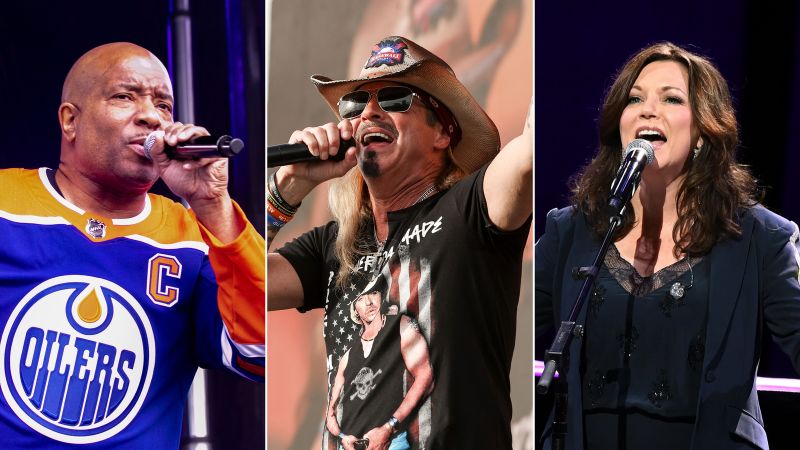
Several high-profile musicians, including The Commodores, Martina McBride, Morris Day and the Time, Bret Michaels, and Young MC, have publicly stated they will not participate in the concert series. Their departures highlight growing unease about the event’s perceived political alignment, which they argue was not clearly communicated during the initial planning stages. “The artists were never told about any political involvement with the event,” said Young MC in a statement on Instagram, describing the situation as a “bait-and-switch” strategy.
“I was presented with an opportunity to perform at a nonpartisan event but that turned out to be misleading,” wrote Martina McBride in an Instagram post. Her comments underscored the sense of betrayal felt by some performers, who believed the event would celebrate American culture without overt political bias.
The Freedom 250 project, launched by executive order under Trump, aims to create an alternative to the United States Semiquincentennial Commission’s America250 initiative. While the original plan was to honor the nation’s 250th anniversary with a bipartisan approach, the Trump-backed series now appears to serve as a platform to promote the president’s political agenda. This has sparked criticism from artists who feel their artistic contributions are being overshadowed by ideological messaging.
Trump’s Response to the Withdrawals
Trump has publicly mocked the artists who left the event, suggesting they are hesitant to support his vision. On social media, he tweeted that the performers were “getting the yips” and implied he could easily replace them with his own “featured attraction.” The president later expanded on his critique, stating, “We should have a giant MAKE AMERICA GREAT AGAIN RALLY, for 250, instead of having overpriced singers, who nobody wants to hear, whose music is boring, and yet who do nothing but complain.” He concluded with a call to “Cancel it,” reflecting his frustration with what he views as a lack of enthusiasm for his initiative.
While Trump has been vocal about the event’s rebranding, the decision to host the opening ceremony is part of a broader effort to align the 250th anniversary celebrations with his political brand. The event’s timeline, June 25 through July 10, has been strategically chosen to coincide with major national observances, further amplifying its symbolic significance.
Controversy and Criticism
Freedom 250 has drawn sharp criticism for its perceived political leanings. Interior Secretary Doug Burgum defended the organization’s role, stating to CNN’s Dana Bash on “State of the Union,” “The president plays a key figure in helping to again celebrate, kick off and be at the opening of these events. It’s very appropriate.” However, artists and critics argue that the event’s nonpartisan image was an illusion, with the concert lineup heavily favoring legacy acts and Trump allies.
The lineup, which includes Morris Day and the Time, Bret Michaels, and Young MC, was curated by Jeff Epstein of Universal Attractions. Epstein, who also represents Vanilla Ice, has been accused of prioritizing political alignment over artistic diversity. Despite his involvement, he has not responded to repeated inquiries about the event’s direction.
Among the most contentious choices is the inclusion of Milli Vanilli, the iconic pop duo known for their 1990 Grammy win before the revelation that their members had not sung on the recordings. Jodie Rocco, a real vocalist who performed with the group during their sessions under the name “The Real Milli Vanilli,” expressed surprise at the decision to feature the duo. “I was shocked that Milli Vanilli was listed as an act,” she told the Associated Press. The group’s past controversy adds an ironic twist to their participation in this year’s celebration.
Remaining Performers and Mixed Reactions
Not all artists have pulled out of the event. Vanilla Ice, a vocal Trump supporter, remains committed to the series, expressing pride in the opportunity. In a TikTok video, he said, “I’m super honored to do this concert. We don’t take anything too serious, man.” His lighthearted tone contrasts with the more serious concerns raised by others.
Meanwhile, rapper Flo Rida has not yet commented on his participation, leaving his stance uncertain. The event’s lineup also includes Freedom Williams of C&C Music Factory, whose Instagram reel—filmed from an unusual angle—has sparked speculation about his role. One commenter joked that Williams appeared to be sitting on the toilet, adding a humorous dimension to the controversy.
Some artists, like Bret Michaels, have cited personal threats as a reason for their withdrawal. Michaels, who previously praised Trump for his leadership in “The Celebrity Apprentice,” noted in an Instagram statement, “Unfortunately, what was presented to us as a celebration of our country has evolved into something much more divisive than what I agreed to be a part of.” His departure highlights the growing divide between the event’s intended purpose and its actual political implications.
The decision to feature the same booking agent for multiple acts raises questions about the event’s impartiality. Epstein’s representation of both Trump-aligned performers and legacy artists like Morris Day and Vanilla Ice has fueled accusations of a coordinated effort to align the concert series with the president’s vision. This has led to debates about whether the event is truly a cultural celebration or a political spectacle.
Legacy of the Great American State Fair
The Great American State Fair, which will take place in Washington, DC, aims to commemorate the nation’s 250th anniversary with a mix of music, food, and festivities. However, the event’s current iteration has sparked discussions about its role in shaping public perception of American identity. Critics argue that the focus on Trump-backed performers risks reducing the celebration to a platform for political messaging, rather than a shared cultural experience.
Despite the controversy, the event’s organizers remain confident in its direction. The timing of the opening ceremony, scheduled for June 24, is designed to generate maximum public attention. As the nation marks its 250th anniversary, the Great American State Fair stands as a symbol of the intersection between art and politics, with Trump’s involvement at the center of the debate.
The withdrawal of artists like Martina McBride and Young MC has not only impacted the concert lineup but also raised broader questions about the role of celebrities in political events. Their departures underscore the challenges of balancing artistic integrity with political alignment, a tension that will likely continue to shape the event’s legacy in the months to come.