Oil prices fall on US-Iran agreement

Oil Prices Fall on US-Iran Agreement
Deal Signals Relief for Global Markets
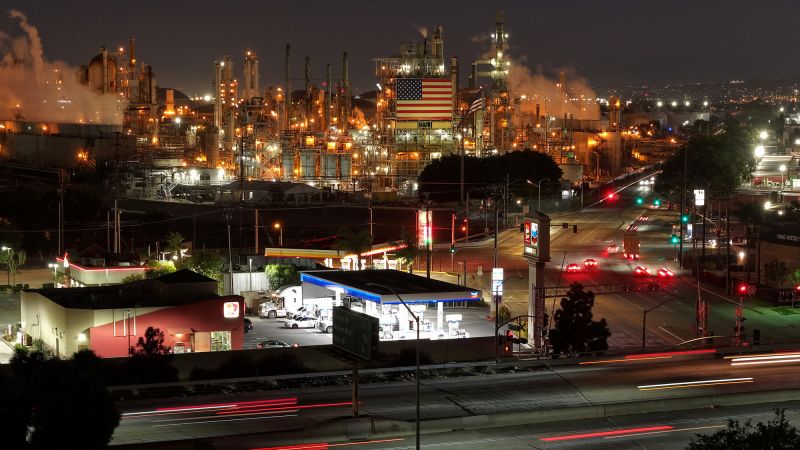
Oil prices fall on US Iran – Following the announcement of a new agreement between the United States and Iran, oil prices declined sharply on Sunday. President Donald Trump revealed that the pact had been finalized, marking the end of the U.S. naval blockade on Iran’s ports. This development has prompted immediate reactions in energy markets, with Brent crude prices dropping 3.9% to approximately $84 per barrel and U.S. crude falling 4.8% to around $81 per barrel. If these levels hold, the prices would represent the lowest crude oil value since March 4, a period shortly after the war began. The market’s response to the deal framework, which was anticipated this weekend, led to oil trading below $90 per barrel on Friday for the first time since the war’s onset. However, the path to recovery remains long, as the price must still reach the $70 mark seen before the attacks on Iran in late February.
A Bridge to Stability?
The agreement has sparked cautious optimism among traders, though the road to restoring normalcy in the oil sector is fraught with challenges. Analysts emphasize that several critical steps remain before the market can stabilize. The Strait of Hormuz, a vital artery for global oil transport, needs to be cleared of mines, ensuring unimpeded maritime traffic. Additionally, the resumption of Middle Eastern oil production, which was halted during the conflict, will require weeks of gradual ramp-up. Emergency petroleum reserves, which have been tapped to mitigate supply disruptions, must also be replenished. The repair of damaged energy infrastructure, such as oil facilities and pipelines, is another hurdle that demands time and resources.
Analysts Predict Sustained Volatility
Despite the positive signs, oil market experts caution that prices may not return to pre-war levels for some time. Many believe the current dip is temporary, with the potential for a rebound as demand stabilizes and stockpiles are refilled. Bob McNally, president of Rapidan Energy, highlighted this concern in a Sunday interview on ABC’s “This Week.” He warned that prolonged disruptions could push crude oil prices into the mid- to high-$100 range, potentially driving gasoline prices back to record highs near $5 per gallon. “The key will be how quickly the infrastructure is restored and whether the emergency reserves can absorb the short-term shocks,” McNally stated. While the agreement is a significant step, its long-term impact depends on the pace of recovery in the region.
Terms of the Agreement
President Trump announced the deal late Sunday afternoon via social media, declaring that “the agreement is now complete.” Iran, in turn, confirmed the memorandum of understanding was finalized with the U.S. and is expected to be officially signed on Friday in Switzerland. Both parties have signaled a commitment to lifting the blockade, with Trump stating that the U.S. would remove restrictions on Iran’s ports. The agreement also includes provisions for de-mining the Strait of Hormuz, a critical chokepoint for global oil flows. Trump further emphasized that he had authorized “the toll-free opening of the Strait of Hormuz,” a move that could ease concerns about supply chain bottlenecks.
Testing the Waters
While the agreement is promising, its immediate effects are still being tested. Iran’s deputy foreign minister for legal and international affairs reiterated the country’s confidence in the deal’s success, though challenges remain. For instance, the cost of shipping through the Strait of Hormuz has been a point of contention, with some vessels paying an average of $2 million per transit, as noted by a member of Iran’s parliament. Even with the strait reopened, the full restoration of trade will take time. Middle Eastern oil wells, which were largely shut down during the war, may require weeks to reach full production capacity. Experts warn that the region’s output could fall short of pre-war levels due to lingering infrastructure damage and operational delays.
Market Skepticism Lingers
Joe McMonigle, president of the Global Energy Analysis think tank and based in Saudi Arabia, expressed cautious optimism. “It’s great if it happens, but I’ll believe it when I see actual ships making the free and unhindered passage through the strait,” he said. This sentiment reflects the market’s wariness, as traders await concrete evidence of sustained calm. The reduction of the U.S. naval blockade is a major factor, but the complete removal of risks—such as minefields or hostile actions—will take time to confirm. Until then, fluctuations in oil prices are expected, especially if the supply chain disruptions persist.
Broader Economic Implications
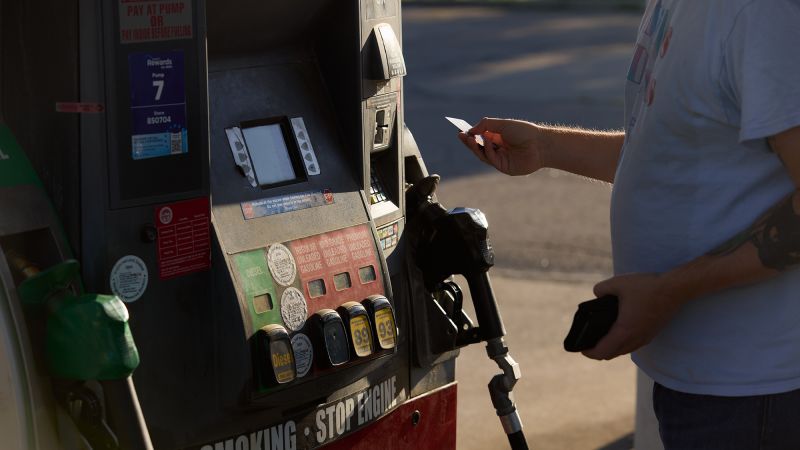
The agreement has also influenced other financial markets, with stock futures climbing on Sunday. The Dow Jones Industrial Average futures rose 0.6%, while S&P 500 and Nasdaq futures each gained over 0.7%. This surge suggests investor confidence in the potential for global trade stability. However, the impact on gas prices has been more gradual. The average price of gasoline in the U.S. settled at $4.07 per gallon on Sunday, according to AAA. While this marks a three-week decline, it remains 36.6% higher than the pre-war benchmark. Analysts note that the reduction in oil prices will take time to filter through to consumer markets, as refineries and distribution networks adjust to the new equilibrium.
What’s Next?
As the agreement moves forward, the focus will shift to its implementation. The removal of mines from the Strait of Hormuz and the resumption of normal shipping operations are critical to long-term price stability. However, the speed of these actions will determine whether the market remains in a downward spiral or stabilizes. Trump’s public endorsement of the deal has bolstered its credibility, but the success of the agreement hinges on Iran’s adherence to the terms and the U.S. maintaining its commitment to easing sanctions. With these factors in play, the oil market’s trajectory will be closely watched in the coming weeks.
Meanwhile, the broader implications of the deal extend beyond immediate price changes. The agreement could signal a shift in U.S.-Iran relations, potentially easing tensions in the region and reducing the likelihood of further conflicts. However, the oil market’s resilience will also depend on global demand, which remains robust despite recent geopolitical uncertainties. As the world waits to see how this agreement unfolds, the energy sector stands at a crossroads—one that could redefine the dynamics of oil prices for months to come.
News of the deal comes as part of a larger diplomatic effort to address regional instability. The U.S. and Iran have been locked in a standoff over sanctions and access to oil markets, with the current agreement offering a temporary reprieve. Analysts remain divided on whether the deal will be enough to prevent a prolonged period of elevated prices, but its symbolic value is undeniable. The market’s cautious optimism, coupled with the need for tangible progress, underscores the delicate balance between political diplomacy and economic outcomes.
For now, the oil market’s immediate response to the agreement has been positive, but long-term stability requires sustained cooperation between the U.S. and Iran. The success of this deal may also influence other oil-producing nations, encouraging them to seek