
A SpaceX rocket was on a collision course with the moon. Here’s what could happen
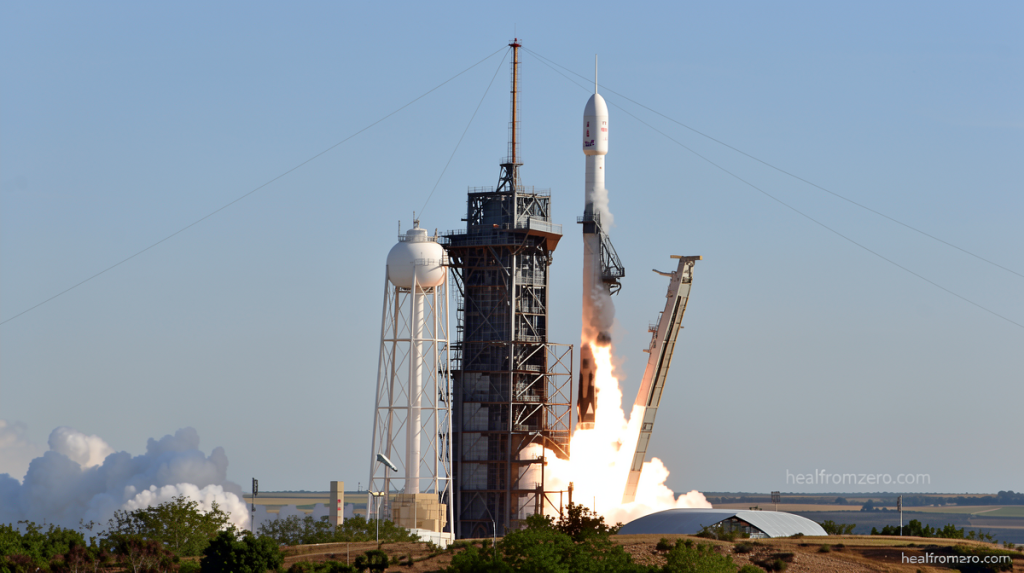
SpaceX Rocket Stage Set for Lunar Collision After Years in Orbit
Healfromzero.com – A massive section of a SpaceX launch vehicle is preparing for an unplanned encounter with Earth’s natural satellite. The second stage of a Falcon 9 rocket, weighing approximately four tons, has been traveling through space at speeds exceeding 5,000 miles per hour since its launch more than a year ago. This metallic cylinder is now on a trajectory that will bring it into contact with the lunar surface. The rocket originally lifted off on January 15, 2025, carrying two commercial landers destined for the moon. While the primary booster returned safely to Earth for reuse, the upper stage continued its journey as a workhorse, propelling both landers toward their destination. Once its propulsion duties were complete, engineers allowed this section to drift freely in space rather than performing a controlled disposal maneuver.
What Happens When the Rocket Hits
Scientists predict the collision will generate a crater measuring between 65 and 90 feet across on the moon’s surface. The impact is expected to occur near Einstein Crater, though precise timing remains uncertain. Initial projections placed the encounter at 2:35 a.m. Eastern Time on Wednesday, but confirmation was still pending as reports emerged. The impact won’t be dramatic for observers on Earth. At a distance of roughly 225,623 miles, the collision will be invisible to the naked eye. Even through telescopes, the event may prove difficult to detect. The bright flash from the impact could be obscured by the moon’s illuminated surface at that location.
If you imagine the moon is a clock, it’ll sort of roughly hit where the 10 would be. But that part of the moon is lit right now, so the bright flash will be muted by that brightness of the moon itself.
Dr. Paul Wiegert, a professor of astronomy and physics at Western University in London, Ontario, provided this assessment. He noted that while the impact itself might be hard to see, the debris plume generated by the collision could be illuminated by sunlight, making it potentially visible through ground-based telescopes.
Why This Rocket Wasn’t Disposed of Normally
For missions traveling to low-Earth orbit, operators typically allow upper stages to burn up in Earth’s atmosphere. This routine disposal method works well for satellites and crew vehicles that circle our planet. However, high-energy missions require different procedures to comply with space debris regulations.
But for high energy missions, we need to perform a different maneuver to ensure the second stage itself is safe per the appropriate rules and regulations. We did that here for the Ispace and Blue Ghost missions’ second stage, and what has happened is essentially a mixture of solar activity and gravity forces have put it on a path towards the moon.
Julianna Scheiman, director of NASA Science and Dragon Programs at SpaceX, explained the situation at a news conference. The combination of gravitational forces and solar activity gradually altered the upper stage’s orbit, eventually placing it on a collision course with the moon.
The Cargo: Two Lunar Landers
The Falcon 9 rocket carried significant commercial value aboard. Texas-based Firefly Aerospace developed the Blue Ghost lander, while Tokyo-based Ispace created the Resilience lander. Blue Ghost achieved a successful soft landing on the lunar surface in March 2025. Resilience experienced difficulties and failed to land safely several months later. Independent astronomers monitoring publicly available orbital data confirmed the upper stage’s trajectory toward the moon. NASA’s Center for Near Earth Object Studies, which primarily tracks objects that might threaten Earth, also verified the impact path. The agency emphasized that no danger exists for our planet from this event.
Implications for Future Lunar Exploration
This rare occurrence offers scientists an opportunity to study the moon’s surface composition and impact dynamics. Researchers can analyze how artificial objects interact with the lunar environment, providing valuable data for protecting astronauts and future infrastructure. NASA’s Artemis program aims to establish a sustained human presence on the moon. As more missions travel to Earth’s natural satellite, managing accumulated space debris will become increasingly important. The moon lacks a protective atmosphere like Earth’s, meaning debris remains in orbit or on the surface for extended periods. The rocket’s upper stage, estimated at 8,818 pounds or 4,000 kilograms, represents just one piece of growing lunar clutter. Astronomers across the Americas positioned ground and space-based telescopes to observe the event. While the general public couldn’t watch the impact live, imagery is expected to become available in the days following the collision. Scientists will use this natural experiment to better understand how to shield future lunar installations from debris impacts. The data collected could inform how operators manage disposal procedures for upcoming missions heading to the moon.
Related Reading
Frequently Asked Questions
What is A SpaceX rocket was on a collision?
A SpaceX rocket was on a collision is the main topic of this guide. The article explains the context, practical details, and next steps readers should understand.
Why does A SpaceX rocket was on a collision matter?
A SpaceX rocket was on a collision matters because readers are looking for a useful answer, not just a short summary. Good content should match search intent and help them decide what to do next.