
A toddler was found in a pool and declared dead. He’s alive and his parents could be charged
A Toddler’s Miraculous Survival Sparks Legal Questions
A toddler was found in a pool – In early February, a young child was discovered in a backyard pool in a Phoenix suburb, setting off a chain of events that would later challenge assumptions about life and death. Recently disclosed police records reveal that the 18-month-old was initially declared dead by medical staff before being found breathing hours later in the hospital’s morgue. The incident has raised questions about the accuracy of death pronouncements and the potential role of the parents in the toddler’s near-fatal experience.
The Scene of the Near-Drowning
Emergency responders were called to the scene at approximately 5:30 p.m. on February 8 after a report of drowning. Upon arrival, the team performed critical interventions on the child before transporting him to a local hospital. According to the records, the toddler was pronounced dead about an hour after being admitted. However, the timeline of events took an unexpected turn when the child was later found alive in the hospital’s cold room.
Medical Staff and the Path to Declaration
Police documents indicate that two officers observed possible signs of life during their initial assessment. Despite these observations, the child was still moved to the cold room, a facility typically used for preserving bodies, following treatment by hospital staff. Dr. Aryan Toosi, who evaluated the toddler, reportedly told an officer, “Please do your thing and let me do my thing,” as the medical team proceeded with the declaration. “I went to medical school for a reason,” the doctor added, emphasizing his confidence in the process.
“I went to medical school for a reason.”
Hours after the child was taken to the cold room, a team from the local medical examiner’s office discovered him breathing. This moment of realization prompted immediate action, with the toddler being transferred to another hospital for further care. The child eventually recovered and was released, leaving medical professionals and the public alike to ponder the circumstances of his survival.
Potential Negligence Charges
Gilbert police have suggested that the parents may face negligence charges, citing evidence of a strong marijuana odor at the scene and open doors that could have allowed unsupervised access to the pool. Investigators are reviewing the case to determine if the parents failed to ensure adequate supervision, a key factor in such incidents. Meanwhile, the Maricopa County Attorney’s Office is examining the situation, though it has not provided additional details.
A Community Effort to Support Recovery
In the wake of the incident, a GoFundMe page was launched to assist the toddler’s family with medical expenses. The campaign highlighted the child’s resilience, referring to him as “our miracle fighter.” It described the need for extensive therapy and thanked donors for their support. The family’s journey from despair to hope has become a focal point for discussions about medical errors and the role of community aid in recovery.
Historical Precedents of Mistaken Death Declarations
This case is not unique. Other instances have shown that individuals can be incorrectly declared dead and later found alive. One notable example occurred in Southfield, Michigan, where 20-year-old Timesha Beauchamp was pronounced dead over the phone in 2020. City paramedics had responded to a 911 call, but it was only when her body was opened at a funeral home that she was discovered gasping for air. She was taken to the hospital but ultimately passed away two months later.
“She was swiftly taken to a hospital but never recovered and died two months later.”
Beauchamp’s case led to a $3.25 million negligence settlement, underscoring the importance of accurate death assessments. Such occurrences, though rare, highlight the critical role of medical professionals in determining life and death, as well as the potential for human error in high-pressure situations.
Expert Insights on Death Pronouncement
Dr. Judy Melinek, a forensic pathologist in San Francisco, explained that cases of mistaken death declarations are uncommon but not unheard of. “It tends to be much more common in elderly people than in children or toddlers,” she noted. According to Melinek, the criteria for declaring death require no heartbeat, no breathing, and no brain activity. “There were times when people were breathing very shallowly or intermittently, so medical practitioners had to wait a few minutes before the declaration,” she said.
“The criteria of death require no heartbeat, no breathing, and no brain activity or neurologic activity,” Melinek said. “There were times when people were breathing very shallowly or intermittently, so medical practitioners had to wait a few minutes before the declaration.”
She also pointed out that the accuracy of such declarations can depend on the skill and training of the medical staff involved. “It’s either someone inexperienced got involved or a policy failure,” Melinek added. This perspective adds a layer of complexity to the toddler’s case, as it raises questions about the protocols in place at the time of the incident.
The Role of 911 Calls and Eyewitness Accounts
During the initial response, 911 calls from two relatives described the child as unconscious, with frantic voices indicating urgency. The callers’ accounts, combined with the shrieks from people at the scene, painted a picture of a critical moment. However, the absence of immediate answers when an Associated Press photographer visited the home on Monday suggests a possible lack of communication or awareness during the crisis.
Hospital Response and Commitment to Improvement
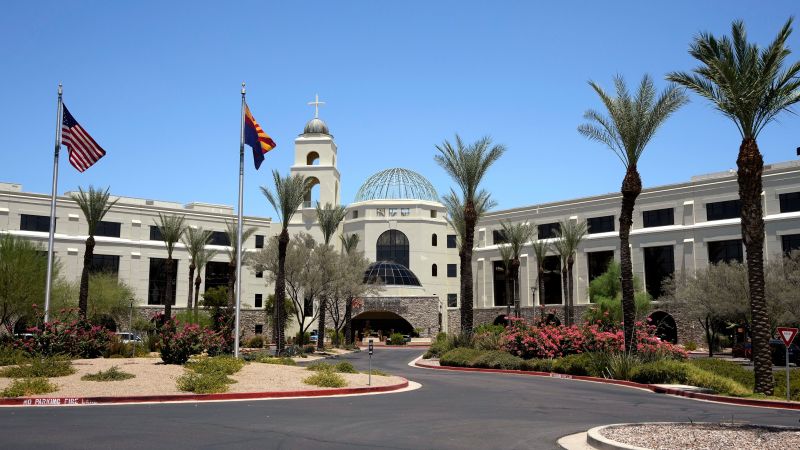
Mercy Gilbert Medical Center, where the toddler was first taken, issued a statement affirming its commitment to reviewing the care provided. “The hospital conducted a thorough review of all aspects of the care to learn what happened and make meaningful changes to strengthen our care,” the statement said. The facility referred to the situation as “heartbreaking” but declined to share further specifics about the toddler’s condition or the hospital’s internal findings.
Legal and Ethical Implications
Scott Holden, an attorney representing Dr. Toosi, emphasized that the case is more complex than initially reported. “There is much more to this case, both factually and medically, than has been shared,” he stated. The attorney’s remarks hint at potential disputes over the circumstances of the toddler’s survival, including whether the parents’ actions contributed to the delayed discovery of life.
As the investigation unfolds, the incident serves as a reminder of the delicate balance between medical procedures and human oversight. While the toddler’s survival is a triumph, it has sparked conversations about the need for clearer guidelines in emergency situations and the responsibilities of caregivers. The case remains a subject of public interest, with ongoing efforts to understand its full implications.