
Utah revokes license for boarding school where Paris Hilton says she was abused as a teen
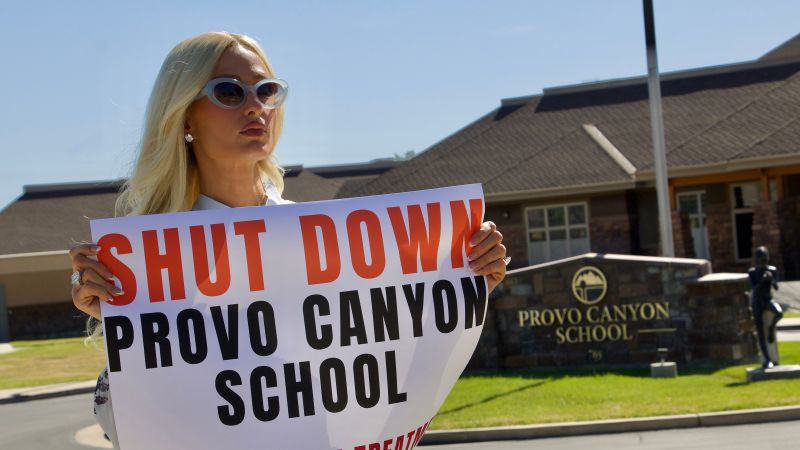
Utah Revokes Boarding School License Amid Paris Hilton Abuse Claims
Utah revokes license for boarding school – The Utah Department of Health & Human Services has revoked the license of Provo Canyon School, a facility where socialite Paris Hilton alleged she experienced abuse during her teenage years. This decision, effective Monday, follows years of compliance failures, with the state citing “insufficient health and safety services” as the primary reason for the revocation. The move marks a critical turning point for the institution, now facing permanent restrictions unless it successfully challenges the ruling within 15 days.
Compliance Issues and Regulatory Actions
State health officials highlighted multiple violations at Provo Canyon School’s Springville campus, including improper staff-to-student ratios and the use of restraints without justification. Reports also detailed instances of physical aggression, such as staff members forcefully confining students to solitary cells and administering unknown medications. Additionally, the school was criticized for failing to conduct thorough background checks on employees, leaving students vulnerable to potential harm. These deficiencies prompted the state to issue temporary restrictions in May, which escalated to full license revocation this week.
The revocation process underscores Utah’s commitment to enforcing stricter standards in residential care. The state agency emphasized that the school’s inability to meet safety requirements reflects systemic problems within the troubled teen industry. Advocacy groups have long called for accountability, and this action is seen as a significant victory for those pushing for reform. Provo Canyon School, which has operated for over 50 years, now faces an uncertain future as its new management must prove it can rectify past issues.
Paris Hilton’s Testimony and Advocacy
Paris Hilton, who attended the school in the late 1990s, has shared harrowing accounts of her treatment. She described being physically assaulted, monitored during private moments, and subjected to solitary confinement without clothing. These experiences, she claims, reveal a culture of neglect that has persisted for decades. Her testimony has since become a catalyst for legislative changes, with her appearing before Congress and state legislatures to advocate for improved protections in similar institutions.
“For over fifty years, children have spoken out about abuse, neglect, and trauma,” Hilton said in a recent press statement. “Today, Utah has confirmed what survivors have known all along: Provo Canyon School didn’t meet the standards it promised.” She added, “I was one of those children. I know what it feels like to cry for help and believe no one is coming. Now, the children still there know someone is finally here to protect them.”
Hilton’s efforts have extended beyond personal narratives, contributing to laws in over 15 states aimed at safeguarding students in residential programs. The revocation of the school’s license is viewed as both a validation of her claims and a broader acknowledgment of systemic failures in the industry. While the school’s new leadership has expressed a desire to move forward with reforms, critics remain skeptical about its ability to address past misconduct effectively.
Legacy of the Troubled Teen Industry
Provo Canyon School is part of a larger network of for-profit residential centers that have long faced scrutiny for their treatment of children. Utah has been a major hub for these facilities, often criticized for prioritizing cost efficiency over student well-being. The state’s recent action against the school signals a growing effort to hold such institutions accountable, with advocates emphasizing the need for more rigorous oversight and transparency.
The controversy surrounding Provo Canyon School has reignited debates about the emotional and physical toll of residential programs on teens. While the facility’s new management has stated it cannot comment on past practices, the revocation of its license has sparked discussions about the long-term impact of such institutions. Many argue that the school’s history of abuse highlights the urgent need for reforms to ensure the safety and rights of all children in care.
Broader Implications and Public Response
The revocation of Provo Canyon School’s license has generated mixed reactions. Supporters hail it as a necessary step to protect vulnerable students, while others question whether it will lead to lasting change. Advocacy groups have praised the state’s decision, calling it a landmark moment for children’s welfare. Meanwhile, the school’s former staff and clients have expressed concern about the future of the facility and its potential to recover from past shortcomings.
As the facility prepares for a hearing, the outcome will determine its next steps. The case has also brought renewed attention to other boarding schools across the country, prompting calls for a nationwide review of similar institutions. With Utah’s regulatory action, the hope is that it will serve as a model for other states to follow, ensuring that children are not left in harm’s way due to institutional negligence. The story of Provo Canyon School continues to unfold, with its license revoked and its legacy under examination.