
Tesla sales soar 25% in sign its troubles may be easing
Tesla Sales Soar 25% in Sign Its Troubles May Be Easing
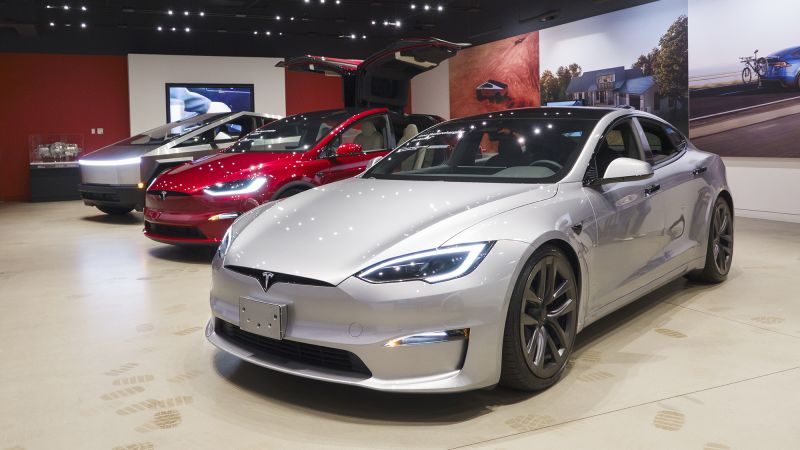
Tesla sales soar 25 in sign – Tesla’s performance in the second quarter of 2026 marked a significant turnaround, with global sales rising by 25% compared to the same period in 2025. This growth has sparked speculation that the electric vehicle (EV) leader, under Elon Musk’s leadership, is overcoming challenges that had plagued its European operations in recent years. The company reported deliveries exceeding 480,000 vehicles during the three months ending June 30, a stark contrast to the approximately 384,000 delivered in the same timeframe in 2025. While Tesla does not provide region-specific delivery data, analysts believe Europe played a pivotal role in this rebound.
European Market Leads the Charge
According to the European Automobile Manufacturers’ Association (ACEA), Tesla’s sales in Europe surged by 77% over the first five months of 2026. This momentum appears to be driven by a combination of factors, including higher fuel prices, increased government support for electric vehicles, and a gradual shift in consumer sentiment toward Musk’s leadership. The backlash against Musk, particularly in Europe, which had been amplified by his political affiliations and public statements, seems to be subsiding. His endorsements of far-right candidates in Germany and Britain, along with his involvement in President Donald Trump’s administration, had previously created friction in the region.
Analysts suggest that the recovery in Europe is tied to a broader trend of rising demand for EVs. As fossil fuel vehicles become less competitive, both economically and environmentally, more consumers are turning to alternatives like Tesla’s models. Additionally, the expansion of fast-charging infrastructure across major highways and urban centers has made EV ownership more convenient, further bolstering sales. “Europe is bouncing back after a year of being negatively affected by anti-Musk sentiments,” Dan Ives, global head of technology research at Wedbush Securities, noted in an emailed statement. “The market has started to normalize, and Tesla is benefiting from that shift.”
Global Sales and Strategic Adjustments
Despite the European resurgence, Tesla’s overall performance in the U.S. remains a point of concern. The company’s U.S. sales dropped by 38% last year, coinciding with Musk’s controversial political activities. However, the second-quarter results suggest that the company is no longer solely reliant on its domestic market. Tesla’s international operations, particularly in Europe, have become a critical component of its strategy to maintain growth. Analysts at Deutsche Bank predicted deliveries of around 416,000 for the quarter, emphasizing that Europe is acting as the primary driver of international expansion.
“The international sales are doing the heavy lifting, with Europe leading the charge,” the Deutsche Bank analysts wrote in a report published Tuesday. This highlights Tesla’s efforts to diversify its market presence, reducing vulnerability to domestic challenges. The company’s decision to discontinue production of its most expensive models—Model S and Model X—has also freed up manufacturing capacity, allowing it to focus on more affordable options and emerging technologies. The removal of EV tax credits in the U.S. further incentivized Tesla to strengthen its foothold in other regions, including Europe.
Competition from Chinese EV Giants
Tesla’s European recovery comes amid intensifying competition from Chinese automakers, notably BYD. Last year, BYD overtook Tesla as the world’s largest EV seller, a shift that has continued into 2026. ACEA data reveals that BYD’s European sales increased by 159% during the January-to-May period, putting it 12% ahead of Tesla in the region. This growth has been fueled by BYD’s aggressive pricing strategies, government subsidies, and a growing consumer base that values cost-effectiveness over brand prestige.
While Tesla has made strides in Europe, it faces a formidable challenge from BYD’s rapid expansion. The Chinese automaker’s dominance in the EV market underscores the need for Tesla to maintain its competitive edge. “Tesla’s sales bump is a positive sign, but it’s not enough to reverse the broader trend of Chinese EV manufacturers gaining market share,” Seth Goldstein, a senior equity analyst at Morningstar, stated in an analysis released Friday. Goldstein also pointed to the affordability of EVs in Europe and the development of charging networks as key factors in the continent’s growth.
Tesla’s Vision Beyond Cars
Tesla’s recent success in Europe has not diverted attention from its long-term goals, which extend beyond the automotive industry. The company is heavily investing in autonomous driving and artificial intelligence, with its robotaxi program serving as a flagship initiative. Launched last summer, the robotaxi service aims to integrate Tesla’s full self-driving (FSD) technology into a scalable ride-hailing network. However, the rollout has been slower than anticipated, with limited availability in key markets.
Despite these delays, Tesla is pushing forward with its plans for humanoid robots, which are expected to become a major product line in the coming years. The discontinuation of the Model S and Model X has allowed the company to reallocate resources to these projects, as well as to enhance its existing lineup. “Autonomous driving and AI are central to Tesla’s future, but the company must first stabilize its core business,” Goldstein added. While the robotaxi and humanoid robot ventures are still in early stages, they represent Tesla’s ambition to lead in multiple high-growth sectors.
For now, the focus remains on Europe, where Tesla’s sales have shown promising signs of recovery. The continent’s EV market is expanding rapidly, driven by both consumer demand and policy support. However, the company must continue to innovate and adapt to maintain its position against rising competition. As Musk’s influence on politics appears to wane, Tesla may find itself in a more favorable position to capitalize on its strengths and address its weaknesses. The 25% sales increase is a welcome development, but it serves as a reminder that the EV industry is still evolving, and Tesla’s success will depend on its ability to navigate these changes effectively.
Future Outlook and Market Dynamics
Analysts believe that Tesla’s European recovery could set the stage for a broader rebound in global sales. The company’s ability to adapt to shifting consumer preferences and market conditions has been critical in this process. “Tesla’s performance in Europe is a testament to its resilience,” Ives said. “The company has managed to regain traction in a market that once viewed it skeptically.” This momentum may also influence its strategy in other regions, such as the U.S., where it is working to restore confidence and drive growth.
Meanwhile, the competition from Chinese EV producers like BYD continues to reshape the industry. BYD’s European sales growth has been exponential, highlighting the importance of cost-effective production and strategic partnerships. Tesla’s recovery in Europe, while encouraging, will need to be sustained through continued investment in technology, marketing, and customer support. The company’s leadership in the EV sector is now more precarious than ever, with BYD and others threatening to erode Tesla’s market share.
As Tesla looks to the future, the balance between maintaining its current success and advancing its ambitious projects will be crucial. The robotaxi and humanoid robot initiatives, though promising, require significant resources and time to scale. However, the recent sales surge in Europe suggests that Tesla is capable of turning its fortunes around. With the right mix of innovation, strategy, and market adaptability, the company may yet reclaim its position as a global leader in the EV industry.