
The most controversial fossil site in human evolution just got even more puzzling
The Most Controversial Fossil Site in Human Evolution Just Got Even More Puzzling
The most controversial fossil site in human – For over a decade, the Rising Star cave system in South Africa has yielded remarkable humanlike fossils, challenging long-held assumptions about our evolutionary past. Recently, groundbreaking research has added another layer of intrigue to this enigmatic site. Scientists analyzing ancient proteins from the remains of 20 individuals discovered that all the fossils belonged to females, sparking debates about the behavior and biology of Homo naledi, a species first identified in 2015. This finding raises questions about the purpose of the remains’ presence in the cave and hints at a deeper mystery in the story of human origins.
Unearthing a Unique Hominin Species
Discovered in the Dinaledi Chamber of the Rising Star cave system, Homo naledi has captivated researchers since its initial description in 2015. The site, accessible only through narrow tunnels, was home to an unusually rich collection of fossils, including nearly 1,500 skeletal elements. Despite its small brain size—comparable to that of a chimpanzee—Homo naledi was noted for its unique anatomical features, such as elongated legs and curved fingers, which suggested a mix of human and ape-like traits. These characteristics, combined with the presence of remains in a location that seemed ideal for burial, led scientists to speculate that the species engaged in complex rituals, such as deliberate funerary practices.
One of the most striking aspects of Homo naledi was its lack of sexual dimorphism. Unlike many hominin species, where males and females display significant physical differences, the fossils from Dinaledi Chamber showed minimal variation in size and shape. This observation, made by Lee Berger and his team, was initially interpreted as evidence of a highly social species with a uniform appearance. Yet, the latest findings challenge this view, revealing that the remains may have been deliberately separated by sex during burial.
Protein Analysis and the Gender Enigma
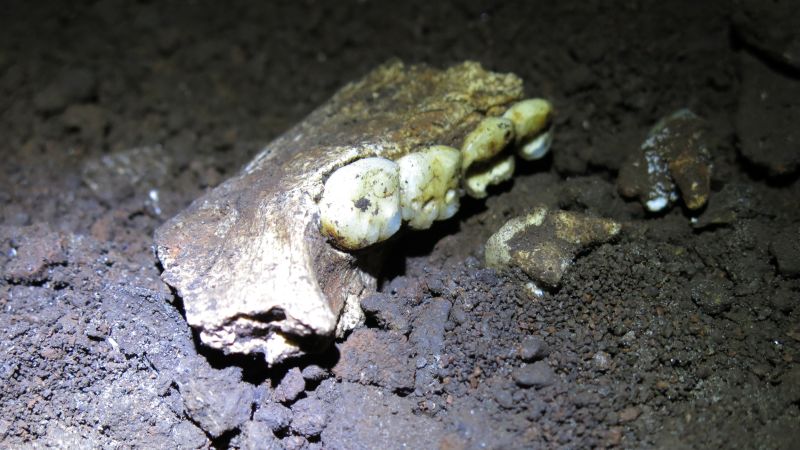
Researchers led by molecular scientist Palesa Madupe have now used advanced techniques to determine the sex of Homo naledi remains. By examining proteins extracted from 23 tooth enamel samples, they found no traces of the Y-linked amelogenin protein, which is typically present in male remains. This absence suggested that all the individuals were female, a conclusion that has left the scientific community in a state of surprise. Madupe, who now works at the Max Planck Institute for Evolutionary Anthropology in Germany, emphasized that the results were cross-verified by two independent laboratories to rule out errors.
“When these results came out, there were a lot of quite nervous scientists. This was not what we expected,” said Lee Berger, a paleoanthropologist and National Geographic explorer in residence. Berger, who has spearheaded excavations at the site, noted that the team initially believed the lack of sexual dimorphism indicated a species that treated both sexes equally. However, the new data implies a different pattern: a possible bias in how Homo naledi handled its dead.
“We ran it through twice because we didn’t want it to be an internal error,” Berger added.
The study, published in the scientific journal Cell, highlights the significance of paleoproteomics—the analysis of ancient proteins—in understanding human evolution. While this method has been applied to remains dating back millions of years, its use on Homo naledi fossils marks a significant step forward. The findings suggest that the species’ burial practices might have been intentionally gender-based, which could imply a level of social complexity previously unattributed to hominins of that era.
Possible Explanations for the Absence of Male Remains
The absence of male markers in the teeth has led to two competing theories. One hypothesis posits that Homo naledi exhibited a sex bias in its mortuary behavior, with individuals of one gender being the sole ones buried in the cave. This would align with the observation that the remains show little variation in physical traits, yet their placement might have been deliberate. Berger suggests that this practice could reflect a ritualistic approach to death, where the species “buried its loved ones by rituals that separated them in death by sex and gender.”
Alternatively, the lack of Y-linked amelogenin proteins could be due to genetic mutations or deletions. Enrico Cappellini, a senior author of the study and professor of paleoproteomics at the Globe Institute, University of Copenhagen, noted that such deletions have been observed in some living male humans and even in the DNA of a Neanderthal male. However, he emphasized that the mutation or deletion of the entire amelogenin-Y gene would be highly unlikely to occur in an entire population or even among half of the 20 individuals studied.
“Either scenario, namely the absence of Homo naledi males in the Rising Star cave system or a systematic deletion of their AMELY gene, presents a compelling puzzle,” Cappellini explained in a news release.
This discovery not only deepens the mystery of Homo naledi’s behavior but also invites comparisons with other hominin species. For instance, the fossil remains of a gliding creature from 120 million years ago, found in a different location, reveal a completely different evolutionary path. Yet, the implications of Homo naledi’s possible sex-based burial practices could reshape our understanding of what it means to be human. The species’ remains, dated between 335,000 and 241,000 years old, sit at the crossroads of early human evolution, offering a glimpse into a world where the line between human and ape was blurred.
Rethinking Human Evolution and Social Behavior
As scientists grapple with these new findings, the question of why only females were found in the Dinaledi Chamber remains unanswered. Berger, reflecting on the implications, admitted that the discovery was unexpected. “In hindsight, I should have spotted sooner that the fossils appeared to be female,” he said. This realization underscores the importance of revisiting earlier conclusions with fresh data. The findings challenge the assumption that Homo naledi was a species with minimal social differentiation, suggesting instead that it may have had nuanced rituals and practices.
The sex bias observed in the fossil record could also hint at broader patterns in human evolution. If Homo naledi’s mortuary practices were guided by gender, it may indicate that such behaviors emerged earlier than previously thought. This would place the species at the forefront of evolutionary complexity, rivaling other hominins in terms of cultural sophistication. While the study does not definitively prove the existence of gender-specific burial rites, it provides a strong foundation for further exploration into the species’ behavior and social structures.
As research continues, the Rising Star cave system remains a focal point for understanding the diversity of human ancestors. The latest findings on Homo naledi’s sex distribution not only complicate existing narratives but also open new avenues for inquiry. Whether the absence of male remains reflects a biological anomaly or a deliberate cultural choice, the mystery deepens, offering a tantalizing glimpse into the lives of our ancient relatives and the enigmatic forces that shaped their evolution.