
AI stocks are getting trampled. South Korean market plunges 10%
AI Stocks Are Getting Trampled. South Korean Market Plunges 10%
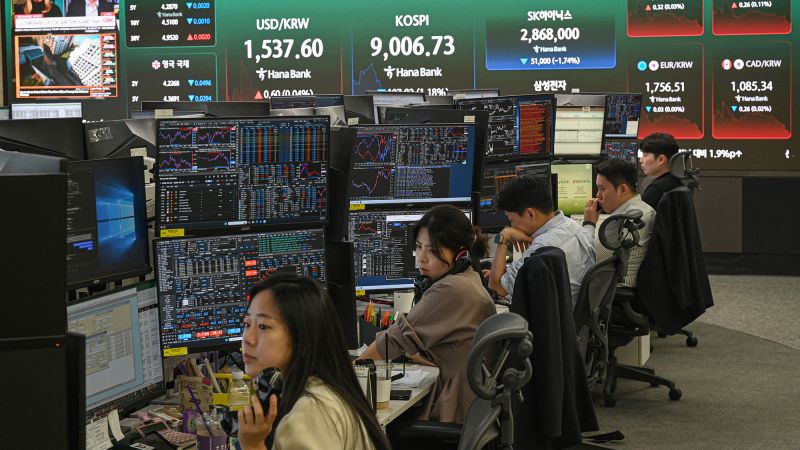
AI stocks are getting trampled South – Market volatility has resurfaced, with artificial intelligence once again serving as the trigger. A moderate decline in US technology stocks on Monday carried over into Asian markets on Tuesday, sparking concerns that the tech-driven euphoria of recent months might be fading. However, the panic quickly intensified in South Korea, where the Kospi index dropped 10% in a single day, triggering a 20-minute circuit breaker halt. This sharp sell-off came as traders grappled with uncertainty, despite no clear catalyst for the sudden shift in sentiment.
A Global Shift in Investor Sentiment
The collapse of the Kospi index marked a turning point, with key players like SK Hynix and Samsung—two of the world’s top memory chipmakers—leading the decline. Both companies fell over 12%, sending shockwaves through the broader market. Their significant losses were partly due to their outsized influence on the Kospi, which they collectively account for about half of the index’s total market value. The drop reflected growing fears that the rapid rise in AI-related stocks might be unsustainable, prompting investors to reassess their exposure.
Analysts speculated on the reasons behind the sell-off. While some pointed to Google’s and SpaceX’s declines on Monday, these were not the primary drivers of the panic. Google’s 5% drop was largely attributed to a high-profile AI leader leaving the company for Anthropic, creating ripple effects in investor confidence. SpaceX, meanwhile, faced typical post-IPO volatility, a common phase for companies that surge in value immediately after their public market debut. Yet, these isolated events did not fully explain the magnitude of the downturn in South Korea.
The Ripple Effect Across Asia
As the crisis deepened, its impact extended beyond South Korea. Japan’s Nikkei index fell 3.6%, with tech giant Softbank plunging 15% in a single session. Other Asian markets also experienced declines, with most indexes dropping more than 1%. The spread of fear suggested that the anxiety over AI valuations and Fed policy was no longer confined to one region, creating a domino effect across global markets.
The situation in the US showed similar signs of unease. Nasdaq futures were down 2.8% on Tuesday, following a 1.3% drop on Monday. This marked the second consecutive day of declines for the tech-heavy index, which had been a cornerstone of the market’s recent rally. While tech stocks had been under pressure, their overall performance had remained relatively stable, with the Nasdaq falling just 3.4% from its June 2 record high. Futures for the broader S&P 500 also dipped 1.2%, and the Dow was poised to open 200 points lower, or 0.3%. These movements underscored a growing sense of caution among investors, even as markets remained near all-time highs.