The ‘earthquake gate’ stopping a San Andreas disaster is under its highest stress in 1,000 years

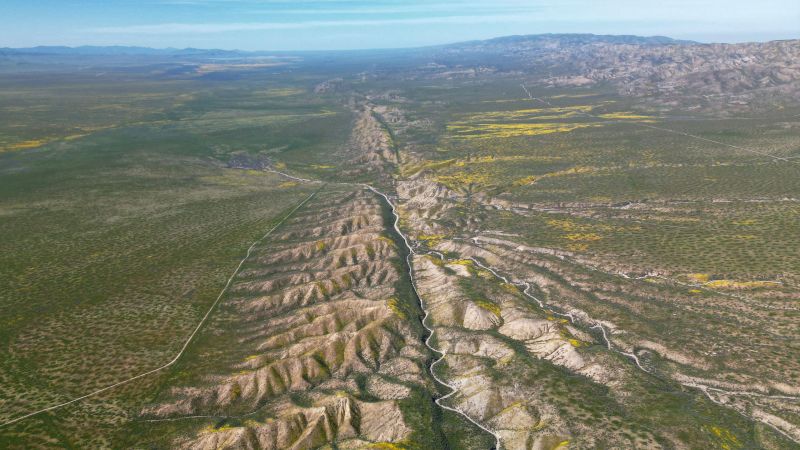
San Andreas Fault’s Earthquake Gate Under 1,000-Year Stress High
The earthquake gate stopping a San Andreas earthquake is under its highest stress in 1,000 years, signaling a growing risk of a major seismic event in Los Angeles. This critical junction, where tectonic plates meet, has become a focal point for scientists monitoring the potential for a catastrophic rupture. A new study reveals that stress levels along the southern San Andreas and San Jacinto fault systems have reached unprecedented heights, creating a scenario where the next earthquake could trigger widespread destruction.
Stress Buildup and Seismic Vulnerability
Seismic activity arises from the gradual accumulation of stress along fault lines, which are fractures in the Earth’s crust. When this stress is released suddenly, it generates powerful earthquakes. The southern San Andreas and San Jacinto faults, located near Cajon Pass, are now locked in a high-stress state. This buildup, which could lead to a massive quake, is linked to the way tectonic plates move and interact, forming a “seismic gate” that may determine whether a rupture remains localized or spreads across the region.
Researchers have found that stress in the San Jacinto Bernardino segment has reached 3.6 megapascals, surpassing its previous peak from nearly 50 years ago. Similarly, the Mojave South segment of the San Andreas fault has exceeded its own stress record, hitting 2.8 megapascals—a figure that outperforms its decade-old maximum. These stress levels are critical, as they indicate the system is primed for a significant release of energy, potentially affecting both fault lines simultaneously.
“The insight isn’t just about stress building over time, which we’ve long known, but how the balance across the junction may decide whether the next quake stays contained or grows into a larger rupture,” said Matthew Weingarten, a geologist at San Diego State University.
Historical Evidence and Modern Risks
The 1812 Wrightwood earthquake, a 7.5-magnitude event, offers a historical example of how the earthquake gate can influence seismic outcomes. That quake traversed Cajon Pass, connecting the San Andreas and San Jacinto faults, and caused widespread damage. If a similar rupture were to occur today, the interconnected infrastructure of Los Angeles, San Bernardino, and Riverside would face even greater disruption. Major highways, railways, and energy networks could all be affected, compounding the impact of a single seismic event.
The earthquake gate’s role in seismic propagation is now more evident than ever. With stress levels surpassing historical thresholds, the probability of a joint rupture—where energy from one fault triggers a larger quake on the other—has increased. Scientists warn that such an event could release energy equivalent to a 7.4 to 7.8 magnitude quake, causing catastrophic damage across the region. The risk is compounded by the fact that these stress conditions are not just temporary but have persisted for over a millennium.
“The earthquake gate acts as a threshold—either halting or enabling the spread of seismic energy. Its current state suggests that the next major event could be more extensive than previously modeled,” explained Liliane Burkhard, a geophysicist at the University of Bern.
Preparing for the Unforeseen
While the earthquake gate has historically acted as a buffer, its current stress levels challenge that role. Experts stress that the next major quake could exceed expectations, with some fault segments showing a greater than 50% chance of a 6.7-magnitude or higher event within the next few decades. This underscores the urgency for updated risk assessments and improved preparedness in vulnerable regions.
Los Angeles and surrounding areas must adapt to the reality that the earthquake gate may no longer serve as a reliable safeguard. Infrastructure upgrades, early warning systems, and emergency planning are critical to mitigating the potential fallout. As stress continues to accumulate, the fault systems remain a ticking clock—waiting for the inevitable release of energy that could reshape the landscape and communities across Southern California.