DHS scraps plans to turn Georgia warehouse into detention mega center, city says

DHS Scraps Georgia Warehouse Conversion Plan, City Says
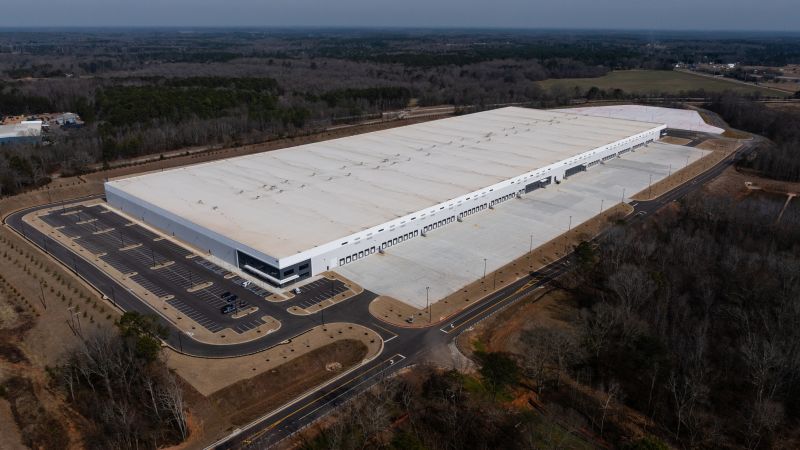
DHS scraps plans to turn Georgia – The Department of Homeland Security (DHS) has abandoned its proposal to convert a warehouse in the small Georgia town of Social Circle into a large-scale immigration detention center, according to a statement issued Thursday by the local government. This marks a reversal of plans that had been in place for nearly four months, following the federal government’s initial confirmation of purchasing the property. The city’s decision comes amid growing concerns over the potential strain on local resources and the community’s pushback against the project.
Relief for a Politically Red County
Social Circle, situated in a region that historically supported President Donald Trump, had become a focal point of resistance against the detention facility. The city’s statement noted that the project, which aimed to house up to 10,000 detainees and 2,500 employees, had faced significant opposition. “The City of Social Circle has received notification from Congressman Mike Collins that the Department of Homeland Security is no longer pursuing an ICE detention facility within the city,” the statement read. City leaders expressed cautious optimism, hoping the property would eventually return to private ownership to benefit the local economy.
“The City is hopeful that the property will ultimately return to the local tax base and once again contribute to the economic vitality and long-term success of the Social Circle community,” said the statement.
The federal government paid $128.5 million for the warehouse, a price nearly four times higher than the $29.3 million it had previously sold the property for in 2023. This dramatic increase in cost raised questions about the project’s feasibility and the political will behind it. While the city remains unsure whether the property will be sold or repurposed, officials emphasized the importance of private ownership to sustain community growth.
Senators Back the City’s Fight
Georgia’s two U.S. senators, Jon Ossoff and Raphael Warnock, both Democrats, praised the decision to halt the plans. “From the beginning, the Social Circle community united against this proposal, which risked overwhelming the city’s infrastructure,” Ossoff stated. Warnock echoed similar sentiments, highlighting the effectiveness of public resistance in shaping policy. “This news proves yet again that public pressure and opposition works,” he added.
“This news proves yet again that public pressure and opposition works,” said Senator Raphael Warnock.
The warehouse conversion project was part of a broader initiative by the Trump administration to expand immigration detention capacity. However, the announcement of its cancellation follows a shift in strategy by DHS. According to a report by The New York Times, the agency has suspended plans to convert seven warehouses across the country, including locations in Salt Lake City, Utah, and Roxbury, New Jersey, into detention facilities.
Political Shift and Strategic Reassessment
The decision to retreat from the warehouse project is tied to changes in leadership within the Department of Homeland Security. Markwayne Mullin, who took over as secretary in April, has reevaluated the $700 million program aimed at increasing immigration detention capacity. A source told CNN that the new administration has prioritized utilizing existing detention spaces in collaboration with state and county partners, rather than investing in new infrastructure.
“From day one, DHS has remained singularly focused on removing the worst of the worst criminal illegal aliens from the United States and is always evaluating the best methods to do so,” said a DHS spokesperson. “These heinous criminals, once arrested, should be removed at lightning speed, not housed on American soil at the taxpayer’s expense.”
Despite the program’s pause, details about its future remain unclear. While officials stress the need for rapid removal of detainees, the suspension of the Georgia warehouse plan has sparked renewed discussions about the balance between national security and local community needs. Social Circle’s residents had warned that the facility would disrupt daily life, strain emergency services, and potentially alter the city’s demographic makeup.
Legal Battles and Ongoing Uncertainty
The proposed conversion of warehouses into detention facilities has drawn legal challenges in multiple locations. In Salt Lake City, for instance, lawsuits have been filed to halt the project, arguing that the rapid expansion of detention capacity could violate due process or community rights. As of Friday, the government had not yet submitted formal documents to confirm the reversal of these plans in pending cases, leaving officials and residents in a state of uncertainty.
“We do not have confirmation from DHS on the release of this facility,” said Eric Biggart, a spokesperson for the Salt Lake County mayor’s office. “However, we hope the reports are true as we would support a sale of the warehouse by DHS.”
Similar skepticism has been expressed in Oakwood, Georgia, a town just 40 miles from Social Circle. There, another warehouse was set to become a detainee processing center. Local attorney Ari Mathé, who has led opposition efforts, said the city would not accept the change until an official statement was confirmed and a new owner was in place. “We won’t believe it until there is an official statement plus a legitimate owner/tenant of the property moved in,” Mathé wrote in an email to CNN.
Broader Implications for Immigration Policy
The suspension of the warehouse conversion plans reflects a broader trend in immigration enforcement. While the Trump administration had focused on aggressive deportation strategies, the shift under Mullin suggests a more flexible approach. Critics argue that the program’s abrupt halt could signal a waning commitment to expanding detention capacity, while supporters see it as a necessary adjustment to address community concerns and fiscal constraints.
Immigration crackdowns have dominated the past year, with agencies working to deport individuals deemed a threat to public safety. However, the recent developments in Social Circle highlight the growing tension between federal objectives and local opposition. The city’s victory, though partial, underscores the power of grassroots activism in influencing policy decisions, even at the national level.
As the debate continues, the fate of the Social Circle warehouse remains a topic of interest. While the city celebrates the temporary reprieve, officials are keeping a close eye on DHS’s next steps. The decision to pause the project may pave the way for alternative uses of the property, but it also leaves room for future plans to resurface. For now, the community hopes the warehouse will serve as a symbol of resilience against policies that once threatened to reshape their lives.
CNN’s Rafael Romo, Devon Sayers, Annie Grayer, and Michael Williams contributed to this report.