Families of kids with disabilities warn Education Department changes could break a flawed system

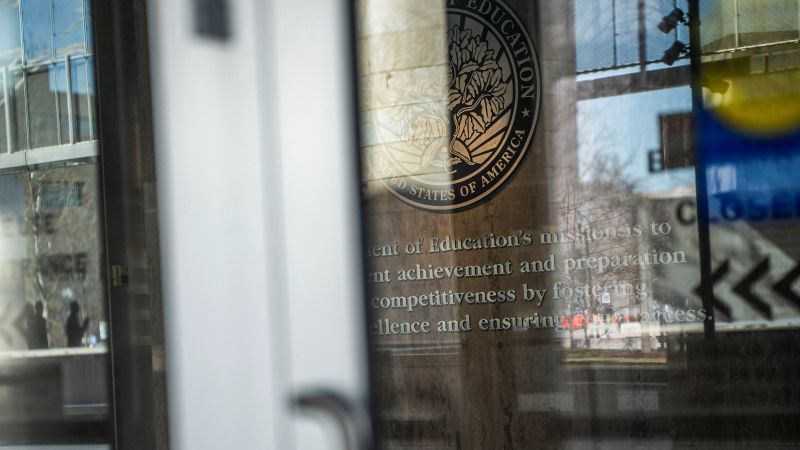
Families of Children with Disabilities Sound Alarm Over Education Department’s Shift to a Flawed System
Families of kids with disabilities warn – Parents of children with disabilities have long expressed frustration with the slow pace of progress from the Education Department on complaints about bullying and discrimination. Now, as the department reshapes its responsibilities, some families and advocates fear that the existing system, already hamstrung since the Trump administration took power, may become even less effective. The proposed changes, which transfer civil rights enforcement and special education oversight to other agencies, have sparked concerns that the process will only grow more complicated for those seeking justice.
Stalled Progress and Parental Concerns
For over a year, Nicole May, a mother from Ohio, said she has watched her daughter’s struggles go unresolved. May filed a complaint in early 2024 with the Office for Civil Rights, alleging that her teenage daughter faced bullying due to her hearing aids and was frequently disciplined for not hearing her teachers. Despite persistent follow-up, the case remains without resolution. “I don’t even check in with the attorney anymore,” May said, highlighting the growing sense of helplessness among families. Similar stories echo across the country, with parents reporting delays that stretch into months or even years.
“I think a lot of people are mad, but they are like, ‘What are we going to do?’” said Emily Harvey, co-legal director at Disability Justice. “The federal civil rights office was never perfect, but it became even less helpful for people trying to resolve issues.”
The shifts in responsibility are part of a broader strategy to reduce the Education Department’s role. Under the new plan, the Department of Justice will handle civil rights enforcement in schools, while the Department of Health and Human Services will manage special education. These moves are seen as fulfilling a key promise of the Trump administration to streamline and decentralize federal education programs. However, critics argue that the changes risk creating confusion and inefficiency, particularly in areas where the department had been the primary point of contact.
Advocates Raise Concerns
Special education advocates have voiced alarm over the decision to place oversight under the Health and Human Services. “Special education isn’t just about health; it’s about educational equity and access,” said one Republican senator, who chairs the Senate education committee. He pledged to introduce legislation to ensure special education remains within the Education Department’s purview. Yet, many parents feel the response is a step backward. “Disabilities should be seen as differences, not just medical conditions,” argued a disability rights group, emphasizing that the health-focused approach may overlook the systemic challenges faced by students with learning needs.
The Education Department’s civil rights office has been a critical lifeline for families, serving as the last resort when local schools failed to address discrimination. Under Trump, however, the backlog of cases has grown significantly, with resolution rates plummeting. “The system is broken, and it’s getting worse,” said Harvey, who once worked as a civil rights attorney in the department. She noted that the office’s staff has shrunk by nearly half since 2024, leaving parents to navigate a more fragmented landscape.
Shift in Legal Strategies
As federal resources dwindle, many parents and advocates are turning to state-level systems for help. In Massachusetts, Craig Haller, a special education advocate, has relied more on state agencies to resolve disputes. He recently used this system to support a student whose high school failed to account for their individualized education plan during a suspension. “The federal process is too slow, so we’re forced to look elsewhere,” Haller explained. “But it’s not a perfect solution either.”
The state-level approach has gained traction as federal agencies become less responsive. Colorado, for example, has passed a new law in May that expands the authority of state education officials to investigate civil rights complaints. This legislation enables the state to handle cases that were previously under federal jurisdiction, such as those involving discrimination or harassment. While this shift offers some relief, it also raises questions about the consistency of enforcement across different regions.
Impact on Federal Cases
Emily Harvey’s experience underscores the growing reliance on state systems. She has pending cases with both the Education Department and the Department of Justice, including one alleging that a Denver-area school district restrained disabled students repeatedly without cause. “They’re probably collecting dust on a virtual shelf somewhere,” she said, reflecting the perception that federal oversight has become a formality rather than a meaningful avenue for change.
Harvey’s frustration is shared by many. The Office for Civil Rights, which once served as the go-to agency for parents, has seen its workforce reduced by 40% since Trump’s term. Meanwhile, the Office of Special Education and Rehabilitative Services has shrunk by a third, according to recent data. These cuts have forced families to seek alternative solutions, often turning to state programs or private attorneys. The Department of Justice’s Education Opportunities Section, which handles school-related civil rights cases, has also been cut by half, further complicating the process.
Resilience in the Face of Challenges
Despite the challenges, some parents and advocates are finding ways to push forward. In Colorado, Harvey’s efforts helped pass a new law to address gaps in federal oversight. This legislation, while a local solution, symbolizes a broader trend: families adapting to a system that no longer guarantees swift action. “We’re not giving up,” she said. “We’re just finding new paths to justice.”
Others, like Nicole May, are questioning whether the changes will ultimately benefit students. “The Education Department was the only place where we could get a fair hearing,” May said. “Now, we’re left wondering if the new structure will make things easier or harder.” For many, the moves represent a loss of federal accountability, with the hope that state systems can fill the gap. However, the transition is not without its hurdles, as agencies struggle to keep up with the volume of cases and the complexity of special education needs.
The debate over these changes highlights a deeper tension between efficiency and accessibility. While the Trump administration argues that reducing the Education Department’s role will streamline processes and save resources, opponents warn that the result could be a system that leaves vulnerable students without adequate support. As the Department of Justice and Health and Human Services take on new responsibilities, the question remains: will these agencies be prepared to shoulder the burden, or will the process become even more convoluted for families fighting for their children’s rights?
In the absence of clear federal leadership, state-level advocates are stepping up. But the scale of the challenge is daunting. With thousands of complaints still pending and new cases continually filed, the system is under immense pressure. For families like May’s, the stakes are high: unresolved issues can mean ongoing discrimination, missed educational opportunities, and a lack of support for children who need it most. As the changes take effect, the focus will shift to whether these new structures can deliver the same level of justice that parents once relied on.