Supreme Court limits power of federal government to disarm drug users

Supreme Court Limits Federal Power to Disarm Marijuana Users
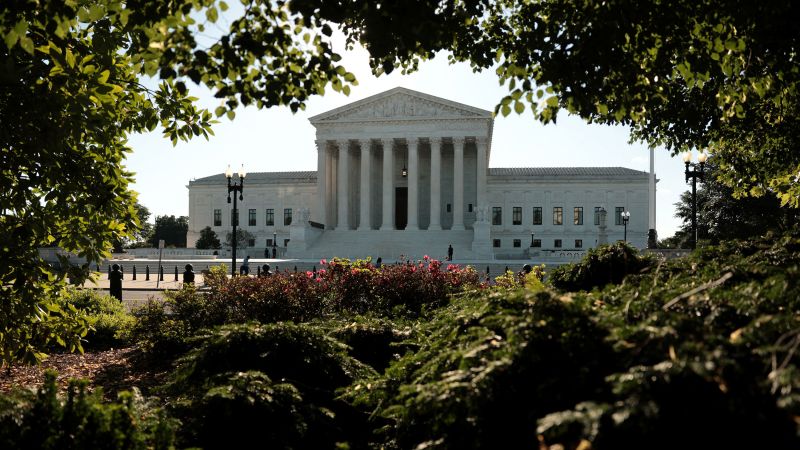
Supreme Court limits power of federal – On Thursday, the Supreme Court issued a landmark ruling that significantly restricted the federal government’s ability to remove firearms from individuals who regularly use marijuana. The decision, authored by Justice Neil Gorsuch, overturned a key provision of a 1960s-era law that allowed authorities to seize weapons from people deemed to be habitual drug users. By doing so, the court emphasized that the law’s broad application to drug users must be justified by evidence of their threat to public safety, rather than merely their consumption of marijuana.
The Case That Sparked a Legal Shift
The case, which centered on Ali Danial Hemani, a dual citizen of the United States and Pakistan, challenged the constitutionality of a federal statute that criminalized gun possession for those who used drugs regularly. Hemani was indicted in 2023 on a single count of violating the law, which links drug use with the potential for firearm-related harm. The charges stemmed from an FBI search of his family’s home, where a Glock 9mm pistol and 60 grams of marijuana were discovered. However, the government’s case relied on the assumption that regular marijuana users are inherently dangerous, a claim the court scrutinized closely.
Justice Gorsuch’s unanimous opinion stated that the government failed to demonstrate Hemani’s risk to others, instead categorically labeling him as a threat simply for his drug use. The ruling highlighted a critical flaw in the law’s logic, arguing that it equates habitual marijuana consumption with violence without sufficient proof. “We do not question that sometimes an individual’s unlawful use of marijuana may render him a danger to others,” the court wrote. “But, again, the government disclaims the need to show anything like that in this case. Instead, it asks us to conclude that anyone who regularly uses marijuana is categorically violent and dangerous without any further showing.”
A Political and Legal Crossroads
The decision came at a pivotal moment for the Supreme Court, which has been reshaping interpretations of the Second Amendment in recent years. The ruling underscored a growing divide between the justices, who typically split on issues of gun rights. While all nine justices agreed on the narrow interpretation of the law, the decision left broader questions unresolved. For instance, it did not determine whether drug addiction or intoxication should automatically disqualify someone from owning a firearm, or whether self-harm due to drug use justifies disarmament.
This case also reflects the shifting legal landscape surrounding marijuana. As of 2026, approximately half of U.S. states have legalized recreational marijuana, and a majority allow its medical use. The court’s restraint in addressing these larger issues suggests a cautious approach to revising long-standing federal policies. “The court seems to have gone out of its way to avoid deciding any bigger questions about whether it’s constitutional to criminalize gun possession by drug addicts,” noted Steve Vladeck, a CNN Supreme Court analyst and professor at Georgetown University Law Center. “By individuals who are actually intoxicated; or in other circumstances in which the defendant is not obviously dangerous.”
Reactions from Advocates and Legal Experts
Gun rights advocates celebrated the ruling as a significant win. John Commerford, executive director of the National Rifle Association’s lobbying arm, called it a “major victory for the Second Amendment and peaceable gun owners across America.” He argued that the decision reaffirms the principle that individuals should not be stripped of their right to bear arms for engaging in nonviolent conduct, and that there is no historical basis for such restrictions.
“No one should be deprived of their God-given right to keep and bear arms for engaging in nonviolent conduct, and there is no historical justification for doing so,” Commerford said.
In contrast, some legal experts expressed concern that the ruling could still allow for reasonable categorical bans on firearms ownership. Leigh Rome, a senior litigation attorney at the Giffords Law Center, noted that the decision “continues to permit the government to enact and enforce reasonable categorical prohibitions on firearms ownership” in cases where drug use is clearly linked to danger.
Political Context and Historical Precedents
The case also carried political weight, as it aligned with the conservative court’s broader push to reinterpret gun laws through a historical lens. This approach was evident in the 2022 decision NYSRPA v. Bruen, which lowered the threshold for carrying handguns in public by requiring prohibitions to align with founding-era precedents. The current ruling reinforces this trend, emphasizing that drug use alone is not enough to justify disarming someone unless there is clear evidence of risk.
Additionally, the decision’s timing coincided with the ongoing legal saga involving Hunter Biden, President Joe Biden’s son. In 2024, Hunter was convicted of violating the same federal law, which linked his crack cocaine addiction to gun possession. Though he was later pardoned by his father, the case highlighted the political implications of federal drug and gun regulations. The court’s handling of Hemani’s case may signal a shift toward protecting individuals like Hunter Biden, even as the government defends the law’s intent.
The Path Forward for Gun and Drug Laws
While the ruling was narrow, it has the potential to influence future cases. The court’s decision to avoid broader questions means that the debate over the constitutionality of disarming drug users will likely resurface. “It’s only a matter of time before those questions will come back to the Court, in cases in which it will be harder for the justices to punt,” Vladeck added.
The Justice Department, which has historically supported the Second Amendment, defended the law in this instance. They argued that the combination of guns and drugs poses a significant risk, with about 300 people charged annually under the statute. A conviction can result in a 15-year prison sentence, underscoring the law’s gravity. However, the court’s focus on the absence of evidence of danger raises doubts about the law’s continued relevance in modern contexts.
As the debate over marijuana and gun rights continues, this decision marks a turning point. It challenges the federal government’s ability to use broad categories of drug users as justification for disarmament, while also leaving room for future litigation. The ruling’s impact will be felt in both legal and political spheres, as advocates push for reforms and lawmakers reconsider the balance between public safety and individual freedoms.