Zohran Mamdani sharply criticizes Democratic Party as he rallies with progressive challengers

Zohran Mamdani Sharply Criticizes Democratic Party as He Rallies with Progressive Challengers
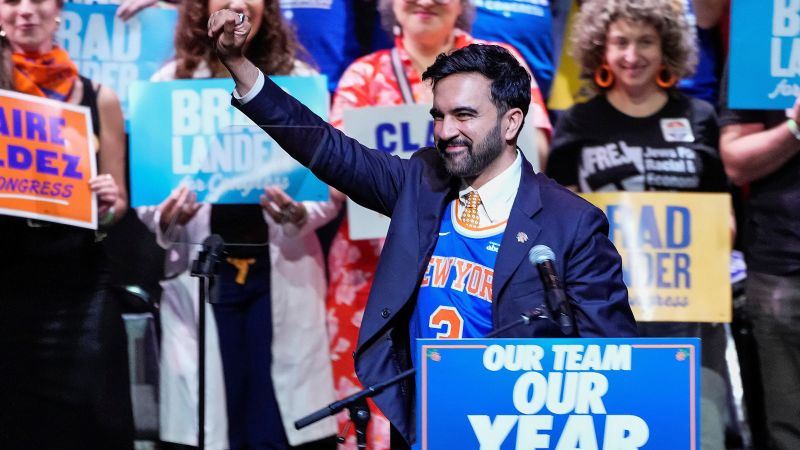
Zohran Mamdani sharply criticizes Democratic Party – Thursday night marked a pivotal moment for New York City Mayor Zohran Mamdani as he openly challenged the Democratic Party’s trajectory during a rally with his slate of progressive congressional candidates. The event, held in Brooklyn’s Flatbush neighborhood, brought together three candidates—Assemblymember Claire Valdez, former city comptroller Brad Lander, and educator-turned-politician Darializa Avila Chevalier—who are vying for key seats in upcoming Democratic primaries. Mamdani’s remarks underscored his belief that the party’s current approach is failing to meet the needs of working-class communities, setting the stage for a broader reevaluation of its strategies.
A Call for Transformation
Mamdani’s speech was laced with sharp criticism, targeting what he described as a stagnation within the Democratic Party. “For too long, our party has accepted the role of managing decline rather than advancing meaningful progress for working-class communities,” he declared. This statement, delivered in the shadow of Vermont Senator Bernie Sanders, highlighted Mamdani’s growing influence as a voice of dissent. “The party has seen its job as explaining why we cannot instead of showing how we can,” he continued. “That outdated mindset will lose on Tuesday, and frankly, it will lose in South Carolina and New Hampshire.”
“The party of the past will not be what leads us into the future.” — Zohran Mamdani
Mamdani emphasized that the Democratic Party’s failure to secure 270 electoral votes in the next presidential election is tied to its inability to adapt. He framed the upcoming primaries as a critical juncture, stating, “The race for 2028 begins now. It starts on Tuesday.” This declaration positioned the event as more than a campaign stop—it was a referendum on the party’s future. Mamdani’s comments resonated with a growing faction of voters who feel disillusioned by traditional Democratic leadership.
Endorsements and Political Challenges
With six months in office, Mamdani is testing his political influence by backing three progressive challengers in New York’s congressional races. Valdez, a Queens-based Assemblymember, is running to replace retiring Rep. Nydia Velazquez. Lander, a former city comptroller, seeks to unseat Rep. Dan Goldman, while Chevalier, an educator and activist, aims to challenge Rep. Adriano Espaillat. Each candidate represents a distinct strand of progressive thought, yet they share a common goal: to redefine the Democratic Party’s identity in the face of rising political divides.
Valdez’s campaign has drawn attention for its focus on economic equity and education reform, while Lander’s platform centers on fiscal responsibility and urban development. Chevalier, however, has faced scrutiny over her social media activity, including deleted posts that criticized Democratic leaders and her attendance at a pro-Palestinian rally the day after Hamas’ attacks on Israel in October 2023. These moments have sparked debates about the candidates’ alignment with the broader progressive movement and their ability to unify voters.
Mamdani’s choice of these candidates also signals his intention to challenge entrenched figures within the party. House Minority Leader Hakeem Jeffries, a Brooklyn-based Democrat, has endorsed both Goldman and Espaillat, making him a key target of Mamdani’s critique. In a recent interview with CNN’s Erin Burnett, Jeffries acknowledged the tension between the mayor and himself, stating, “The mayor and I have agreed to strongly disagree as it relates to this particular race.” This mutual pushback reflects the broader ideological rift within the Democratic Party, with Mamdani positioning himself as a catalyst for transformation.
Attacking AIPAC and the Politics of Division
During his speech, Mamdani went beyond critiquing internal party dynamics to name specific adversaries. He singled out the American Israel Public Affairs Committee (AIPAC), accusing it of using dark money to stoke division among Democrats. “They move millions in dark money to accomplish a single goal: to preserve their power,” he argued. “This allows them to turn us against one another instead of focusing on the moral change we all know is essential.”
“Those who fund television ads that blanket the airwaves with misleading and bad faith attacks are the monsters we must confront.” — Zohran Mamdani
Mamdani’s attack on AIPAC followed a pattern of criticism aimed at organizations he believes prioritize corporate interests over grassroots mobilization. He pointed to the group’s strategy of running ads that link domestic issues to foreign policy, often to undermine progressive candidates. “These ads are designed to distract from the real challenges facing working people,” he said, highlighting how AIPAC’s influence has shaped the political landscape in key races. The remarks echoed broader concerns about the role of outside groups in shaping electoral outcomes, with Mamdani arguing that their tactics have deepened partisan divides.
A Legacy of Progressive Leadership
Mamdani’s critique of the Democratic Party is part of a larger narrative that has defined his political career. At just 34 years old, he has emerged as a prominent figure in the democratic socialist movement, leveraging his mayoral platform to push for systemic change. His 2023 campaign, which broke new ground for progressives, showcased his ability to mobilize voters around issues like housing affordability and healthcare access. This year’s primaries, however, have intensified his focus on the party’s structural flaws.
“People often ask me what I think of the state of the Democratic Party,” Mamdani said while speaking at Kings Theatre. “This slate here today is our answer.” The phrase underscored the significance of his endorsements, framing them as a practical response to the party’s shortcomings. By aligning with candidates who challenge both established Democrats and traditional policies, Mamdani is positioning himself as a bridge between the current administration and a more radical future. His approach has drawn comparisons to figures like Bernie Sanders, whose influence is evident in the rally’s tone and messaging.
Implications for the 2028 Race
Mamdani’s aggressive rhetoric suggests that the 2028 presidential election is already in the works, even as the 2024 cycle unfolds. His call for immediate action has galvanized supporters, but it also raises questions about the feasibility of overhauling the party’s structure. “The party of the past will not be what leads us into the future,” he repeated, emphasizing the need for a new era of leadership. This vision of transformation could reshape the Democratic Party’s strategy, potentially shifting its focus from centrist compromise to bold, progressive agendas.
However, the path to such change is not without obstacles. Mamdani’s endorsements have sparked discussions about the balance between ideological purity and pragmatic governance. Critics argue that his candidates may struggle to appeal to moderate Democrats, particularly in swing districts. Yet, supporters see this as a necessary step to break the cycle of complacency that has plagued the party for years. “The current Democratic Party is more concerned with maintaining its status quo than addressing the urgent needs of working families,” Mamdani asserted, framing his campaign as a moral imperative.
The rally also served as a platform for Mamdani to highlight the broader implications of his actions. By selecting candidates who challenge both incumbents and establishment allies, he is signaling a commitment to reshaping the party from within. This strategy has the potential to create a new wave of progressive leadership, but it also risks alienating voters who prioritize stability over radical change. As the primaries approach, the success of Mamdani’s slate will be a litmus test for the party’s ability to adapt to a rapidly evolving political landscape.
CNN has contacted AIPAC for comment, seeking clarification on its role in the current cycle of congressional races. Meanwhile, Mamdani’s allies are preparing to push his message further, with the hope that his critique will resonate across the country. The mayor’s remarks have already sparked a new round of conversations about the Democratic Party’s future, setting the stage for a critical showdown in the upcoming primaries.