Oldest known evidence of plague reveals the disease’s deadly impact 5,500 years ago

Oldest known evidence of plague reveals the disease’s deadly impact 5,500 years ago
Ancient findings challenge understanding of plague’s origins and spread
Oldest known evidence of plague reveals – Researchers have uncovered ancient DNA from cemeteries in southeast Siberia that suggests plague bacteria infected humans more than 5,000 years ago, far earlier than previously thought. The discovery, detailed in a groundbreaking study published Wednesday in *Nature*, indicates that early strains of the disease may have originated in a group of people who were not typically associated with outbreaks—hunter-gatherers. This finding shifts the narrative about how plague evolved and spread, revealing its capacity to devastate communities even in the absence of domesticated animals or dense settlements.
Plague, caused by the bacterium *Yersinia pestis*, has been responsible for some of history’s most catastrophic pandemics, such as the Black Death in the 14th century, which claimed an estimated 25 million lives over five years. Before this latest research, the earliest known evidence of bubonic plague in human remains dated back to around 3,800 years ago. Scientists had long speculated that the disease’s ability to cause widespread mortality depended on proximity to livestock, which provided the fleas that carried the bacteria. However, this new evidence from the Lake Baikal region complicates that theory.
“Hunter-gatherers are constantly moving around the landscape,” said Ruairidh Macleod, a research fellow at the University of Oxford, during a news conference. “The theory is that infectious disease can’t really take hold and devastate entire communities in this way. Typically, if somebody gets ill, they’ll move somewhere else. The fact that we’re finding this happening in an isolated group of prehistoric hunter-gatherers challenges that epidemiological theory.”
Mass Mortality in a Mobile Community
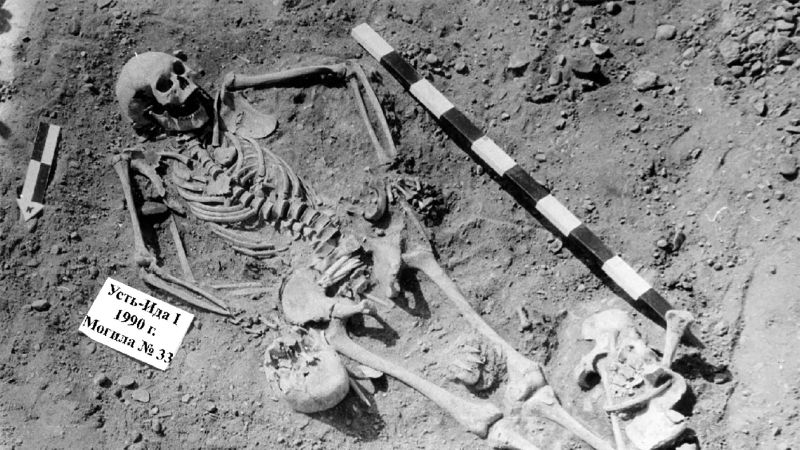
The study focused on two of the largest cemeteries near Lake Baikal, where remains of children and young adolescents were disproportionately represented. These individuals showed no signs of physical trauma or other obvious causes of death, prompting researchers to investigate further. Genetic analysis of ancient DNA from the site revealed *Yersinia pestis* in 18 out of 46 individuals, as well as a genetic marker that could have amplified the disease’s effects. This discovery highlights the potential for plague to spread rapidly even among nomadic populations.
Archaeologists have been excavating the four cemeteries in the region for decades, uncovering evidence of long-term habitation and communal burial practices. The presence of multiple generations buried together suggests that these communities were deeply interconnected, with families living in close proximity for generations. However, the unusually high number of child remains hints at a sudden, widespread crisis. The researchers combined advanced DNA sequencing, archaeological analysis, and radiocarbon dating to reconstruct the timeline of events.
“There was very clear radiocarbon evidence that this mass mortality event took place over a very, very short period of time,” Macleod explained. “So all of these deaths are occurring contemporaneously with each other.”
Revisiting the Disease’s Evolutionary Timeline
The findings also raise questions about the genetic evolution of *Yersinia pestis*. While earlier strains were believed to lack the mutations that allowed them to cause large-scale outbreaks, this study suggests that the pathogen may have been more virulent than previously assumed. The presence of the disease in hunter-gatherers implies that its transmission mechanisms were more sophisticated, possibly involving human-to-human contact or environmental factors that facilitated spread.
Eske Willerslev, a coauthor of the study and evolutionary geneticist at the University of Copenhagen and the University of Cambridge, noted that the kinship patterns among the buried individuals provide critical insight. In some cases, siblings, parents, and children were interred together, indicating that the disease likely moved through families. This pattern contrasts with the idea that early plague outbreaks were isolated incidents, as the high infection rate among the community members suggests otherwise.
Further analysis of the graves revealed that some relatives were buried separately, possibly due to dying during different waves of the disease. The study authors estimate that two outbreaks occurred a few hundred years apart, with the second one potentially leading to a significant population decline. The presence of *Yersinia pestis* in such a high proportion of the remains—39% of the investigated population—has stunned experts, as it implies the disease was not only prevalent but also lethal in a way that challenges prior assumptions.
“Previous research has only found what seem to be sporadic, relatively isolated infections of the earliest versions of *Y. pestis* with no compelling evidence of widespread transmission,” said Ian Light-Maka, a postdoctoral associate at the Max Planck Institute for Infection Biology in Berlin. “This study changes that by showing a high rate of infection in a small, mobile group. It could rewrite how we understand the pathogen’s early history.”
Ancient DNA and the Puzzle of Population Collapse
The analysis of ancient DNA not only confirmed the presence of plague but also linked it to a mysterious population decline that occurred 5,000 years ago. The cemeteries near Lake Baikal, which have been studied extensively, show that the community persisted for generations but experienced a sudden collapse during the time of the plague outbreaks. This raises new questions about the role of the disease in shaping human societies and how it might have influenced migration patterns or social structures.
Experts now argue that the origins of plague may be more complex than previously believed. The discovery of *Yersinia pestis* in hunter-gatherers suggests that the bacterium could have spread through other means, such as respiratory transmission or contaminated water sources. This challenges the notion that the disease required livestock to thrive and opens the door to alternative theories about its evolution. The study also emphasizes the importance of environmental and cultural factors in determining the impact of infectious diseases on ancient populations.
The implications of this research extend beyond historical curiosity. By understanding how plague affected mobile communities thousands of years ago, scientists can gain new perspectives on the adaptability of pathogens and the vulnerability of human populations to infectious diseases. The findings may also shed light on the resilience of ancient societies and how they coped with outbreaks that were as devastating as those seen in modern times.
As researchers continue to analyze the genetic material from these cemeteries, they hope to uncover more about the interplay between human behavior and the spread of disease. The Lake Baikal region, with its rich resources and long history of habitation, offers a unique window into the past, revealing how a deadly pathogen could have thrived even in the absence of the traditional conditions thought to foster its outbreaks. This study underscores the importance of interdisciplinary approaches in unraveling the mysteries of ancient diseases and their enduring impact on humanity.