US says Iran was always supposed to fly back to Mexico immediately after World Cup match, despite coach’s complaints

US Claims Iran’s Immediate Return to Mexico Post-World Cup Match Was Prearranged
US says Iran was always supposed – Amir Ghalenoei, the coach of Iran’s national men’s soccer team, voiced frustration over the team’s abrupt return to Tijuana, Mexico, following their World Cup match in Los Angeles. The United States government, however, insists the plan for Iran to fly back immediately after the game was always in place, according to officials. Despite the team’s complaints, the U.S. maintains that the decision was made with their agreement, underscoring the complex logistics of hosting international competitions amid ongoing geopolitical tensions.
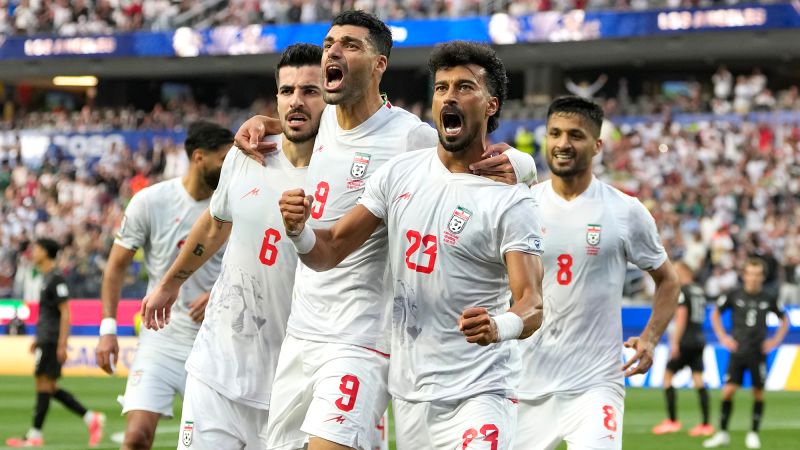
The Iranian squad, which drew 2-2 with New Zealand in their opening World Cup encounter, was reportedly ordered to leave Los Angeles before they could rest. Ghalenoei criticized the timing, stating it left his players without the chance to recover. “They didn’t even give us time to recover,” he said in a statement cited by the Associated Press. “After the game today, they said to us, ‘You have to leave immediately.’ It’s very important for us to have time for recovery, (but) we are asked to get on a plane and return to our camp in Tijuana, and we are really troubled by that.”
Logistical Challenges and Unanticipated Decisions
Andrew Giuliani, executive director of the task force overseeing the World Cup in the U.S., clarified that the team’s departure was planned for the evening of the match. “The team would depart ‘the evening of the match,’” Giuliani stated during an interview broadcast by CBS News on Monday. A spokesperson from the Department of Homeland Security confirmed that the Iranians had consented to the schedule, emphasizing coordination between the U.S. and Iranian authorities.
Yet, the abrupt nature of the departure has raised questions about the extent of Iran’s involvement in the planning process. Ghalenoei hinted that his team felt sidelined, suggesting the U.S. made decisions without consulting them. “We don’t know why they are returning us, to be honest,” he added. “I think it’s very strange. It seems like others are doing the planning for us. The decision-making for us is being made elsewhere. We were supposed to come two nights before the game, and we were supposed to stay tonight to recover and return tomorrow at lunchtime. We have no idea why.”
The Iranian delegation’s experience highlights the broader challenges of hosting the World Cup in a country at war with its own team’s nation. The months-long conflict has created a backdrop of tension, complicating the tournament’s operations. Iran’s participation in the event, despite the hostilities, marks a unique situation in international sports history—a nation competing in a World Cup while its host country is at war with it.
One of the most notable disruptions has been the relocation of Iran’s training base. Originally set in Tucson, Arizona, the team was forced to move to Tijuana, Mexico, just days before the tournament began. This last-minute shift disrupted their preparation, adding to the logistical hurdles. The decision to move was partly due to visa restrictions imposed on Iranian athletes and officials, which limited their ability to travel freely within the U.S. and forced them to adjust their training schedule.
Additionally, the Iranian delegation faced visa issues that barred some members from entering the country for the games. FIFA revoked the team’s ticket allotment, further complicating their ability to compete. Travel bans also affected Iranian fans, who were unable to attend matches in the U.S. These challenges have created a sense of isolation for the team, even as they strive to perform on the global stage.
Despite these obstacles, Iran has proceeded with its World Cup schedule as planned. The team’s three group matches are set to take place in the U.S., with the first game against New Zealand in Los Angeles, followed by a showdown with Belgium in the same city and a final fixture against Egypt in Seattle on June 26. The timeline for these matches has been altered due to the conflict, with the team’s training base and travel arrangements constantly under scrutiny.
The situation has sparked speculation about Iran’s commitment to the tournament. Earlier in the month, there were rumors that the team might withdraw from the competition in protest over the U.S.-Iran conflict. Discussions even occurred about relocating games to a neutral venue, but Iran ultimately decided to stay and compete. This choice has drawn mixed reactions, with some viewing it as a diplomatic gesture and others as a sign of forced compliance.
While the U.S. government asserts that the team’s return to Tijuana was part of the original plan, the abruptness of the decision has left many within the Iranian squad feeling caught off guard. Ghalenoei’s comments reflect a broader sense of dissatisfaction, as he described the team’s circumstances as “perhaps the most oppressed” in the World Cup. His frustration is compounded by the lack of clarity surrounding the U.S.’s actions, which he believes were not fully communicated to his players.
The Iranian team’s experience has become a symbol of the broader tensions between the two nations. As the World Cup progresses, the conflict has cast a shadow over the event, with diplomatic challenges spilling into the sporting arena. The U.S. and Iran have long been at odds, and the tournament has provided a stage for their rivalry to unfold in unexpected ways. From logistical disruptions to visa restrictions, the impact of the conflict is evident in every aspect of Iran’s participation.
CNN has sought comments from FIFA regarding the late-night departure of the Iranian team from Los Angeles. The organization, which oversees the World Cup, has not yet issued an official statement. However, the incident has reignited debates about the role of geopolitics in international sports and the extent to which host nations can influence the schedules of visiting teams. For Iran, the tournament has been a test of resilience, with each challenge adding to the pressure of competing in a hostile environment.
As the World Cup continues, the Iranian team’s journey remains a focal point for those following the intersection of sports and politics. The swift return to Tijuana, despite the coach’s complaints, underscores the delicate balance between diplomacy and competition. While the U.S. government defends its decision, the Iranian delegation’s experience raises questions about the fairness of the process and the impact of political decisions on athletic performance.
The tournament’s unique context—hosting a World Cup in a nation at war with its participants—has made it a case study in international relations. The Iranian team’s struggles, from visa issues to travel bans, highlight the broader challenges of maintaining neutrality in sports when political tensions run high. Yet, despite these difficulties, Iran has remained committed to the competition, demonstrating a determination to overcome obstacles and represent their nation on the global stage.
With the framework agreement to end the conflict expected to be signed later this week, there is hope that the tensions between the U.S. and Iran will ease. However, the immediate return of the Iranian team to Tijuana serves as a reminder that the impact of the conflict is still felt, even in the midst of a high-profile sporting event. As the World Cup progresses, the story of Team Melli’s journey will continue to reflect the challenges of competing in a politically charged environment.