Consumer sentiment rises for the first time in three months

Consumer Sentiment Rises for the First Time in Three Months
Consumer sentiment rises for the first – The University of Michigan’s recent survey of American consumers revealed a notable uptick in sentiment, marking the first increase in three months. The preliminary reading of 48.9, released on Friday, reflects a 9% rise from the previous month, offering a glimmer of hope amid a prolonged period of economic uncertainty. This shift comes after a series of events, including the escalating conflict between the United States and Israel over Iran, which sent global energy prices soaring and depressed consumer confidence to unprecedented levels.
The Impact of Energy Costs on Consumer Perception
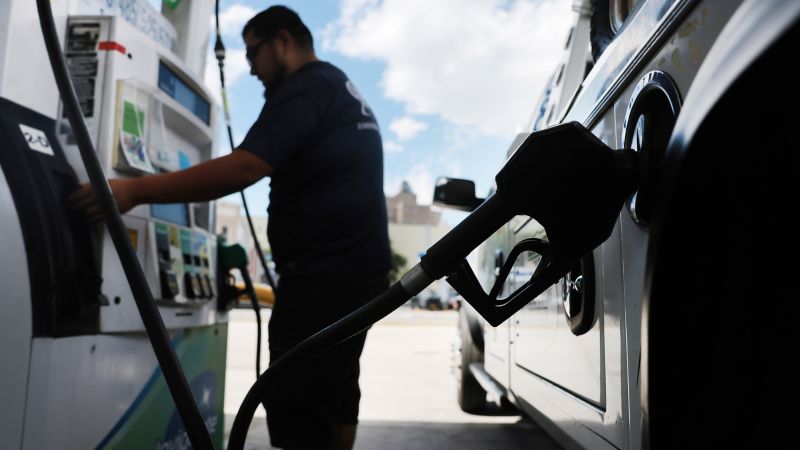
Gas prices have long been a key indicator of economic stability, and their recent decline has played a crucial role in restoring some optimism. Following the outbreak of the war, energy costs surged, creating a double dip in sentiment that pushed consumer confidence to its lowest point in years. However, as fuel prices began to stabilize, the psychological effect on households started to ease. Joanne Hsu, the director of the surveys, highlighted this trend in a statement: “This month, consumer sentiment ticked up… with consumers experiencing some relief due to the early-month easing in gasoline prices.”
Lower-income individuals, who allocate a larger portion of their budgets to energy expenses, showed the most significant improvement in sentiment. This aligns with the broader observation that gasoline prices are a primary factor shaping people’s economic outlook. The recent relief in fuel costs has allowed households to regain a sense of normalcy, even as other economic pressures persist.
A History of Economic Shocks and Resilience
Consumer confidence has endured a years-long downturn, driven by a cascade of crises. Since 2020, Americans have navigated the pandemic, which disrupted global supply chains and ended the longest economic expansion on record. This was followed by a spike in inflation, reaching 9.1% in June 2022—the highest level since the 1980s—before the Federal Reserve’s rate hikes and a congressional standoff over the debt ceiling further strained sentiment in 2023.
The past year has seen a tentative recovery, but this progress was reversed in 2025 when President Donald Trump’s sweeping tariffs introduced new volatility. These tariffs, dubbed “Liberation Day” by critics, amplified fears of prolonged economic instability. The ongoing war with Iran has since added another layer of concern, with energy price shocks continuing to weigh heavily on household budgets.
Despite these challenges, there are signs that consumers are adapting to the new economic landscape. The latest quarterly survey from TransUnion indicates that pessimism has declined slightly, though optimism remains relatively stable compared to a year ago. Charlie Wise, head of global research and consulting at TransUnion, noted in an interview with CNN: “We see a lot of resilience in consumers that maybe have gotten a little bit more accustomed to the volatile times that we live in, and a lot of price uncertainty.”
The Path to Sustained Recovery
For consumer sentiment to move decisively above historical lows, economists suggest a period of sustained economic stability is necessary. This would require not only stable energy prices but also broader inflation control. Currently, inflation stands at its highest level in three years, with 50% of Americans citing it as their top financial worry—up from 47% in the prior quarter. Kevin Warsh, a prominent economist, emphasized that the situation is more nuanced than it appears: “A cynic might say they’re getting numb to it, but I think more realistically they’re getting used to the realities that price stability is going to be a little out of normal balance for a continuing amount of time.”
Warsh pointed out that the 2022 inflation spike was a turning point, as it was the most severe in decades. At that time, many consumers were unprepared for the scale of price increases, which led to a sharp drop in confidence. However, as the months passed, people began to normalize the uncertainty, with some adjusting their expectations. “So now, when you look at gas prices and energy prices that have increased, I think that consumers may be more likely to say at this point, ‘you know, I lived through this fairly recently and managed to come out OK on the other side; I’ll probably be OK this time too,’” Warsh explained.
The current state of consumer sentiment underscores a complex interplay between economic events and public perception. While the recent rise is a positive development, it remains fragile. If gas prices continue to decline significantly, it could signal a broader shift in economic conditions. However, the success of this recovery hinges on the ability of the economy to maintain stability, with the Strait of Hormuz—a critical chokepoint for global oil trade—playing a pivotal role in shaping energy markets.
Broader Implications for the Economy
The persistence of inflation and its psychological impact on households highlights the need for long-term solutions. The data from the University of Michigan and TransUnion suggest that while immediate relief is evident, deeper structural issues remain. The combination of wartime price spikes, pandemic-related disruptions, and policy decisions has created a unique environment of economic stress. Yet, the resilience of consumers, as noted by analysts, indicates that the economy may be developing a new equilibrium.
As the recovery continues, the focus will remain on how effectively inflation can be managed and how quickly energy markets stabilize. The recent survey results provide a temporary reprieve, but the long-term trajectory of consumer sentiment will depend on the sustained performance of key indicators. For now, the slight improvement offers a reminder that economic resilience is not just about data—it’s about how individuals adapt to changing conditions and maintain their sense of security in an unpredictable world.
The ongoing challenges also highlight the importance of policy coherence. The Federal Reserve’s approach to interest rates, the government’s ability to navigate international conflicts, and the resolution of domestic political disputes will all influence the pace of recovery. While the immediate future seems to show some optimism, the underlying factors that have driven years of economic stress remain in place, ensuring that the path to full recovery is neither swift nor certain.
With inflation still the dominant concern, the question for policymakers is how to balance short-term stability with long-term growth. The recent survey data suggests that consumers are beginning to adjust, but the broader economic landscape remains a test of resilience. The next few months will be critical in determining whether this slight rebound is the start of a sustained trend or a temporary fluctuation in an otherwise turbulent market.