Lawsuit aims to stop UFC fight at the White House

Lawsuit Aims to Stop UFC Fight at the White House
Lawsuit aims to stop UFC fight – Two residents of Virginia have initiated a legal challenge to halt the upcoming UFC fight hosted by President Donald Trump at the White House, which is scheduled as part of commemorations for the nation’s 250th birthday. The lawsuit, filed on Saturday by the Public Integrity Project, represents a Vietnam War veteran and a civic activist, contends that the temporary structure erected on the White House grounds lacks proper authorization. It argues that the event should not proceed without congressional approval or an environmental review, emphasizing the public’s right to oversight of government spaces.
Legal Challenges and Congressional Authority
The lawsuit questions the legitimacy of the event, stating that the White House lawn is being used to host a private, profit-driven sports spectacle. The plaintiffs claim this repurposing of the site undermines its traditional role as a symbol of national significance. They highlight that the UFC’s event, which will take place on June 14, is not a genuine celebration of American history but a commercial venture designed to elevate the UFC brand and Donald Trump’s personal image. This assertion directly counters the administration’s argument that the event falls under Congress’s authority to sponsor activities marking the 250th anniversary of American Independence.
The lawsuit also points to the financial incentives for the UFC and Trump. According to the complaint, the event will provide substantial branding opportunities, which could generate revenue for UFC President Dana White and Trump himself. A report from earlier this year revealed that Trump had invested $50,000 in stock of the UFC’s parent company, further fueling concerns about potential conflicts of interest. This financial stake, combined with the high-profile nature of the event, has drawn criticism from those who view it as a self-serving use of public resources.
Event Context and Historical Significance
The June 14 event, dubbed “The Greatest Show on Earth” by Trump, will occur on the South Lawn of the White House, a site historically reserved for presidential events and public ceremonies. The weigh-in for the fighters is set for the preceding day, June 13, at the Lincoln Memorial, a location imbued with deep historical and cultural importance. The plaintiffs argue that the Lincoln Memorial, which honors veterans and citizens who served the country, is being transformed into a backdrop for a for-profit fight, diminishing its sacred status.
“The Lincoln Memorial is a hallowed place, dedicated to those who have worn this nation’s uniform,” said Paul Romano, a retired Air Force sergeant and Vietnam veteran, in a news release. “To use it as a setting for a private, commercial combat event so the President and his allies can profit is a profound violation of its purpose.” Romano’s words underscore the emotional and symbolic weight of the lawsuit, framing the event as a misuse of national landmarks for political and financial gain.
Corporate Interests and Public Perception
The UFC, through its VIP package sales, is projected to generate millions of dollars in revenue. Packages for the event range from $1 million to $1.5 million, according to the lawsuit, which accuses the organization of leveraging the White House’s prestige to boost its brand. Brendan Ballou, the founder of the Public Integrity Project, called the event a “corrupt scheme to enrich the President and his associates.” He warned that allowing the fight to proceed would set a precedent, transforming national monuments into mere tools for corporate promotion.
Ballou’s critique extends to the broader implications of the event. “If this fight is permitted, it will mark the start of a trend where our national landmarks become branding assets for the wealthy and well-connected,” he stated. The lawsuit’s arguments align with growing public skepticism about the use of government spaces for private interests, especially during a time of national celebration.
Construction and Symbolism
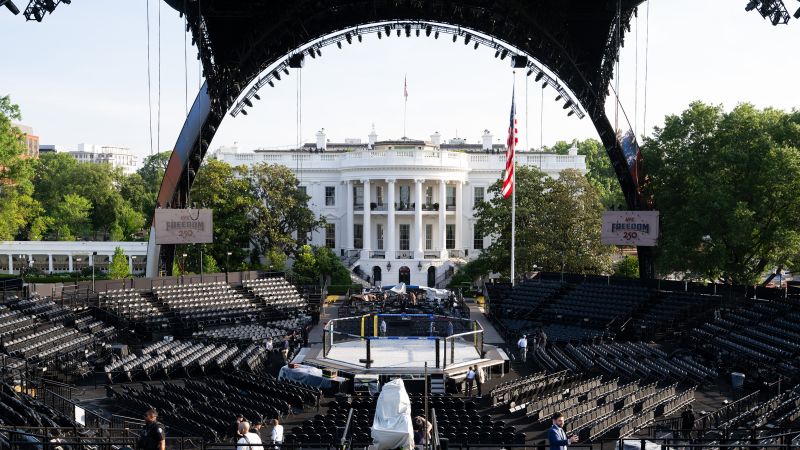
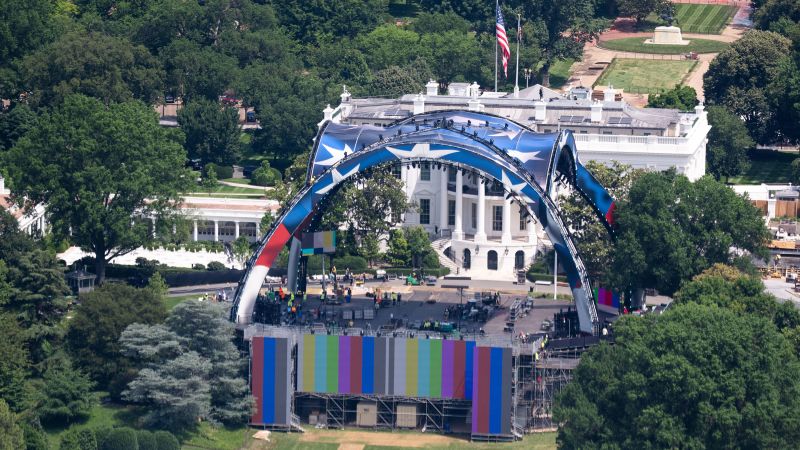
As the June 14 event approaches, construction crews are assembling a fight cage on the White House South Lawn. The structure, referred to by the UFC as “The Claw,” features a massive arched lighting grid that casts a dramatic spotlight on the fight. While the administration frames the event as a celebration of American heritage, critics argue that it’s more of a spectacle for entertainment and profit. Trump has repeatedly emphasized the event’s grandeur, positioning it as a unique opportunity to showcase the nation’s spirit through the lens of combat sports.
The choice of location also raises questions about the balance between public use and private benefit. The Lincoln Memorial weigh-in, occurring the day before, further amplifies this debate. While the memorial is a popular venue for public gatherings, the use of its iconic setting for a UFC event has sparked discussions about whether such commercialization is appropriate. The combination of the White House and Lincoln Memorial as venues for the event underscores its scale and the symbolic power it seeks to harness.
Public Reaction and Political Tensions
The lawsuit has ignited a conversation about the role of government in endorsing private enterprises. Supporters of the event praise its ability to bring national attention to the UFC and Trump’s legacy, while opponents view it as a misuse of public trust. The 250th anniversary of American Independence is a milestone that invites reflection on the country’s founding principles, but the lawsuit suggests that the administration is prioritizing celebrity and commerce over civic engagement.
CNN has sought comments from both the White House and the UFC to clarify their positions. The White House maintains that the event is authorized under existing congressional guidelines for celebratory activities, while the UFC emphasizes its role as a private organization. However, the lawsuit’s emphasis on the financial motivations behind the event has put pressure on the administration to justify its decision. As the June 14 fight nears, the legal battle over its legitimacy continues to shape public discourse around the use of national spaces for private gain.
Broader Implications for National Monuments
The case has broader implications for the future of national monuments. If the UFC fight is allowed to proceed, it could signal a shift toward using these spaces for commercial purposes, potentially eroding their cultural and historical value. The plaintiffs argue that such actions risk prioritizing the interests of a few over the collective heritage of the nation. Their challenge highlights the tension between celebrating national milestones and the economic opportunities they present, drawing attention to the need for transparency in the allocation of public resources.
With the event drawing widespread media coverage and public interest, the legal dispute has become a focal point for debates about the intersection of politics, entertainment, and national symbolism. As the White House prepares for the spectacle, the outcome of the lawsuit may influence how future events are perceived and approved, ensuring that the use of iconic locations remains aligned with their intended purposes.
This story has been updated with additional information. CNN’s Devan Cole contributed to this report.