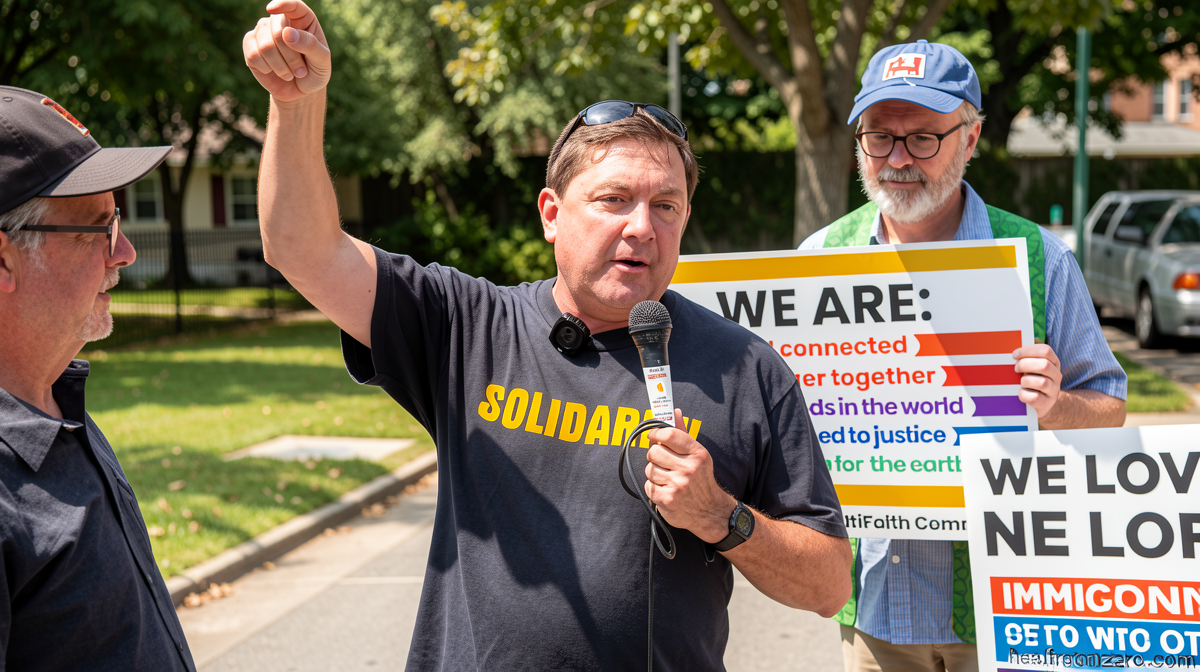
A Maine gubernatorial candidate is running as a political outsider. His last name is Bush


A Maine Gubernatorial Race Challenges the Legacy of the Bush Dynasty
A Maine gubernatorial candidate is running – For over 40 years, the Bush name has been synonymous with political influence across the U.S. A long line of family members held prominent positions, from the White House to state capitols, until 2023 when George P. Bush, former Texas Land Commissioner, stepped down. Yet, the legacy of the Bush family is far from extinguished. Jonathan Bush, a 57-year-old candidate for Maine governor, is seeking to revive it, but with a distinct twist. Unlike his predecessors, he aims to position himself as a disruptor rather than a continuation of the dynasty.
The Bush Family’s Political Footprint
Jonathan Bush’s campaign is rooted in a family history that spans generations. His grandfather, George H.W. Bush, served as the 41st president of the United States, while his uncle, George W. Bush, was the 43rd. These towering figures have cast long shadows over the Bush name, often overshadowing the ambitions of their relatives. However, Jonathan Bush’s bid for governor marks a departure from the traditional playbook, as he acknowledges the challenges of being a Bush in 2026.
“I’m Jonathan Bush,” he says in an ad. “Now hold on, I know what you’re thinking – not another Bush. I get it. But hear me out: I might be different than what you’re expecting. First, I’m not low energy anything.”
His message is a direct rebuttal to the perception that the Bush name equates to political establishment. While his cousin, Jeb Bush, struggled in the 2016 presidential race under the weight of Trump’s anti-establishment rhetoric, Jonathan Bush is determined to carve his own path. His campaign emphasizes a break from the past, leveraging his private-sector background to appeal to voters weary of traditional politics.
A Legacy of Influence in Maine
The Bush family’s ties to Maine stretch back generations, with deep roots in the Pine Tree State. Raised in Manhattan, Jonathan Bush relocated to Maine as an adult, choosing to live away from the family’s Texas stronghold. This decision underscores his effort to distance himself from the dynasty, even as he taps into a legacy of summer homes, philanthropy, and community engagement.
Take Kennebunkport, the coastal town that hosts the family’s compound. Its streets are lined with portraits of the Bushes, a testament to their enduring presence. The promontory where the compound stands is known as Walker’s Point, a name that carries historical weight. Even the state’s largest children’s hospital, located in Portland, bears the name of Barbara Bush, the former first lady. These symbols reflect the Bushes’ long-standing influence, but they also highlight the scrutiny Jonathan faces as he enters the fray.
The Struggle for Relevance in a Transformed GOP
With the Republican Party reshaped by Donald Trump’s ascension, Jonathan Bush’s candidacy is a test of whether the Bush name still holds sway. Trump’s “Make America Great Again” movement has drawn many voters away from the traditional establishment, creating a rift with figures like his uncle George W. Bush. This shift has placed the Bush family in a precarious position, as their reputation as stalwarts of Republican politics is now questioned.
Jonathan’s campaign is part of a broader trend in 2026, where several races are probing the public’s view of political dynasties. Maine’s governor’s race is just one of these, with voters increasingly wary of families that have dominated national and state politics for decades. In an interview with CNN, Bush admitted the family name was initially a double-edged sword. “It was an anchor,” he said, “but I’m not running as the keeper of the legacy. I’m running as someone who wants to shake things up.”
Shaking Up the System
Bush’s platform centers on disrupting entrenched systems in healthcare, education, and governance. He positions himself as a “political outsider,” a label that contrasts sharply with the family’s historical role as insiders. His co-founded healthcare technology firm, Athenahealth, once employed over 900 people in Belfast, a midcoast town where he launched his campaign. This local connection is a key component of his strategy, emphasizing his roots in Maine rather than his ties to Texas or Washington, D.C.
The candidate also highlights his family’s contributions to Maine. His wife’s lineage includes generations who summered in the state and engaged in philanthropy, adding a layer of authenticity to his bid. Yet, Bush acknowledges that the “system has betrayed them,” a sentiment that resonates with voters disillusioned by political gridlock. “Mainers don’t want an insider right now,” he explained. “They’ve got an allergy to someone who’s part of the system. When they hear the name Bush, they imagine someone who’s all wired up.”
A Family Divided by Politics
The Bush family’s relationship with Trump has become a point of contention. While George W. Bush initially supported Trump’s 2016 campaign, the two later clashed. Trump’s early political attacks targeted George W. Bush’s presidency, particularly his handling of the Iraq War. These criticisms, combined with Jeb Bush’s struggles in the 2016 primary, have left the family fractured. Even Jonathan’s younger brother, Billy Bush, played a central role in the “Access Hollywood” scandal, which nearly derailed Trump’s first presidential bid.
By 2022, the Bushes’ influence had waned further. George P. Bush’s campaign for Texas attorney general, though unsuccessful, underscored the party’s preference for Trump’s style of politics. Jonathan’s cousin, George P. Bush, had sought Trump’s endorsement but was sidelined, symbolizing the broader shift in the GOP. This dynamic has placed Jonathan in a tough spot, as he navigates a party that now prioritizes outsider appeal over traditional pedigree.
The Road Ahead
Despite these challenges, Bush is gaining traction in the final stretch of the race. A May survey by the University of New Hampshire placed him in second place, though still trailing frontrunner Bobby Charles. His growing momentum is fueled by aggressive advertising and a message that aligns with voters’ frustrations with the status quo. However, the question remains: can the Bush name be rebranded as a symbol of change rather than a relic of the past?
Political science professor Mark Brewer from the University of Maine noted that Bush’s situation is complex. “He’s not just running as a Bush,” Brewer observed. “He’s running against the perception that the name represents the establishment. That’s a tough spot to be in, especially with the GOP evolving under Trump’s leadership.”
As the primary approaches, Jonathan Bush’s campaign will rely on his ability to distinguish himself from his family’s history. Whether he succeeds in becoming a symbol of renewal or another chapter in the Bush dynasty’s story remains uncertain. But for now, the Maine race is a proving ground for a name that has long been associated with power, and a candidate determined to redefine it.
Editor’s Note
Join John King at CNN’s Magic Wall as he breaks down primary election results and answers your questions live on Tuesday night, starting at 8pm ET/5pm PT. This event offers a deeper look into the evolving political landscape and the candidates shaping it, including Jonathan Bush’s fight to reclaim relevance in a transformed party.