
Bumblebees show advanced problem-solving skills in new experiment
Bumblebees Show Advanced Problem-Solving Skills in New Experiment
Bumblebees show advanced problem solving skills – More than a century ago, a German psychologist named Wolfgang Köhler conducted a groundbreaking study that reshaped scientific views on animal cognition and spontaneous problem-solving. His work with chimpanzees introduced the concept of insight, demonstrating that some animals could grasp abstract solutions without relying on trial and error. This experiment placed a banana out of reach and scattered boxes, poles, and sticks around the enclosure, allowing the apes to interact with their environment. After failed attempts to grab the fruit directly, the chimps began stacking objects to create a platform, ultimately succeeding in retrieving the reward. This behavior marked a pivotal moment in understanding how animals use reasoning to solve challenges.
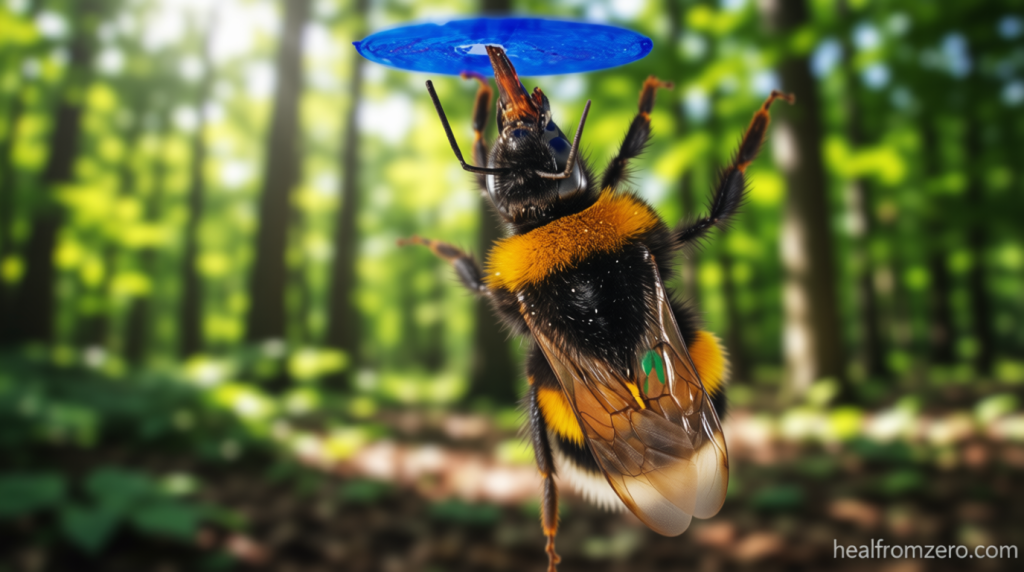
Fast forward to the present, and a recent study published in *Science* has revealed that bumblebees might share this cognitive ability with great apes and elephants. The research, led by Akshaye Bhambore, a doctoral researcher at the University of Oulu in Finland, challenges assumptions about the size of an animal’s brain and its capacity for complex thought. The experiment involved bumblebees navigating a task that required them to manipulate objects in a novel way. In one scenario, the insects had to roll a plastic foam ball under an artificial blue flower, climb over it, and use it to access a sugary reward. The key detail was that the bees accomplished this without prior training or repeated attempts, suggesting they applied an abstract understanding of the situation.
“We showed for the first time that bumblebees can solve a completely novel object-manipulation task, spontaneously and without being trained to do so, or without any trial and error,” said Bhambore. This discovery underscores the potential for small-brained creatures to exhibit sophisticated problem-solving behaviors.
Earlier studies had already indicated that bees could use socially learned behaviors and logical reasoning. For example, they have been observed pulling strings to obtain food or stacking sticks to create tools. However, this latest experiment was designed to test whether the insects could solve a problem without direct experience with the solution. The researchers exposed the bees to the separate components of the task—such as the foam ball and the blue flower—but never taught them how to combine them. The results showed that a majority of the bees (75%) successfully rolled the ball to the correct pit and climbed onto it to reach the flower, highlighting their ability to adapt and reason in real-time.
The study’s setup was meticulous. Scientists constructed a circular arena measuring 10 centimeters in diameter and 3.2 centimeters in height, restricting the bees’ movement to walking rather than flying. This limitation forced the insects to focus on the task at hand. In the first phase, the team placed a blue artificial flower with a sugary solution in the center and introduced a foam ball nearby to acclimate the bees to the object. In the second phase, the ball was positioned to cover the flower, and the bees demonstrated the ability to push it aside to uncover the reward. The third scenario, which tested insight, involved moving the flower to the ceiling above one of four pits. The bees had to recognize the relationship between the ball and the flower, rolling the object to the right location and climbing atop it to access the treat.
James Nieh, a professor in the Department of Ecology, Behavior, and Evolution at the University of California San Diego, noted that this finding is significant. “A tiny insect brain can support surprisingly flexible behavior,” he explained. Nieh emphasized that while moving objects to create platforms isn’t a typical behavior for bumblebees, the experiment proved they could use spatial memory and object manipulation to achieve a goal. This ability to abstractly plan and adjust their actions suggests a level of cognitive processing previously thought to be exclusive to larger-brained animals.
Natalie Hempel de Ibarra, an associate professor of neuroethology at the University of Exeter in England, highlighted the broader implications of the study. “This exciting new research shows that insects can learn and change their behavior in ways scientists are only just beginning to understand,” she stated in an email. Hempel de Ibarra, who was not part of the research team, added that the findings could influence how bees and other pollinators interact with their environments. As landscapes evolve and challenges arise, such adaptability might help these creatures survive in changing conditions.
The study’s methodology also raised questions about the role of prior exposure in problem-solving. Two additional groups of bees were tested: one familiar only with the flower and another unfamiliar with both elements. The latter group struggled to solve the puzzle, indicating that previous experience with the objects was crucial. This suggests that while bumblebees can demonstrate insight, their ability depends on exposure to the components of the task. The research team, including coauthor Olli Loukola, a behavioral ecologist, sought to determine how much knowledge the bees needed to tackle the challenge. Loukola explained, “We wanted to know how much previous information they needed in order to solve the task.”
These findings contribute to an ongoing scientific discussion about the scope of animal intelligence. While insight has been documented in a few species, the question remains whether invertebrates like octopuses and certain spiders should be included in this category. The study adds to the evidence that even small-brained animals can engage in complex behaviors, potentially redefining how researchers approach interspecies communication. By observing how bees integrate objects and navigate spatial relationships, scientists may uncover new ways to interpret the cognitive processes of animals across the animal kingdom.
Ultimately, the experiment challenges the notion that problem-solving requires a large brain or extensive experience. It reveals that bumblebees can achieve abstract solutions, suggesting that intelligence is not solely tied to brain size. This discovery opens the door to further research on insect cognition, offering insights into their ability to adapt and innovate in their ecosystems. As the study’s authors continue to explore these behaviors, the implications for understanding animal intelligence—and perhaps even human-like thinking in other species—could be profound.