One way to improve your sleep? Imitate the habits of hunter-gatherers

One way to improve your sleep? Imitate the habits of hunter-gatherers
The Science of Sleep and Human Evolution
One way to improve your sleep – Modern sleep recommendations often emphasize the importance of eight hours of uninterrupted rest in a quiet, dark environment. Yet, according to a new book titled *The Sleepless Ape*, this ideal may not align with how humans have naturally slept throughout most of our evolutionary journey. Published on May 19, 2026, the book challenges conventional wisdom by suggesting that our ancestors’ sleep patterns were more adaptable and less rigid than those prescribed today. Its author, David Samson, an anthropologist and associate professor at the University of Toronto, argues that understanding these ancient rhythms could unlock solutions for contemporary sleep struggles.
Samson’s research reveals that early humans, unlike their more arboreal primate relatives, developed sleep habits that were both shorter and more flexible. This shift allowed for greater time dedicated to activities like toolmaking, social bonding, and exploration, which played critical roles in our species’ survival and expansion. The book posits that humans are not only the shortest-sleeping primates but also the ones with the highest proportion of REM sleep, a phenomenon that defies traditional evolutionary expectations. “How is it then that we are the shortest sleeping primate on the planet?” Samson questions in an interview with CNN, highlighting the paradox of our sleep patterns.
“Sleep governs so much of our mental and physical performance throughout the day,” Samson explained. “How is it then that we are the shortest sleeping primate on the planet?”
Reconstructing Ancient Sleep Patterns
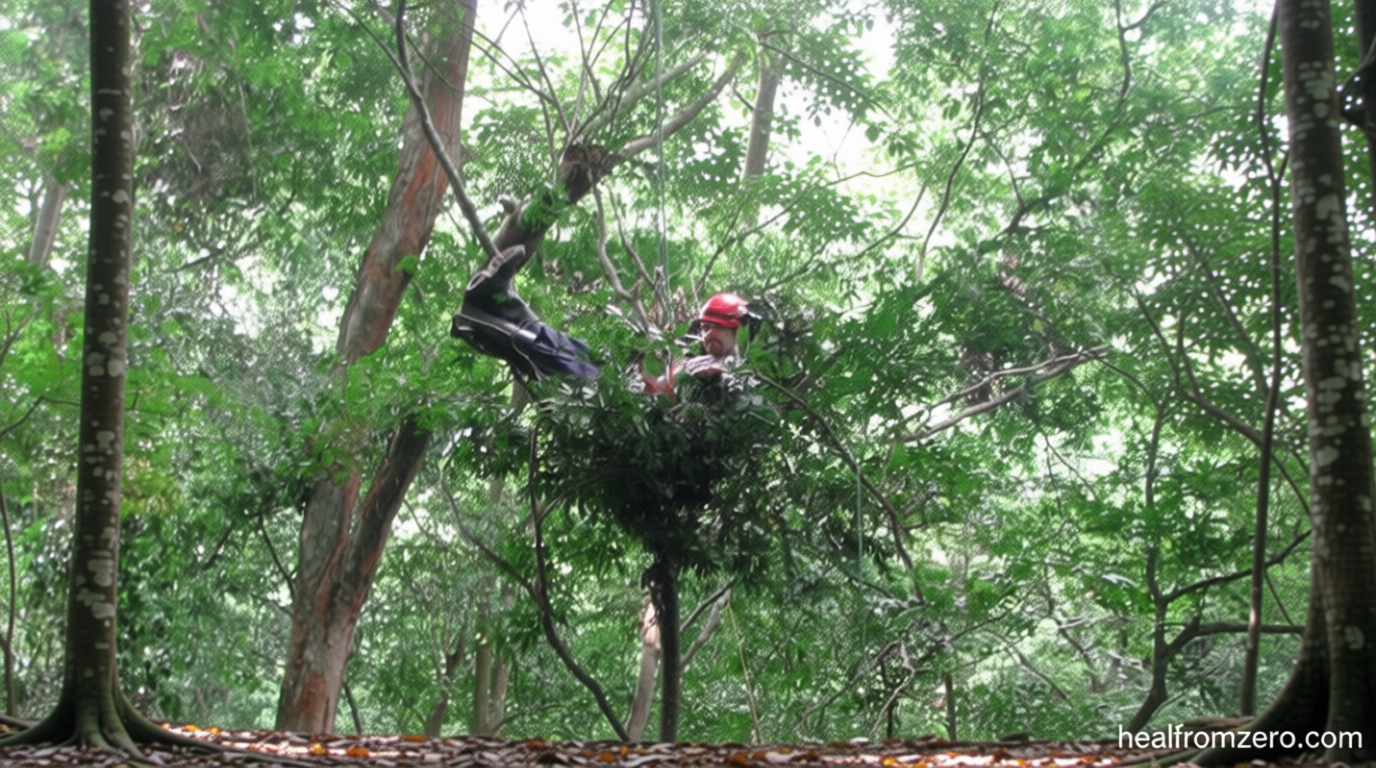
To uncover the origins of human sleep, Samson immersed himself in the study of chimpanzee nests and the lifestyles of remote hunter-gatherer communities. By climbing trees to observe chimp beds, he gained insights into how primates adapted to their environments for safety and comfort. These nests, he notes, were designed to repel both large predators and small insects, offering a dual layer of protection. Such observations, combined with fieldwork among indigenous tribes, helped him trace the evolution of sleep from tree-dwelling to ground-based practices.
The book highlights a pivotal transformation in human sleep behavior: the move from arboreal shelters to safer, communal sleeping arrangements. This change, Samson suggests, was driven by innovations like controlled fire use and social structures that allowed for shared vigilance. While early humans slept in groups, their sleep cycles were not strictly synchronized. Instead, they relied on a distributed system of alertness, where individuals took turns staying awake to monitor surroundings. This adaptability, he argues, was key to thriving in new environments and surviving threats like predators or harsh weather.
The Shift to Ground-Based Sleep
Samson’s findings suggest that the transition from sleeping in trees to sleeping on the ground marked a turning point in human evolution. For species like Homo erectus, the ability to create shelter and harness fire enabled them to spend more time in safer, social settings. This shift freed up mental and physical energy, allowing for greater focus on tasks that required innovation and problem-solving. “What we created was a completely new innovative space for sleep,” he stated, using the metaphor of a “shell” to describe the protective environment of a hunter-gatherer camp.
Contrary to modern assumptions about sleep, Samson emphasizes that ancestral communities thrived in dynamic, stimulating environments. These spaces were not isolated; they were bustling with activity, yet they provided a sense of security that encouraged deeper, more restorative rest. “It’s this little bubble, this shell: ‘I can finally let my guard down,’” he noted, underscoring how the structure of human social groups influenced sleep patterns. The book posits that this balance between safety and stimulation was essential for the cognitive and emotional development of early humans.
The Role of REM Sleep in Evolutionary Success
One of the book’s central arguments is that humans’ unique sleep habits, particularly their high REM sleep rates, were crucial to our evolutionary success. While other primates sleep for longer periods, humans spend a greater proportion of their sleep time in REM, a stage linked to vivid dreaming, creativity, and memory consolidation. Samson explains that this adaptation allowed for the kind of cognitive flexibility needed to innovate and adapt to changing conditions. “REM is the sleep stage famously associated with dreaming,” he said. “It’s associated with creativity and innovation, all the things that would have been prerequisite for us becoming a successful species.”
The shift to ground-based sleep also enabled early humans to develop more complex social behaviors. By sleeping in groups, they could share body heat, foster cooperation, and create a system of watchfulness that reduced the risk of predation. This collective approach to sleep, Samson argues, not only improved survival rates but also laid the groundwork for cultural and technological advancements. “These unique sleep habits fostered survival, innovation, and shaped our species’ behavior in pivotal ways,” he added, emphasizing the interconnectedness of sleep and human development.
Lessons for Modern Sleep Practices
Samson’s research has significant implications for today’s sleep-deprived population. He suggests that modern humans can benefit from adopting some of the strategies used by our ancestors to manage sleep in the wild. For instance, the idea of varying sleep schedules to accommodate different roles within a group—like having some individuals remain awake while others rest—could be applied to contemporary work-life balances. “Many of your readers may think: ‘For me to get the perfect amount of sleep, I need isolation from people, I need isolation from stimulus,’” Samson pointed out. “But almost all the small-scale environments I’ve studied are highly dynamic, yet they still support deep, meaningful rest.”
By embracing the flexibility of ancestral sleep patterns, modern individuals might reduce their reliance on artificial sleep environments and reclaim the natural rhythms that once sustained our species. Samson’s book also explores how the controlled use of fire and the development of shelters allowed humans to prioritize activities that required mental acuity, such as planning, communication, and strategic thinking. These innovations, he argues, transformed sleep into a more efficient process, aligning it with the demands of a rapidly evolving world.
Samson’s journey to uncover these insights was both rigorous and unconventional. For years, he meticulously analyzed primate sleep data, eventually concluding that human sleep patterns were an evolutionary outlier. “It took about 15 years to get the prerequisite number of primate sleep studies to run these stats,” he recalled. “The models predicted humans should sleep 10.5 hours, but our average is closer to seven. That means we’re an evolutionary oddity.”
Understanding this divergence, Samson believes, is the first step toward improving sleep in the 21st century. His work challenges the notion that longer sleep equals better health, instead advocating for a return to the adaptive, varied sleep cycles that once defined human life. “How our ancestors used to sleep can help the sleep-deprived today,” he concluded, offering a compelling case for rethinking sleep in the context of human evolution.
This interview has been edited for clarity and length. By examining the past, Samson provides a roadmap for the future, showing how ancient practices can inform modern solutions. As the world continues to prioritize productivity over rest, his research reminds us that sleep is not just a necessity but a dynamic process shaped by the same forces that drove human progress.