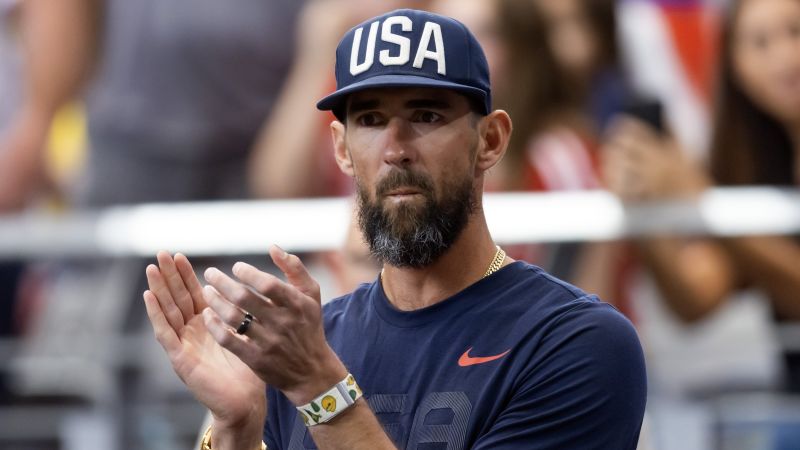
Winning gold is ‘way less important than having a chance to save a life’: Michael Phelps on finding purpose beyond the pool

Daftar Isi
From Olympic Glory to Mental Health Advocacy
Winning gold is way less important – More than a decade has elapsed since Michael Phelps captivated global audiences during the Rio 2016 Games, where he clinched five gold medals and one silver, cementing his status as the most decorated Olympian in history. At the time, his retirement seemed like a definitive end to a career defined by athletic triumph. Yet, as the 40-year-old swimmer reflected on his journey, it became clear that his legacy would extend far beyond the pool. Today, Phelps is a vocal champion for mental health and water safety, reshaping the narrative around athletic excellence and personal well-being.
A New Mission Beyond the Pool
Phelps’ transition from elite athlete to advocate began with a profound realization: the skills honed in the water could be applied to real-world challenges. “Water safety but also mental health—those two things are who I am,” he shared during a recent interview with CNN Sports’ Coy Wire. This dual focus is central to the Michael Phelps Foundation, an organization that has grown significantly since its inception in 2008. Initially established to promote healthy lifestyles and water safety—areas Phelps himself grappled with during his early years as a swimmer—the foundation has since broadened its scope to address mental wellness in children and young adults.
“Being able to implement mental health into my foundation along with swimming, it kind of gives me that purpose again I had when I was competing,” said Phelps, who has won 23 Olympic gold medals. His journey from the Olympic podium to the forefront of mental health advocacy is a testament to the evolving nature of his identity.
The Defining Moment That Shifted Focus
Phelps’ transformation was catalyzed by a pivotal experience that left him questioning his own life. “I honestly think it’s really when I got to that point of not wanting to be alive,” he explained. This moment of vulnerability, he noted, was a turning point that pushed him to seek support and share his struggles. “Once I got to that point, I was like, ‘OK, something is wrong. I need to ask for help,’” he said, reflecting on the emotional weight that led to his decision to open up.
Phelps emphasized that this breakthrough was not just personal but transformative for others. “That was the first time that I ever asked for help because I just didn’t know what to do,” he recounted. “I’m very thankful that I got the help that I needed because I wanted change. And then, at that point, it was about just being able to find that ground to stand on and be OK sharing the stories that I talk about.”
Expanding the Foundation’s Mission
While water safety remains a core pillar of the Michael Phelps Foundation, its mission has evolved to prioritize mental health education. This shift aligns with Phelps’ belief that the challenges he faced as an athlete—perfectionism, pressure, and the risk of burnout—resonate deeply with young people. “For me, winning a gold medal is way less important than having a chance to save a life,” he asserted, underscoring the importance of his advocacy in addressing the silent struggles of others.
The foundation’s expansion in 2020 marked a deliberate effort to integrate mental wellness into its programming. By collaborating with experts in psychology and education, Phelps aims to create a supportive environment for children to develop resilience and emotional strength. His work with the foundation is not merely about sharing his story but about equipping others with tools to navigate their own mental health journeys.
Advocacy in Action
Phelps’ commitment to mental health advocacy has taken many forms beyond the foundation. In 2023, he partnered with Talkspace, an online therapy platform, to launch the “Start from the Top” campaign. This initiative emphasizes the five pillars of sustainable mental wellness, including self-awareness, community support, and proactive care. Through this collaboration, Phelps has brought his platform to a broader audience, encouraging individuals to prioritize their psychological well-being as much as their physical health.
His efforts have also included keynote speeches and public appearances, where he openly discusses his battles with depression and the lessons learned from his athletic career. “When I was in the pool, I was driven by a singular goal: to win,” he said. “But now, my focus is on helping others find their own path to recovery and resilience.” These talks have sparked conversations about the importance of vulnerability in sports, challenging the notion that admitting mental health struggles is a sign of weakness.
Water Safety as a Foundation for Change
Even as his advocacy has expanded, Phelps has not forgotten the roots of his foundation. Water safety, once a personal fear from his early days in swimming, has become a symbol of his broader mission. The Michael Phelps Foundation’s initial efforts centered on teaching children how to swim, addressing the risk of drowning and promoting aquatic education. For Phelps, this work was deeply personal. “I was scared of the water when I was seven,” he revealed. “But that fear became a driving force to ensure others could overcome it.”
His experiences in the pool have instilled a sense of purpose that continues to guide his efforts today. “The discipline, focus, and determination I learned as an athlete are now applied to mental health and water safety,” he said. By bridging the gap between physical and mental well-being, Phelps is redefining what it means to be a champion in the modern era.
Legacy Beyond the Podium
Retirement for many athletes signifies the conclusion of a long and grueling career, often accompanied by reflection and celebration. For Phelps, however, it was the beginning of a new race. “When I stepped out of the pool professionally in 2016, I knew my work wasn’t over,” he stated. His transition has allowed him to connect with younger generations, offering insights into the pressures of elite sports and the importance of emotional support. “I’ve seen how athletes can struggle in silence, and I want to break that cycle,” he added.
Phelps’ story is a powerful reminder that success in one area of life can lead to fulfillment in another. His journey from Olympic glory to mental health advocacy highlights the potential for athletes to influence society beyond their sporting achievements. “The impact of saving a life through my work is far greater than any medal I’ve ever earned,” he concluded. This perspective reflects a broader philosophy that challenges the traditional view of athletic careers as finite accomplishments, instead framing them as catalysts for ongoing personal and communal growth.
Through his foundation, public speaking, and partnerships, Phelps continues to champion causes that resonate with both athletes and the general public. His voice, once reserved for the pool, now echoes in the halls of mental health organizations and community programs. As he moves forward, the message remains clear: the pursuit of excellence is not just about victory but about creating a legacy that empowers others to thrive. In this way, Phelps has transformed his own challenges into a movement that inspires change, proving that even after the final race, the journey is far from over.