Kenya prepared for Ebola. It still slipped through — a warning of wider cross-border spread

Daftar Isi
Kenya’s Ebola Case Highlights Cross-Border Health Risks
Healfromzero.com – Kenya prepared for Ebola It still faced an imported case that exposed the limits of border screening. An infected traveler reached Nairobi after traveling from eastern Democratic Republic of Congo through Uganda, despite extensive preparations, traveler checks and health-worker training.
The man arrived at Nairobi Hospital on October 3 after a relative and friend drove him from Jomo Kenyatta International Airport. He had fever, chills, severe weakness, muscle pain and bleeding beneath the skin. Hospital staff isolated him, and laboratory tests confirmed infection with Bundibugyo virus, which can cause Ebola disease.
He died days later. Kenyan health authorities began tracing and monitoring people who may have had contact with him during his journey and after he arrived in Nairobi.
A route through the DRC, Uganda and Kenya
The patient had lived in the DRC for seven years. On October 2, he traveled by road through Beni in North Kivu province to Kampala, Uganda. The next day, he flew from Entebbe International Airport to Nairobi.
Kenya prepared for Ebola It still could not rely on screening alone. Uganda’s health ministry said the man spent less than 24 hours in the country and had a normal temperature when screened before leaving Entebbe. Kenya said he underwent routine public-health screening on arrival but was not identified as a suspected Ebola patient at the airport.
Officials have not said what checks he encountered at the DRC-Uganda land border, and it remains unclear when his Ebola symptoms began during the trip. His illness had lasted about a month, raising the possibility that he was initially sick with another condition before later contracting Ebola while seeking medical care.
Why Ebola Screening Can Miss Infected Travelers
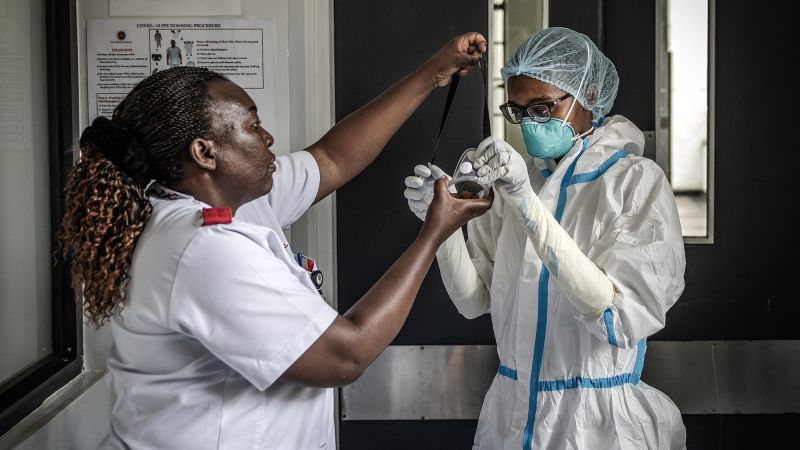
Authorities had screened hundreds of thousands of travelers and trained almost 5,000 health workers for a possible Ebola importation. Those preparations created an important response system, but temperature checks and symptom questions cannot identify every infection.
A traveler may not have a fever at the time of screening, may have symptoms resembling another disease, or may still be incubating the virus. Kenya prepared for Ebola It still needed hospitals and clinics to serve as a second line of defense once travelers had crossed a border.
In Nairobi, the patient was isolated after reaching the hospital. Rapid isolation, testing, contact tracing and coordination among health officials are essential to reducing the risk that an imported case becomes wider local transmission.
The wider regional threat
The DRC outbreak is the country’s largest recorded Ebola outbreak. By Wednesday, the World Health Organization had recorded 8,728 confirmed cases and 4,205 deaths across seven provinces. The organization considers the regional risk high for countries sharing land borders with the DRC.
Kenya is the fourth country to confirm Bundibugyo virus. Uganda had previously reported 20 cases before declaring the country Ebola-free on July 28. France also identified a travel-related case, although no additional cases were reported there.
“Africa is an open field divided into countries by poorly manned porous borders,” Oyewale Tomori, a former WHO regional virologist for Africa, said. “The Kenya case is a warning of more cases in the future.”
Ebola generally spreads through direct contact with the body fluids of someone who is ill or has died from the disease. That makes early recognition, safe isolation and careful follow-up of possible contacts central to preventing further spread.
Frequently Asked Questions
How did the Ebola patient reach Kenya?
He traveled by road from Beni in eastern DRC to Kampala, Uganda, on October 2, then flew from Entebbe to Nairobi the following day.
Why was he not detected at the airport?
Uganda said he had a normal temperature before departing Entebbe, while Kenya said routine screening on arrival did not identify him as a suspected Ebola case. Screening can miss people whose symptoms are not yet clear at that moment.
What should Kenyan residents do?
People with Ebola-like symptoms, particularly after travel or possible exposure in affected areas, should seek medical care promptly and avoid close contact with others until assessed by health professionals.