Margaret Hamilton, whose software helped land Apollo astronauts on the moon, has died

Daftar Isi
Margaret Hamilton’s Apollo Software Legacy Endures After Her Death at 90
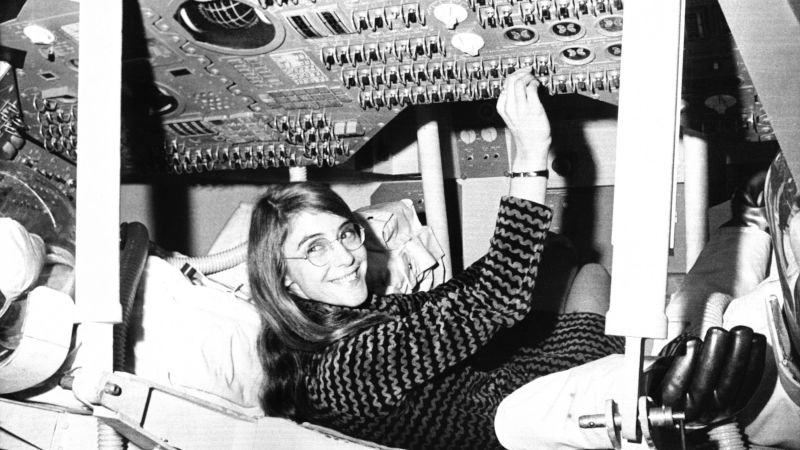
Healfromzero.com – Margaret Hamilton, the pioneering computer scientist whose work helped guide Apollo astronauts to the moon, has died at the age of 90. Her career connected one of humanity’s defining spaceflight achievements with the early development of software engineering as a recognized profession.
The Massachusetts Institute of Technology confirmed Hamilton’s death through its Department of Aeronautics and Astronautics. No cause of death was disclosed.
Hamilton’s technical work became inseparable from the Apollo program’s success. At a moment when computer programming was still an emerging discipline, she helped create software capable of supporting NASA missions that demanded extraordinary reliability. The code developed under her leadership was used to help navigate the Apollo spacecraft during the United States’ race to reach the moon.
A career shaped at MIT
Hamilton joined MIT in 1959 and remained there until the middle of the 1970s. During that period, she led the Software Engineering Division at MIT’s Instrumentation Laboratory, an organization that would play an important role in the Apollo missions.
In 1961, the division received a NASA contract connected to the Apollo program. Hamilton ultimately directed a group of 100 engineers responsible for designing software used to guide the missions. The scale of that responsibility was remarkable: the team was developing systems for spacecraft operations at a time when the tools, standards and professional expectations surrounding modern software development had not yet fully taken shape.
The Apollo effort required more than writing instructions for a computer. The software had to function as part of an immensely complicated mission system, working alongside astronauts, spacecraft hardware and mission operations. Hamilton’s contribution helped demonstrate that programming could be a rigorous engineering discipline, especially when failure was not an acceptable outcome.
Helping define software engineering
Hamilton is widely regarded as one of the people who helped establish software engineering as a professional field. She coined the term “software engineering,” giving language to the idea that programming needed methods, discipline and standards comparable to those used in other forms of engineering.
That framing carried lasting importance. Software was often treated as a secondary component of larger technical projects in the early years of computing. Hamilton’s work reinforced the reality that code could be central to safety, navigation and mission success. In an Apollo mission, software was not simply an added feature; it was part of the system that enabled a spacecraft to carry out its intended purpose.
Her leadership also reflected the collaborative nature of the work. Although Hamilton became the best-known figure associated with the team, the Apollo software was produced by a large engineering group. Leading 100 engineers on a project of such consequence required technical expertise as well as the ability to organize a developing discipline around a goal that had never before been achieved.
“To say Margaret Hamilton was a pioneer — to say she was ahead of her time — would be a dramatic understatement,” said Olivier de Weck, the Apollo Program Professor and interim head of the MIT Department Aeronautics and Astronautics, in a statement.
“She was a software engineer at a time when that field was in its infancy, and she not only developed advanced code herself but also led a team in using that nascent technology to develop one of the most complex systems humanity had ever achieved.”
The description captures why Hamilton’s career continues to resonate well beyond the history of Apollo. Her work sits at the intersection of space exploration and computing history, two fields that have transformed daily life and scientific ambition in the decades since the moon landings.
A place in the history of the moon landing
The Apollo program remains one of the most ambitious projects ever undertaken, combining advances in aerospace engineering, computing and human spaceflight. Hamilton’s software team contributed to the guidance systems that supported the missions, making its work part of the broader achievement of landing astronauts on the moon.
That accomplishment unfolded during the 20th-century space race, when the United States pursued the goal of reaching the lunar surface. The success of Apollo depended on countless people working in laboratories, control rooms, factories and universities. Hamilton’s role has become especially significant because it illustrates the often less visible software work behind a landmark moment usually remembered through rockets, astronauts and lunar photographs.
Her story also offers a clear reminder of how much computing has changed. Today, software is embedded in communications, transportation, research and everyday devices. During Hamilton’s early career, however, programming was still being defined as a serious technical practice. The systems created for Apollo helped reveal the need for careful design and dependable processes when software is responsible for critical operations.
National recognition
Hamilton received the Presidential Medal of Freedom in 2016 from President Barack Obama in recognition of her contributions to science and space travel. The honor acknowledged a career whose influence extended from the Apollo era into the continuing evolution of software engineering.
Her legacy is not limited to a single phrase, a single team or even a single mission. It can be found in the idea that software must be treated with the same seriousness as any other essential part of a complex engineering system. For generations of engineers and programmers, the Apollo program remains a demonstration of what disciplined technical work can accomplish under immense pressure.
Hamilton’s death marks the loss of a figure who helped shape both the journey to the moon and the profession that made much of modern computing possible. Her work remains a lasting part of the Apollo story: a reminder that humanity’s most celebrated explorations are often powered not only by engines and instruments, but by the people who make complex systems dependable enough to carry a mission forward.
Related Reading
Frequently Asked Questions
What is Margaret Hamilton whose software helped land?
Margaret Hamilton whose software helped land is the main topic of this guide. The article explains the context, practical details, and next steps readers should understand.
Why does Margaret Hamilton whose software helped land matter?
Margaret Hamilton whose software helped land matters because readers are looking for a useful answer, not just a short summary. Good content should match search intent and help them decide what to do next.