Can Trump actually change Lake Ontario to ‘Lake America’? Here’s what to know

Can Trump Actually Change Lake Ontario’s Name?
Healfromzero.com – Can Trump actually change Lake Ontario to “Lake America”? That question landed in front of millions of Americans on Thursday when President Donald Trump signed an executive order directing federal agencies to adopt the new designation. The move came amid a sharp breakdown in trade talks with Canada, following a weekend in which Trump imposed 50 percent tariffs on roughly $20 billion in Canadian imports. Ottawa retaliated within hours, and both governments have since paused formal negotiations while posturing for further escalation.
The Trade Context Behind the Rename
The order did not arrive in isolation. Bilateral trade discussions collapsed last week, and the president used the weekend to announce the steep tariff package targeting Canadian exports. Canada’s government responded with reciprocal duties on a range of American goods, creating a tit-for-tat spiral both capitals now describe as frozen. Trump has warned that additional measures are possible if Canada does not reverse its retaliatory steps, though no new round of negotiations has been scheduled. In that charged atmosphere, the renaming functions less as a geographic correction and more as a rhetorical signal aimed at a neighbor Washington views as failing to meet its expectations.
What the Order Commands — and Where It Stops
Legally, the directive assigns Interior Secretary Doug Burgum and the federal Board on Geographic Names the task of completing the rename within 30 days. That work includes updating the Geographic Names Information System, the database underpinning federal cartography and official records, and purging references to the old name from agency materials. Trump instructed the Board to circulate guidance so every federal map, contract, interagency document, and public communication substitutes the new label. The president declared the order effective immediately upon signing.
Geological Survey Director Ned Mamula confirmed in a White House-distributed statement that the agency had already flagged the new designation across all official USGS electronic documents. Printed publications, he noted, would reflect the change over the following days.
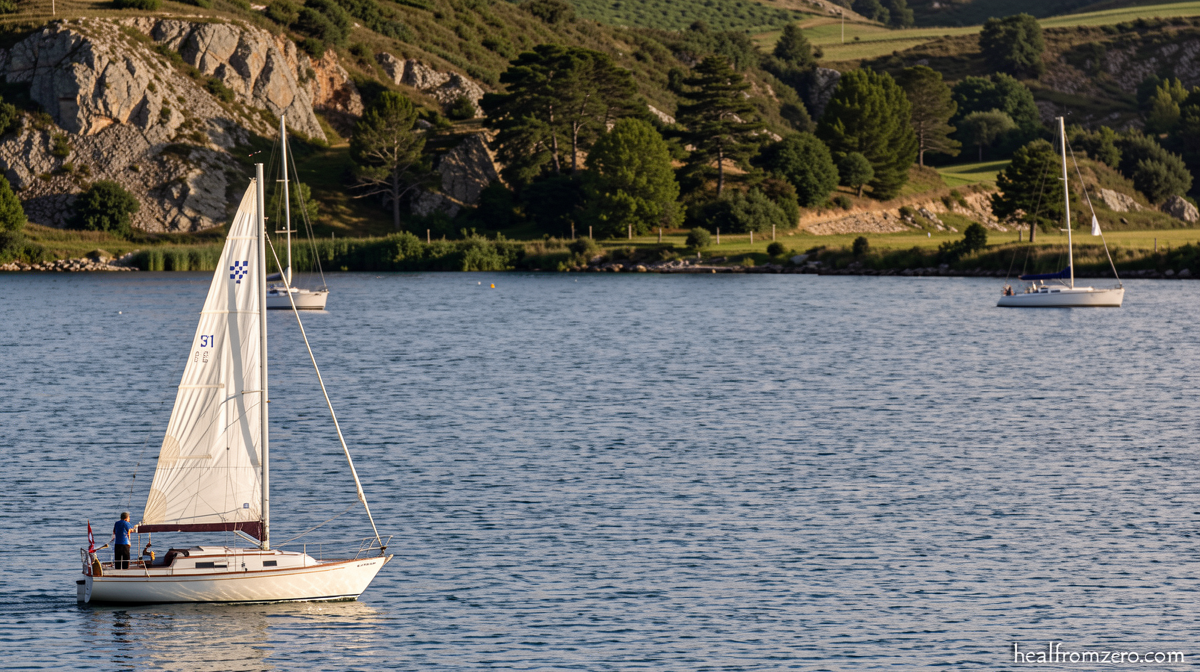
The order governs how American agencies speak about the water body. It does not compel Canada, international cartographers, shipping charts, or the general public to adopt the new label. Whether the president can actually change Lake Ontario’s designation in any meaningful sense beyond federal paperwork remains a question of legal scope, not geography. Lake Ontario sits on the border between New York State and the Canadian province of Ontario, and its shared management falls under the Boundary Waters Treaty, an early-20th-century accord designed to prevent and resolve disputes over transboundary waters. Because of that treaty framework and a U.S. statute mandating uniformity in geographic nomenclature, the executive order’s reach stops at the perimeter of federal communications.
“We have to stop thinking of it as a name change of the body of water, and simply a change in how the United States refers to it. The US can’t compel the rest of the world to refer … to a body of water by America’s chosen name.” — Elliot Williams, legal analyst
Former federal prosecutor Alyse Adamson told reporters the rename will have “zero impact” on anyone outside U.S. jurisdiction. Tim Naftali, a senior research scholar at Columbia University who serves as a presidential historian, observed that the order’s domestic effect is confined to federal references and carries no consequence for Canada or the broader international community. He added that the earlier renaming of the Gulf of Mexico, carried out on Trump’s first day back in office, has not been formally challenged in part because Congress has remained under Republican control, leaving no legislative vehicle to contest the change.
A Name Older Than Either Nation
The water body has carried the name “Ontario” since the 17th century, a designation rooted in the Wendat language. Canadian Prime Minister Mark Carney took to social media on Thursday to underscore that point, writing that the name is more than 400 years old and predates the founding of both the United States and Canada. He explained that the term derives from the Wendat word Ontari’io, which he described as meaning “the lake is beautiful, the lake is big.” Carney stated plainly that his country would “forever” continue to call the lake by its historical name.
Frequently Asked Questions
Does the executive order change the lake’s name on international maps? No. The order binds only U.S. federal agencies. International cartographic bodies, Canadian authorities, and private-sector maps are unaffected.
Can Congress reverse the rename? In principle, yes, through legislation. In practice, with Republican control of both chambers, no formal challenge has been introduced. The earlier Gulf of Mexico rename remains unchallenged for the same reason.
What happens to existing federal documents that reference “Lake Ontario”? The Board on Geographic Names is directed to update the Geographic Names Information System and agency materials within 30 days. Printed publications will be revised over a longer period, per USGS Director Ned Mamula’s statement.
Does the Boundary Waters Treaty limit what the U.S. can do? The treaty governs shared management of transboundary waters and supports uniform nomenclature. It does not prohibit a domestic naming change, but it reinforces the practical limit: the rename applies only within U.S. federal communications.