Tornado and hail hits northern Italian city, injuring dozens of people

Daftar Isi
Storm Devastates Cremona’s Historic Heart During Local Festival
Healfromzero.com – A violent tornado paired with a severe hailstorm tore through the Lombard city of Cremona, leaving dozens of residents wounded and inflicting what local officials expect will be millions of euros in destruction. The strike came at a particularly vulnerable moment: the city was in the midst of a public festival, with crowds gathered in open-air pavilions when the storm cell passed overhead. The combination of flying debris, collapsing structures, and hailstones the size of small stones turned a celebratory afternoon into a scene of emergency chaos.
Cremona, a compact city of roughly 70,000 inhabitants in northern Italy’s Po Valley, has long been celebrated worldwide for its centuries-old tradition of stringed-instrument craftsmanship. The workshops of Antonio Stradivari and his successors gave the town its global reputation, and the surrounding forests—locally called the “violin forests”—supply the spruce, maple, and fir used in those instruments. That heritage made the storm’s aftermath all the more symbolic: the very woods that feed the city’s most prized craft were among the first sites inspected in the days following the event.
Landmarks and Sacred Architecture Struck
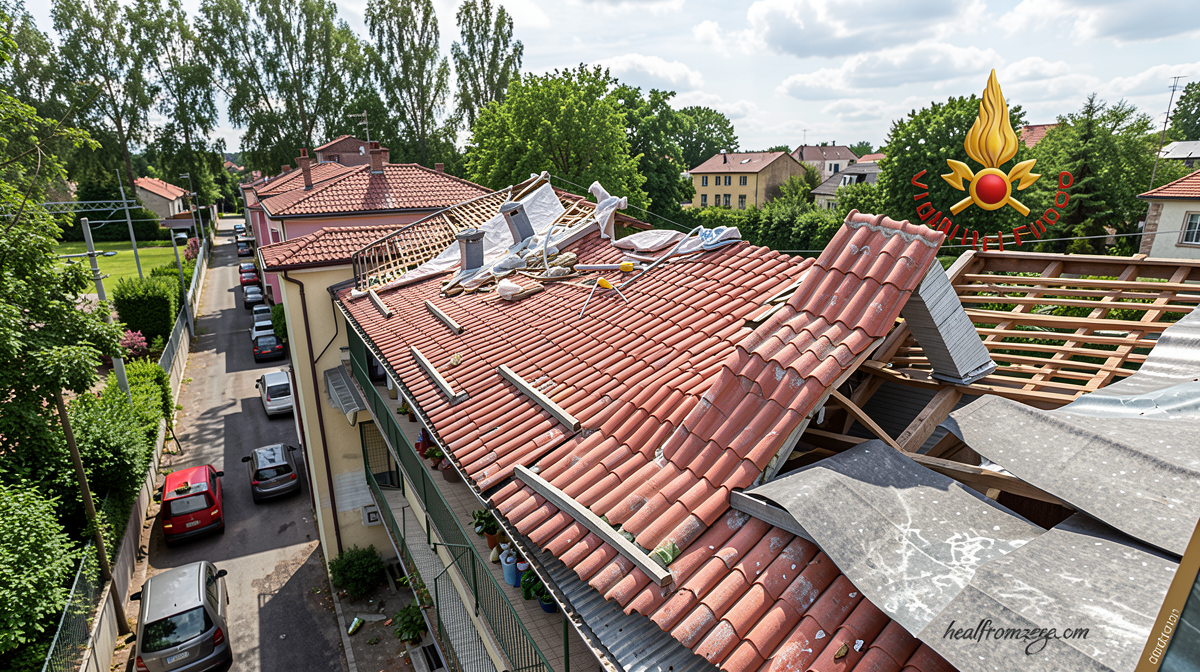
Ten churches sustained damage in the tornado’s path, including the city’s principal cathedral. A decorative spire detached from one of the cathedral’s towers and crashed to the ground, permanently altering the silhouette of Cremona’s most recognizable skyline feature. Across the historic core, windows and skylights in centuries-old religious buildings were shattered or blown inward. Italy’s fire brigade logged more than 500 emergency calls within hours of the storm passing, a volume that overwhelmed local response capacity for a city of this size.
Residential, Agricultural, and Vehicular Damage
Twelve families were pulled from their homes after roofs were stripped away or structures were struck by airborne debris. Hundreds of mature trees came down across residential neighborhoods, compounding roof damage and severing power lines. In the agricultural fringe surrounding the city, several barns were heavily compromised. Low-lying roads flooded as drainage systems were overwhelmed by the storm’s torrential rainfall.
The hail component of the event proved equally destructive to property. Approximately 10,000 vehicles sustained damage from hailstones and from branches and trunks brought down by the tornado’s winds. The city government projected that total repair and reconstruction costs would reach into the millions of euros, a figure that will require coordinated funding between municipal, regional, and national authorities.
Emergency Response Under Pressure
Festival pavilions were among the hardest-hit structures, producing multiple injuries in a concentrated area. Francesca Co, who directs the city’s emergency services, described the operational challenge of managing a sudden influx of casualties:
“Most (of the injured) have been discharged, one remains under observation, while four trauma patients require hospitalization.”
“We found ourselves managing the arrival of over forty people almost simultaneously, and the emergency system responded promptly.”
The near-simultaneous arrival of more than forty patients tested triage protocols at local hospitals, though Co emphasized that the emergency apparatus functioned as designed. The majority of the injured sustained minor wounds from glass, hail, or falling branches; the four hospitalized trauma cases represented the most serious outcomes.
A Rare Event with No Advance Warning
Tornadoes are uncommon in Italy compared with the American Midwest or parts of central Europe, and the civil protection agency confirmed that no tornado watch or warning had been issued before the storm formed. Residents and festival-goers received no advance notice. The event emerged from the same atmospheric instability that had been fueling Italy’s prolonged summer heat, but its localized rotation and intensity caught forecasters and the public alike by surprise.
The absence of a warning raised questions about detection gaps in the national meteorological network for short-lived, low-level rotating storms over densely built historic urban areas. Civil protection officials later noted that the tornado’s lifespan was brief and its path narrow, characteristics that make advance warning particularly difficult even with modern radar coverage.
Context: Italy’s Fifth Heatwave of the Summer
The Cremona storm arrived during what Italian meteorologists classified as the country’s fifth consecutive heatwave of the summer. Across Europe, a pattern of extreme heat, followed by violent convective storms, has become a recurring feature of recent summers. The thermal energy accumulated during weeks of above-normal temperatures provides the fuel for the intense updrafts that spawn tornadoes, large hail, and flash flooding. Cremona’s experience, while locally catastrophic, fits within that broader climatic pattern.
For a city whose economy and cultural identity are tied to precision craftsmanship and heritage preservation, the storm’s damage to both modern infrastructure and centuries-old architecture carries implications well beyond immediate repair costs. Insurance claims, heritage-conservation assessments, and questions about building-code compliance for historic structures will occupy municipal planners for months.
Aftermath and Inspection Efforts
By Saturday following the storm, joint teams from the fire brigade and civil defense were conducting structural inspections of buildings along the tornado’s path. Multiple roads remained closed pending clearance of fallen timber and assessment of pavement integrity. Separately, the regional forestry department began surveying the “violin forests” to evaluate windthrow damage to the specific tree species and age classes that instrument makers depend upon. Any significant loss of mature, straight-grained spruce or maple in those stands could affect the supply chain for Cremona’s luthiers in coming seasons.
The city’s recovery will unfold over weeks and months, balancing urgent shelter needs, insurance processing, heritage-restoration planning, and the practical task of clearing thousands of damaged vehicles from streets and parking areas. For now, the fallen spire of the cathedral stands as a stark marker of how quickly a single afternoon can rewrite the physical landscape of a city that has endured, largely unchanged, for centuries.
Related Reading
Frequently Asked Questions
What is Tornado and hail hits northern Italian?
Tornado and hail hits northern Italian is the main topic of this guide. The article explains the context, practical details, and next steps readers should understand.
Why does Tornado and hail hits northern Italian matter?
Tornado and hail hits northern Italian matters because readers are looking for a useful answer, not just a short summary. Good content should match search intent and help them decide what to do next.