Russia likely to mobilize at least 300,000 more troops to Ukraine war, Zelensky warns

Daftar Isi
Zelensky Warns of Massive Russian Mobilization as Frontline Pressure Intensifies
Healfromzero.com – Ukrainian President Volodymyr Zelensky has projected that Moscow will call up at least 300,000 additional soldiers before the calendar year closes, a move he frames as a desperate attempt to finish seizing the eastern oblast of Donetsk. The warning came in a broad set of remarks published on Sunday, in which the Ukrainian leader laid out his expectations for the final months of fighting, the state of Western air-defense deliveries, and the narrow diplomatic corridor still open for ending the conflict.
Zelensky’s central claim is that Russia will finish the year holding roughly the same stretch of Ukrainian land it held at the start of the year, even after absorbing staggering personnel losses. He placed the toll at 267,000 Russian soldiers lost since January, of whom approximately 155,000 were killed outright. Independent verification of those figures remains elusive, though Western defense officials have cited comparable ranges in private assessments.
The Mobilization Question and Electoral Timing
With Russian parliamentary elections scheduled for next month, speculation about a fresh draft has intensified. The memory of the September 2022 mobilization — which sparked street protests in several cities and prompted a visible exodus of young men across borders — still shapes public anxiety in Moscow. Zelensky, however, expressed certainty that a new call-up will follow the vote.
“We are confident that following the elections, they will carry out a mobilization. We believe this will not take place in the major cities.”
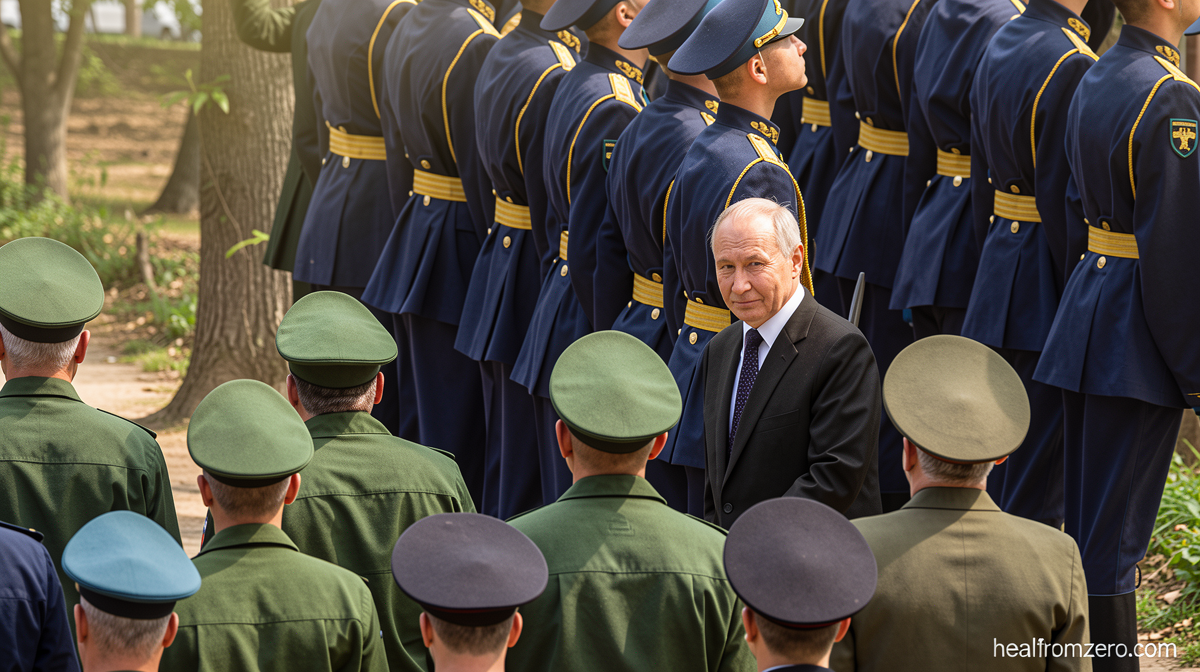
He added that Vladimir Putin had instructed his commanders to complete the occupation of Donetsk by year’s end, deploying the newly conscripted force “depending on the situation in the east of our country.” Zelensky dismissed the prospect of Russian success with characteristic bluntness:
“They’ll lose all 300,000 of these newly mobilized Russians there; we’ll wipe them out.”
Ukrainian forces currently hold roughly one-fifth of Donetsk oblast, including a corridor of strategically vital industrial towns such as Slaviansk and Kramatorsk. Zelensky argued that completing the capture of the entire region is operationally impossible for Moscow within the remaining months, given the attrition rates already documented.
Threats on the Northern Flank
Beyond Donetsk, Zelensky flagged the possibility of a Russian incursion into the northern oblasts of Kharkiv and Sumy. He noted that while no large troop formations have yet appeared in Russia’s Bryansk region — which borders northern Ukraine — military hardware has been spotted along the shared frontier, suggesting preparatory logistics.
Air-Defense Shortfall and the Patriot Gap
A recurring theme in the remarks was Ukraine’s growing vulnerability to ballistic missile strikes. Zelensky contrasted the 675 Patriot interceptor missiles delivered in 2023 with a projected 264 for the current year, describing a troubling downward trajectory that he attributed primarily to the American side. Patriot systems remain the only reliable means of intercepting ballistic missiles over Ukrainian cities, and their scarcity has translated directly into higher civilian casualties and wider infrastructure damage.
Last month, US President Donald Trump floated the idea of letting Ukraine manufacture Patriot missiles under license, only to retreat from the proposal. Zelensky offered a counter-arrangement: if Washington were willing to transfer up to 10 percent of its Patriot stockpile to Kyiv, Ukraine would cover the cost.
“This could make a huge difference, both in terms of saving lives and diplomatically as well.”
A parallel shortfall exists in Europe’s Aster surface-to-air missiles. Despite a recent pledge from French President Emmanuel Macron to bolster Ukrainian air defenses, Zelensky said production volumes remain insufficient.
“There aren’t enough ‘Aster’ missiles, even though they are being produced.”
He added that a licensing arrangement would accelerate European output and close the gap more quickly.
Striking Back at Launch Sites
In the interim, Ukraine is actively hunting the Russian launch positions from which ballistic missiles are fired. Zelensky estimated that Russia’s defense-industrial complex can produce around 1,300 ballistic missiles annually, a capacity that makes sustained targeting of launch infrastructure essential. He referenced “specific objectives regarding strikes on military targets and other anti-ballistic sanctions,” pointing to a broader campaign of precision strikes.
Kyiv has also expanded its own long-range drone fleet and indigenous cruise-missile arsenal, now employed against a widening set of targets deep inside Russian territory. Separately, Ukraine is seeking permission to use Starlink satellite imagery over Russian airspace. Elon Musk, who controls the Starlink constellation, reportedly told Zelensky he “believed that this could lead to a major escalation against the Russian Federation on Ukraine’s part” and that he favored ending the war rather than prolonging it. Talks with Washington on the matter were ongoing at the time of the remarks.
The Diplomatic Window
On negotiations, Zelensky placed the practical window for a settlement through the end of next summer, before the US presidential election campaign consumes political bandwidth. American envoys Steve Witkoff and Jared Kushner, he said, have struggled to identify a format in which Moscow would agree to end hostilities without Ukraine being forced to withdraw from Donbas or accept terms Kyiv considers unacceptable.
“Jared, Steve and I agreed to summarize all these discussions on a single page – setting out the realistic options for ending the war. This is what the Americans want to discuss with us and with the Russians.”
The single-page document, Zelensky explained, distills the narrow set of mutually workable proposals and serves as the basis for continued trilateral dialogue. Whether Moscow will engage with that framework — or whether the anticipated mobilization will simply reset the military calculus — remains the defining question of the coming months.
Related Reading
Frequently Asked Questions
What is Russia likely to mobilize at least 300?
Russia likely to mobilize at least 300 is the main topic of this guide. The article explains the context, practical details, and next steps readers should understand.
Why does Russia likely to mobilize at least 300 matter?
Russia likely to mobilize at least 300 matters because readers are looking for a useful answer, not just a short summary. Good content should match search intent and help them decide what to do next.