
Why engaging your core isn’t always the answer
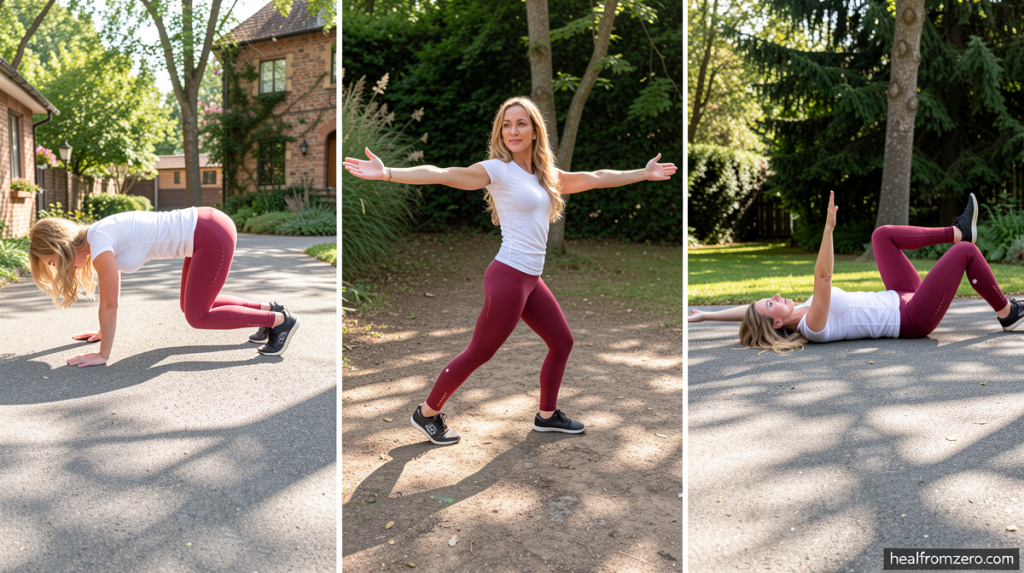
The Core Obsession: Why Constant Bracing May Be Hurting Your Fitness
Healfromzero.com – Modern fitness culture has turned the core into a catch-all solution for every physical complaint. From social media influencers to personal trainers, the mantra is nearly universal: engage your midsection, tighten your abs, maintain that “core engagement” throughout every movement. But this blanket approach to core training may be doing more harm than good for many people seeking strength, mobility, and pain relief.
Dana Santas, widely recognized in the fitness world as the “Mobility Maker,” has spent over twenty years observing how athletes and everyday people interact with their core muscles. As a certified strength and conditioning specialist and mind-body coach working with professional sports organizations, she has developed a nuanced perspective on core function. Her expertise is further validated by her authorship of “Practical Solutions for Back Pain Relief,” a resource that has helped countless individuals address chronic discomfort through better movement patterns.
The Bracing Paradox
The advice to “brace your core” carries genuine merit. When you forcefully tighten your abdominal muscles during heavy lifting or complex movements, you create spinal stability that protects your vertebrae from excessive stress. This mechanism is evolutionarily sound and physiologically necessary for certain activities.
However, Santas identifies a critical distinction between appropriate bracing and habitual over-tightening. When individuals maintain maximum abdominal engagement regardless of the task at hand—whether they are carrying groceries, sitting at a desk, or performing light stretching—they essentially transform their torso into a rigid structure. This constant tension creates a cascade of negative effects that extend far beyond simple stiffness.
Instead of building greater strength or resilience, excessive core tension limits mobility, restricts breathing and triggers your nervous system’s stress response.
Understanding Your Core as a System
Many people conceptualize their core as simply their abdominal muscles—the six-pack region visible in fitness magazines. Santas describes the core as a comprehensive 360-degree system encompassing the abdominal wall, lower and mid-back musculature, the diaphragm, and the pelvic floor. These components function as an integrated unit, working in concert to transfer force through the body while simultaneously supporting the spine, pelvis, and rib cage.
The beauty of this system lies in its dynamic nature. Rather than maintaining constant tension, the core muscles are designed to modulate their engagement based on immediate demands. When you bend forward, the system adjusts. When you rotate to reach for something, the system adapts. When you lift a heavy object, the system increases support. This responsiveness is what Santas calls “dynamic core stability.”
The Breathing Connection
One of the most significant consequences of excessive bracing involves respiratory function. The diaphragm serves a dual purpose: it acts as the primary muscle of respiration while simultaneously functioning as a stabilizing postural element within the core system. This dual role creates an interesting physiological relationship.
When the diaphragm contracts during inhalation, the pelvic floor naturally relaxes. Conversely, when the pelvic floor engages for stability, the diaphragm’s respiratory function becomes somewhat compromised. This relationship becomes problematic when individuals maintain constant abdominal bracing throughout the day.
Research published in 2023 examined this phenomenon in a study involving 31 healthy adults. The findings revealed a clear respiratory trade-off: when participants engaged in abdominal bracing during a lifting task, their lung volume decreased despite increased diaphragm movement. This doesn’t suggest that bracing during heavy lifts is incorrect—it remains appropriate for those specific activities. The issue emerges when this strategy becomes the default mode of operation for all movements and positions.
The Stress Cycle
Chronic excessive bracing initiates a self-perpetuating cycle that affects both physical and neurological function. When individuals constantly hold their stomach in and maintain rigid abdominal engagement, they naturally shift toward shallower breathing patterns. This shallow breathing, combined with occasional breath-holding, reinforces sympathetic nervous system arousal—the fight-or-flight response that evolved to help humans survive immediate threats.
When this response remains chronically activated, it increases overall muscle tension throughout the body. That additional tension further restricts breathing capacity, which in turn maintains the sympathetic state, creating a feedback loop that can contribute to anxiety, reduced mobility, and even chronic pain patterns.
Practical Solutions for Daily Life
Santas recommends matching muscular engagement to the specific demands of each activity. Carrying groceries requires moderate strength and stability but doesn’t necessitate the rigid activation needed for a heavy deadlift. Similarly, activities like mopping floors, raking leaves, and shoveling snow all benefit from dynamic stability that supports rotational movement rather than static rigidity.
For those looking to rebuild proper core function, Santas suggests three exercises that train responsive trunk control through the three planes of motion. These movements progress from lying positions to standing, allowing individuals to develop awareness of how their core should engage and disengage throughout different activities.
The recommendation is to integrate these exercises into existing workout routines or perform them as a circuit two to three times per week. The emphasis should be on controlled movement rather than speed, allowing practitioners to develop the neuromuscular awareness necessary for dynamic core stability.
Before beginning any new exercise program, consulting with a healthcare provider remains essential, particularly for individuals with existing conditions or injuries. However, for most people, learning to release unnecessary tension and allow their core to function dynamically may provide the relief and strength they’ve been seeking through constant bracing.
Related Reading
Frequently Asked Questions
What is Why engaging your core isn t always?
Why engaging your core isn t always is the main topic of this guide. The article explains the context, practical details, and next steps readers should understand.
Why does Why engaging your core isn t always matter?
Why engaging your core isn t always matters because readers are looking for a useful answer, not just a short summary. Good content should match search intent and help them decide what to do next.