
Trump extends deadline for Iran to open strait of Hormuz by 10 days
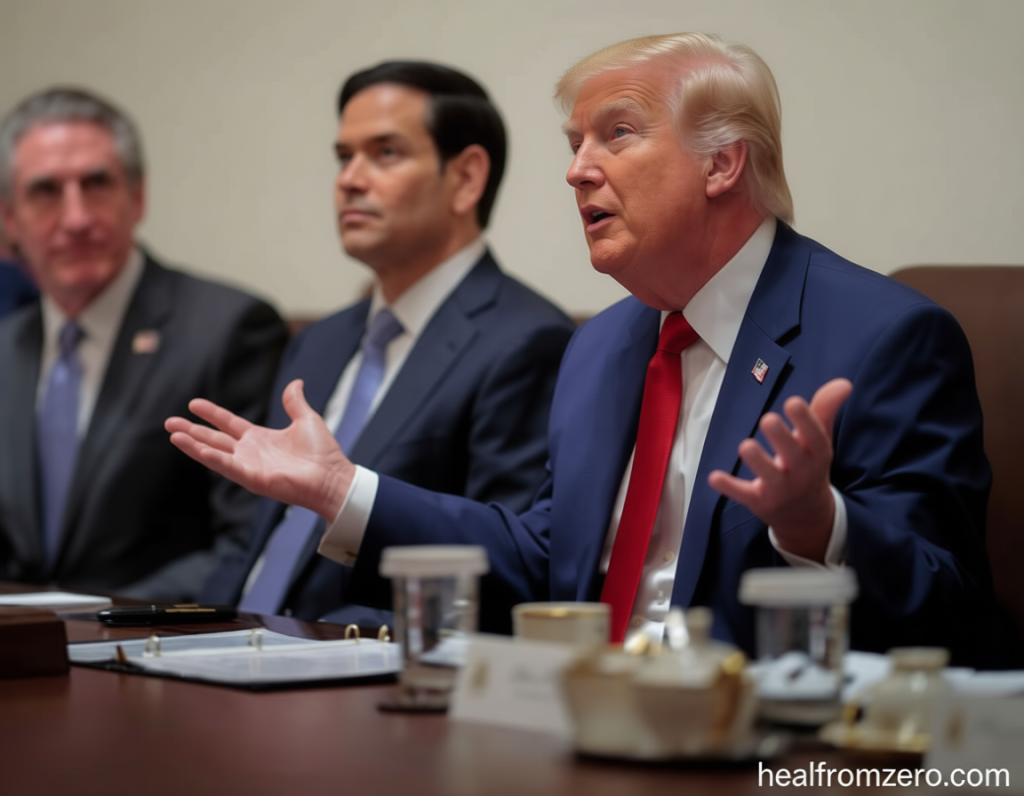
Trump extends deadline for Iran to open strait of Hormuz by 10 days
President Donald Trump has granted Iran an additional 10-day reprieve, pushing the deadline to open the Strait of Hormuz to April 6. The update came after Trump stated that discussions were “going very well” in a Thursday social media post. “As per Iranian Government request, please let this statement serve to represent that I am pausing the period of Energy Plant destruction by 10 Days to Monday, April 6, 2026, at 8 P.M., Eastern Time,” he wrote on his Truth Social platform.
Later, during a Fox News interview, Trump mentioned: “I gave them a 10-day period, they asked for seven.” He also declared: “In a certain sense, we have already won.” The president’s comments followed earlier threats to escalate attacks on Iran if it did not resume access to the critical waterway.
Iran’s retaliatory strikes continued across the Middle East on Thursday, with loud booms reported in Tel Aviv, Modi’in, and Jerusalem as Israeli air defenses intercepted incoming missiles. Similar defenses in the Gulf region managed to counter Iranian attacks. The US and Israel had intensified military operations, targeting Iranian officials and infrastructure, including a major airbase in Isfahan and a nuclear site bombed during the June conflict.
Trump criticized NATO allies and described Iran as a “great negotiator” but “lousy fighter.” He added: “They now have the chance to permanently abandon their nuclear ambitions and join a new path forward.” The president claimed Tehran had allowed 10 oil tankers, including some Pakistan-flagged vessels, to pass through the strait as a gesture of goodwill.
Meanwhile, Israel asserted that it had “blown up and eliminated” Alireza Tangsiri, the Revolutionary Guards’ naval commander, in a strike on Bandar Abbas. Adm Brad Cooper, head of US Central Command, noted that Tangsiri’s death marked a “path toward irreversible decline” for Iran’s navy. Israel’s defense minister, Israel Katz, accused Tangsiri of being “directly responsible for the terror operation of mining and blocking the strait of Hormuz to maritime traffic.”
Iran has maintained that it is not “begging to make a deal,” while the US insists it has weakened Iran’s naval capabilities. However, Tehran still possesses smaller boats for mine-laying and anti-ship missiles that can be launched from land, both of which could disrupt shipping in the strait.
The conflict began with an Israeli airstrike that killed Ayatollah Ali Khamenei, Iran’s former supreme leader. Since then, dozens of Iranian security and military officials, including political leaders like Ali Larijani, have been eliminated. The new supreme leader, Mojtaba Khamenei, is believed to have been injured in the attack that killed his father.
Iran’s foreign minister, Abbas Araghchi, accused the US of “double standards,” highlighting the contradiction between supporting Israel’s Gaza blockade and criticizing Iran’s self-defense measures. He tweeted: “The US backed Israel’s Gaza blockade … yet condemns Iran for defending itself in the Strait of Hormuz. Double standard: Israel’s crimes are OK while Iran’s defense against aggressors is condemned.”
Pakistan, which has emerged as a key mediator, reportedly persuaded Washington to protect Araghchi and Mohammad Bagher Ghalibaf, the speaker of Iran’s parliament, from Israeli targeting. This move followed their removal from Israel’s hitlist, according to a Pakistani official.
“Talks are ongoing and, despite erroneous statements to the contrary by the Fake News Media, and others, they are going very well.”
Trump’s latest statement was part of a series of remarks in Washington and on social media, where he reiterated his belief that the war had already been won. The president emphasized that Iran’s actions would determine whether it faced a “worst nightmare” or avoided further escalation.