
Iran escalates attacks on infrastructure and transport networks across the Gulf
Iran Escalates Attacks on Infrastructure and Transport Networks Across the Gulf
On Wednesday, Iran intensified its assault on Gulf infrastructure and transportation systems, marking a significant escalation in the conflict. The Islamic Republic targeted commercial vessels and struck Dubai’s international airport as U.S. and Israeli warplanes carried out further strikes. This coordinated effort has deepened the crisis, with both sides accusing each other of expanding the war’s reach.
Senior Iranian officials have adopted a resolute stance, warning of a prolonged “war of attrition” that could destabilize global energy markets. With infrastructure damage and disruptions to transport routes worsening, the region’s critical supply chains face mounting threats. The conflict has entered its 12th day, and tensions show no signs of abating.
International displacement figures highlight the human toll: at least 759,000 people in Lebanon have fled their homes, while over 92,000 have crossed into Syria. In Kuwait, air defenses reportedly shot down eight Iranian drones, and Saudi Arabia intercepted five missiles aimed at its Shaybah oil field. These incidents underscore the broader regional impact of the ongoing strikes.
Funeral Processions and Casualties
Massive crowds gathered in Tehran and other cities for the funerals of Iranian commanders killed in U.S. and Israeli airstrikes. Participants carried caskets and displayed portraits of Ayatollah Ali Khamenei, the late supreme leader, and his son Mojtaba, who succeeded him. Iranian officials confirmed for the first time that the nation’s new leader had been injured in the attacks that claimed his family’s lives.
“I have heard that he was injured in his legs and hand and arm … I think he is in the hospital because he is injured,” said Tehran’s ambassador to Cyprus, Alireza Salarian, during an interview with the Guardian.
Meanwhile, the U.S. and Israel have shown no signs of slowing their joint offensive. Israel’s defense minister, Israel Katz, declared the campaign would continue “without any time limit” until its goals were met. President Donald Trump, however, oscillated between confidence and caution, describing the war as a “short-term excursion” while later asserting that the U.S. had not “won enough.”
At a rally in Hebron, Kentucky, Trump claimed victory but emphasized the need to “finish the job.” “You never like to say too early you won. We won. In the first hour it was over,” he stated, despite acknowledging the destruction of 58 Iranian naval ships. His remarks echoed earlier praise for G7 leaders’ decisions to release 400 million barrels of oil, a historic move by the International Energy Agency to ease price surges.
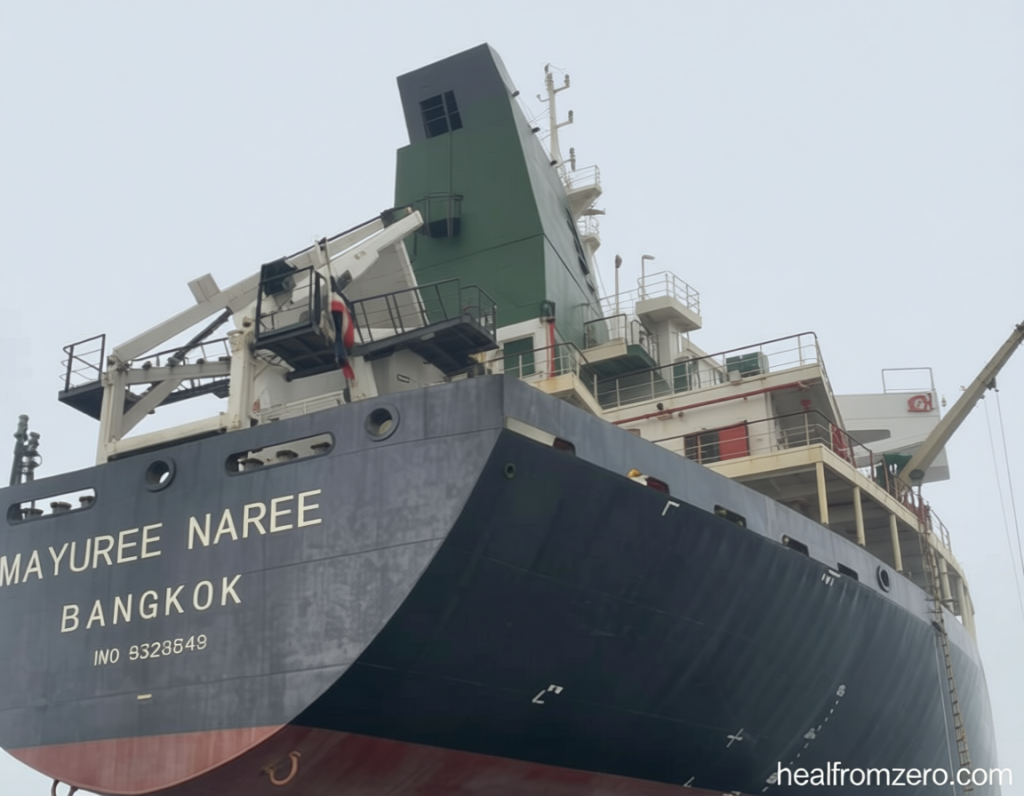
Global leaders express concern over the potential economic fallout from the conflict. Yet, safety in the Strait of Hormuz remains uncertain. Three merchant ships were struck by unknown projectiles on Wednesday, bringing the total number of vessels hit since the war began to 14. Evacuations followed explosions on a Thai-flagged bulk freighter, a Japanese container ship, and a Marshall Islands bulk carrier.
Trump assured reporters that oil tankers would “see great safety, and it’s going to be very, very quickly,” though no specifics were provided. The strait, vital for a fifth of the world’s oil, continues to be a focal point of the war’s economic and strategic stakes.