
Sudan war: Why Hemedti’s legitimacy push in Uganda falters amid RSF atrocities
Sudan War: Why Hemedti’s Legitimacy Push in Uganda Falters Amid RSF Atrocities
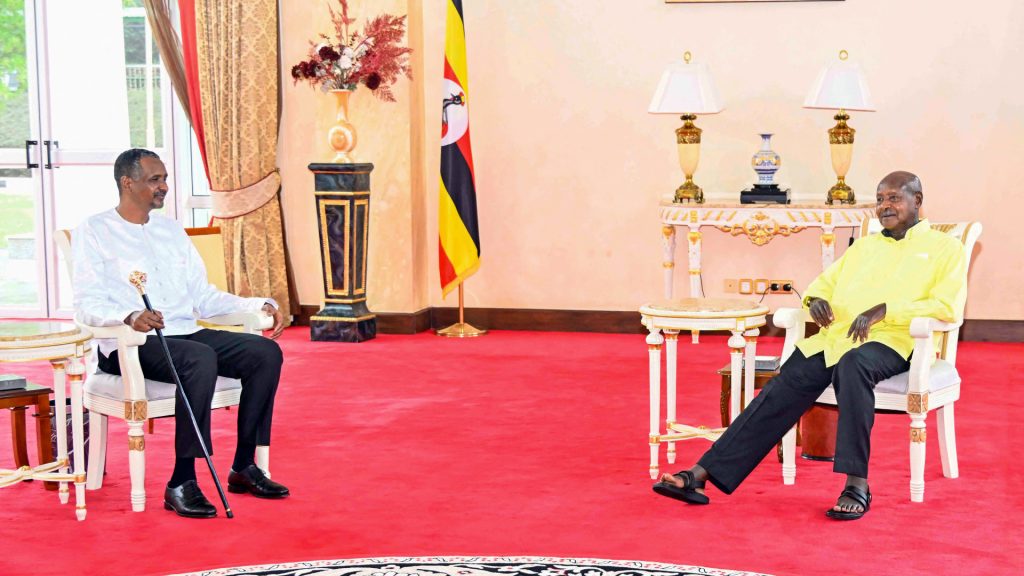
On 20 February, Mohamed Hamdan Dagalo, the Sudanese Rapid Support Forces (RSF) commander commonly known as Hemedti, landed in Kampala, Uganda, for a meeting with President Yoweri Museveni. The visit marked his most notable diplomatic outreach beyond Sudan’s borders in recent months.
The timing of the trip coincided with a UN investigation revealing the RSF’s involvement in genocide in Darfur. Just a day prior, the US had imposed sanctions on three RSF leaders for their role in atrocities in el-Fasher. These events followed years of international criticism directed at the RSF, including a December 2023 US ruling classifying its actions in Darfur as ethnic cleansing and multiple Security Council resolutions in 2024.
Hemedti was not alone. He brought with him representatives from the parallel political framework he helped establish in Nairobi, known as “Tasis.” This initiative aimed to portray RSF-held territories as a civilian-backed administrative model. Despite its ambitions, Tasis struggled to gain widespread political backing within Sudan and faced rejection from regional and international actors, including the UN.
Sudan’s government dismissed Uganda’s reception of Hemedti as an affront to Sudanese people and global dignity. This prompted Kampala to be seen not just as a diplomatic gesture, but as a strategic attempt to bolster the RSF’s standing in the region. The visit highlighted Hemedti’s efforts to reposition the RSF as a key player in Sudan’s political landscape, transcending traditional military roles.
The RSF now operates with administrative control in its territories, fostering alternative governance structures. This development raises concerns about Sudan’s potential fragmentation. The visit’s timing suggests a calculated shift in strategy, as Hemedti extends his influence beyond Sudan’s borders to shape narratives and build alliances.
In his address, Hemedti underscored national unity, opposition to partition, and a commitment to dialogue. He framed the conflict as a fight against entrenched Islamist groups and positioned himself as open to a civilian-led political process. The speech also featured claims of military strength, stating that RSF fighters exceeded 500,000 and were prepared for broader participation in Sudan’s governance.
These statements were likely designed to reinforce internal credibility, reassure allies, and influence ongoing negotiations. By asserting the RSF’s readiness for a long-term role, Hemedti signals a bid for political legitimacy without compromising military authority.
Yet by engaging Hemedti publicly, Museveni steps into a delicate balancing act.
The RSF’s push for recognition comes amid accusations of widespread abuses, creating a paradox. A leader of a paramilitary force under international scrutiny promotes democratic ideals while overseeing parallel political structures. This contradiction underscores the broader challenge: transitioning from military dominance to political credibility without relinquishing operational control.
Analysts at the International Crisis Group have long warned that Sudan’s conflict has evolved into a battle over sovereignty. Prolonged dual authority in African wars often culminates in lasting fragmentation. The Kampala visit aimed to address both image restoration and diplomatic normalization of the RSF as a state-level entity.
Uganda’s choice as a host was strategic. Museveni has long championed “African solutions to African problems,” and the nation holds a neutral position in Horn of Africa diplomacy. Hosting Hemedti elevates Uganda’s role without aligning it with a single Sudanese faction. It also provides a platform separate from Nairobi, where the Tasis initiative lacked traction.
The visit indirectly ties to broader mediation efforts involving the African Union and the Intergovernmental Authority on Development (Igad). However, it risks complicating Sudan’s internal divisions by endorsing a non-state actor in its quest for regional influence.