
Israel’s war to erase Syria
Israel’s War to Erase Syria
On Tuesday, a stark announcement reverberated from Tel Aviv. Israeli Finance Minister Bezalel Smotrich, addressing a group of allies, declared: “The conflict will not cease until hundreds of thousands of Gazans depart… and Syria is divided.” The statement, shared widely on social media, dispelled any lingering illusions. Israel’s military campaigns are not centered on security or combating terrorism; they aim to reshape the map, dismantling countries, uprooting communities, and redefining historical narratives.
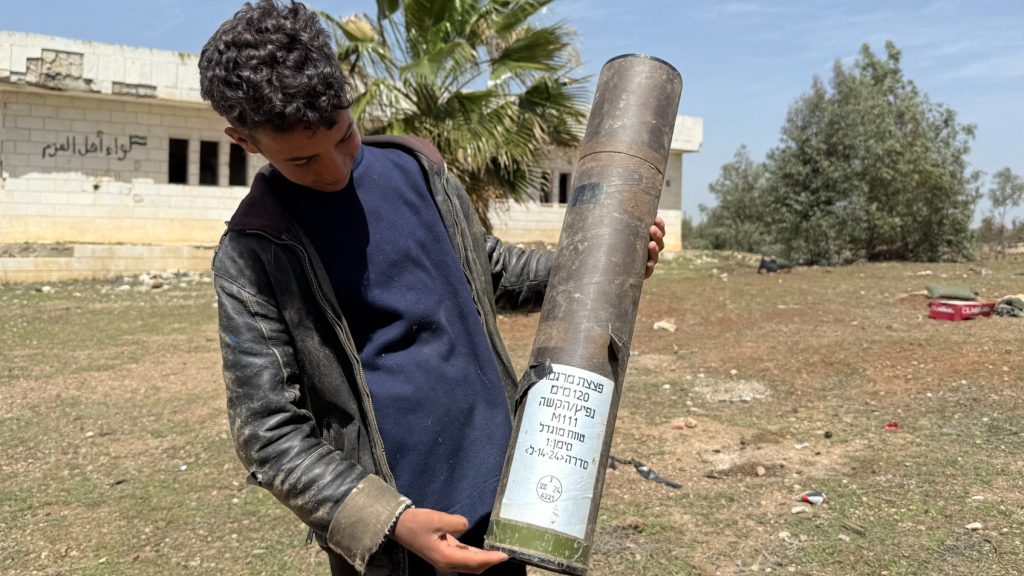
In early April, Israeli jets resumed their assault on Syrian airspace, launching a relentless barrage of missiles at both military installations and civilian areas. The bombardment spanned from central airfields to the southernmost regions, where Israeli troops established a foothold near Nawa, resulting in the deaths of nine civilians. The official stance, consistently presented, emphasized “defense” and “preemptive action.” Yet, beneath the surface of geography and politics lay a more profound intent—an intrusion into collective memory.
Targeting Nawa wasn’t just an attack on a town—it was an assault on a hub of Muslim heritage and intellectual legacy. The city is the birthplace of Imam al-Nawawi, a luminary in Islamic scholarship whose writings resonate through time and across cultures. It was there that he committed the Quran to memory, rejecting the bustle of trade for the serenity of learning. His name is still whispered with respect in homes, schools, and mosques from Cairo to Kuala Lumpur. Bombing this city is to strike a lineage of wisdom.
Nearby, Tell al-Jabiyah stands as a site where Caliph Omar ibn al-Khattab once paused, traveling from Madinah to claim Jerusalem. On that hill, he convened his generals just before a pivotal transfer of power. The echoes of their footsteps linger in Houran’s soil, a place steeped in both faith and historical significance. To the south and east, the regions of other distinguished figures reside. Ibn al-Qayyim al-Jawziyyah, a prominent jurist and theologian, was born in Izraa, Daraa. Ibn Kathir, celebrated historian of Al-Bidaya wal-Nihaya, emerged from Majdal, near Bosra.
Houran has historically been a cradle of knowledge, its land cultivating a civilization that transcended political and religious divides. In 636 AD, Khalid ibn al-Walid secured a decisive triumph for Muslim armies along the Yarmouk River, toppling Byzantine dominance and ushering in a new era for global history. Engaging in conflict with this land goes beyond breaching sovereignty—it targets the core of Arab and Islamic legacy. The soil of Houran is not just ground; it is a testament to centuries of resilience, conquest, and renewal.
Following the Assad regime’s collapse on 8 December 2024, Israel has intensified its operations in Syria, marking the most aggressive phase in years. Over a hundred aerial assaults have crippled military bases, air defense networks, and ammunition stores. The rationale is straightforward: Israel doubts the new transitional administration. However, the scale and timing of the attacks reveal a more intricate motive. A mere day after Assad relocated to Moscow, Israeli officials outlined plans for a “security