
Israel’s war to erase Syria
Israel’s War to Erode Syria
On Tuesday, a frigid statement reverberated from Tel Aviv. Israeli Finance Minister Bezalel Smotrich, addressing a crowd of allies, declared: “The conflict will not cease until hundreds of thousands of Gazans depart… and Syria is divided.” These remarks, disseminated widely across platforms, dismantled any lingering illusions. Israel’s wars transcend security concerns or anti-terrorism rhetoric; they aim to reshape the map, fragment states, displace communities, and rewrite the past.
Targeting Heritage and History
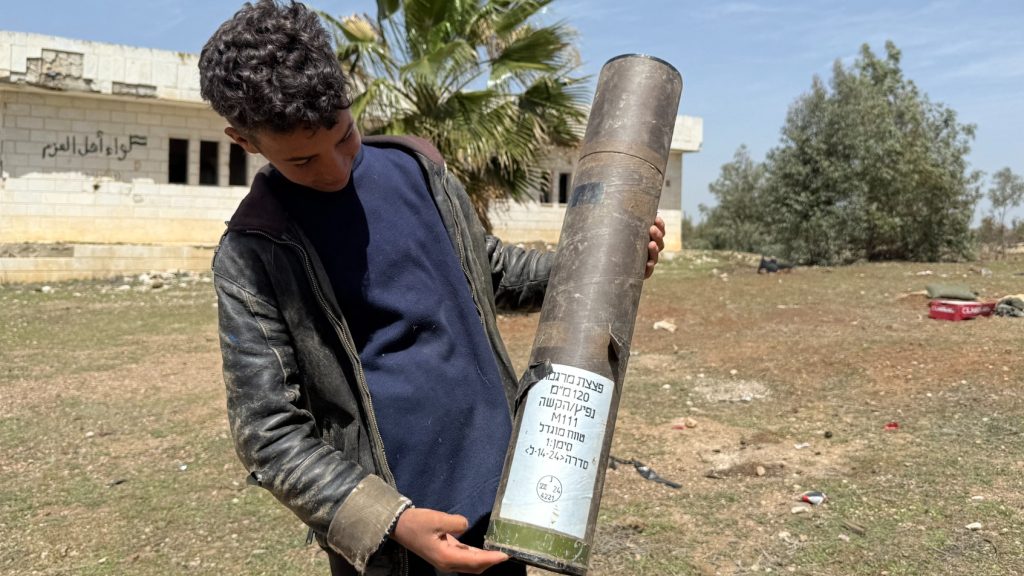
In April, Israeli air power once again pierced Syrian skies, unleashing a relentless barrage of missiles upon military installations and civilian districts. The attacks spanned from central airfields to the southern periphery, where ground forces advanced near Nawa, claiming nine civilian lives. The official narrative, as it always has, centered on “defence” and “pre-emption.” Yet the deeper truth lies in an assault on collective memory itself.
By striking Nawa, Israel did not simply destroy a town. It targeted a cradle of Islamic scholarship and spiritual tradition. The city is the birthplace of Imam al-Nawawi, a venerated figure in Islamic civilization whose teachings resonate across time and regions. He memorized the Quran in its hallowed halls, choosing contemplation over commerce. His legacy persists in mosques, schools, and homes from Cairo to Kuala Lumpur. Bombing this place equates to bombing a lineage of wisdom.
A Region of Enduring Influence
Not far from Nawa, Tell al-Jabiyah looms, where Caliph Omar ibn al-Khattab once stood. Journeying from Madinah, he received the keys of Jerusalem, meeting commanders on that ancient ridge before a pivotal handover. Their footsteps remain imprinted in the soil of Houran, a land steeped in sacred history. Beyond this, the towns of Izraa and Majdal in Daraa birthed Ibn al-Qayyim al-Jawziyyah and Ibn Kathir—towering minds whose works shaped Islamic thought and chronicles.
At the Yarmouk River, another epoch-defining moment unfolded. Khalid ibn al-Walid led Muslim forces to a decisive triumph against the Byzantines in 636 AD, toppling imperial authority and ushering a new era. To attack this terrain is not merely to trespass; it is to challenge the very fabric of Arab and Islamic continuity. The land of Houran is not passive—it is a guardian of centuries of resistance, conquest, and renewal.
Occupation and Symbolism
Since the fall of the Assad government on 8 December 2024, Israel has escalated its campaign in Syria. Hundreds of airstrikes have obliterated military bases, air defenses, and armories. The stated reason? Distrust of the new interim administration. Yet the timing and breadth of the strikes suggest a more profound motive. Just one day after Assad relocated to Moscow, Israeli leaders announced plans for a “security zone” spanning 400 square kilometers—an expanse larger than Gaza itself.
Israeli troops now occupy positions along Mount Hermon’s Syrian flank, openly defying international law. Officials initially hinted at temporary control, but the mask has since fallen. “We will stay,” proclaimed Defence Minister Israel Katz, standing upon the mountain. “We will secure the southern area’s demilitarization and safeguard the Druze from perceived threats.” This claim of minority protection rings hollow when history reveals its ulterior intent.
“We will remain,” declared Defence Minister Israel Katz, standing atop the mountain. “We will ensure the southern zone is demilitarized and shield the Druze from threats.”