
Syria walks back Damascus alcohol ban after outcry from residents
Damascus Alcohol Ban Reversed Amid Resident Concerns
Syrian authorities have reversed an alcohol ban in Damascus following widespread backlash from citizens and claims of sectarian bias. The initial restriction, announced on Monday, targeted the sale of alcoholic beverages in restaurants and nightclubs across the city, with exceptions granted to Christian neighborhoods like Bab Touma, Qassaa, and Bab Sharqi.
Clarification and Apology Issued
In response to criticism and demonstrations, the governorate released a clarification on Sunday, adjusting the ban to allow alcohol sales for tourism-related purposes. This included hotels, restaurants, and other designated venues. The statement also apologized to the Christian communities, acknowledging that singling them out was perceived as discriminatory.
“The Damascus Governorate apologises to our people in Bab Touma, Qassaa and Bab Sharqi for the misunderstanding that arose from the decision, which was circulated inappropriately,” the clarification stated.
The governorate emphasized that these areas are central to Damascus’s cultural identity and vowed to revise the policy to avoid offending any group. This move comes as the transitional government, led by President Ahmed al-Sharaa, seeks to balance religious traditions with public acceptance.
Social Restrictions and Public Dissent
Since ousting Bashar al-Assad in December 2024, the government has generally avoided imposing strict social rules on the population. However, recent policies such as a January ban on female public sector workers wearing makeup and a mandate for full-body swimsuits on beaches have sparked fears of tightening control.
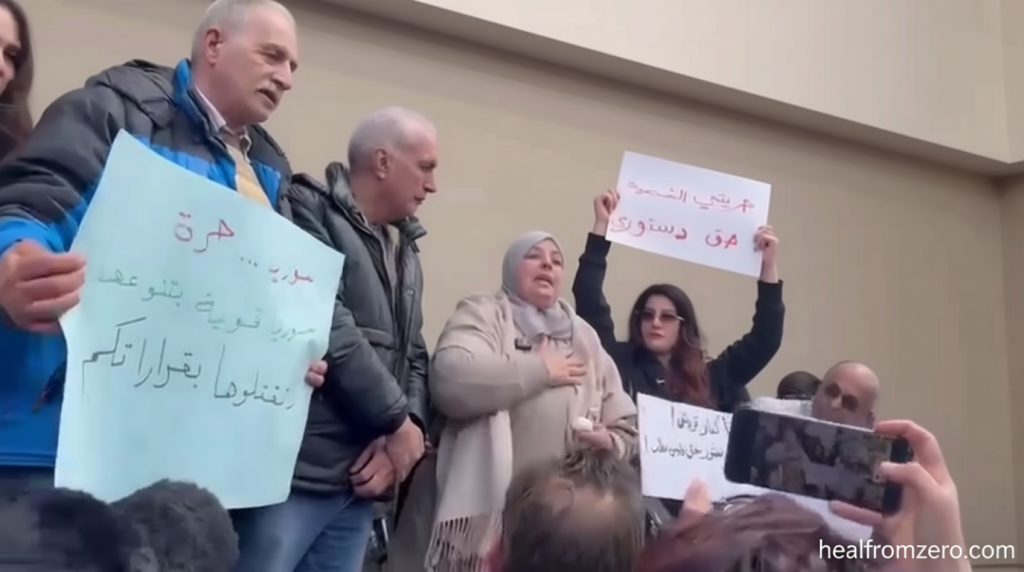
Many secular Sunnis and minority groups view the alcohol ban as a threat to personal freedoms. Residents in Bab Touma protested on Sunday, citing broader grievances. Demonstrators, including both Muslims and Christians, argued the rule was “sectarian” and risked dividing communities.
“Restricting the sale of alcohol to predominantly Christian areas could make these regions vulnerable to terrorist attacks, given the history of targeting Christians in Syria,” a statement from Christian advocacy groups warned.
Political Context and Electoral Challenges
The interim administration has faced difficulties in stabilizing the country amid ongoing unrest, Israeli attacks, and shifting alliances. In October, parliamentary elections were held, with Sharaa appointing a third of the seats while the remaining were chosen by local committees dominated by government loyalists. Sweida province, home to a majority of Druze, was excluded from the process, leaving its 32 seats vacant.
Under a temporary constitution adopted in March, the parliament will handle legislative duties until a permanent one is finalized. The new authorities claim popular elections are impractical due to the devastation of Syria’s 13-year conflict, which resulted in hundreds of thousands of deaths and millions displaced. Yet, this method has disappointed pro-democracy advocates who hoped for more inclusive reforms after Assad’s fall.