
Moon fly-by sees astronauts regain contact with Earth and head for home
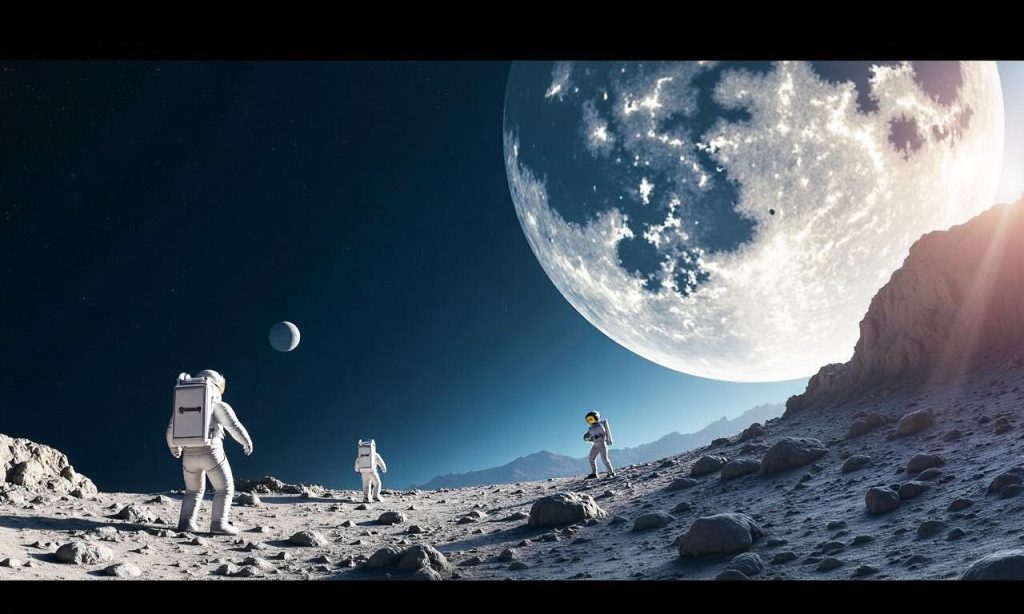
Moon fly-by sees astronauts regain contact with Earth and head for home
Four NASA astronauts from the Artemis II mission have begun their return to Earth following a notable lunar fly-by, which set a new record for human distance from the planet. During the maneuver, the crew experienced a 40-minute communication blackout as the spacecraft passed behind the Moon. Astronaut Christina Koch expressed relief upon reestablishing contact, stating:
“It’s so great to hear the Earth again.”
After the blackout, the Orion capsule approached within thousands of miles of the lunar surface, allowing the astronauts to witness a total solar eclipse as the Moon obscured the Sun’s light. The spacecraft surpassed the previous record of 248,655 miles (400,000km) held since 1970 by Apollo 13, achieving this milestone at 13:56 EDT on Monday. Canadian astronaut Jeremy Hansen reflected on the achievement with modesty, noting:
“As we surpass the furthest distance humans have ever traveled from planet Earth, we do so in honoring the extraordinary efforts of our predecessors.”
The crew’s tasks included documenting the Moon’s far side, a region unseen from Earth. Equipped with digital cameras and sketching tools, they captured images and described observations, highlighting the unique value of human perspective. While Orion did not plan to land, it circled the Moon’s unobservable side, offering the first direct view of certain craters and geological formations. The astronauts also requested to name two lunar features: one in tribute to their spacecraft, Integrity, and another to honor the memory of Commander Reid Wiseman’s late wife, Carroll.
During the six-hour flyby, the crew adjusted Orion’s internal lighting to minimize window reflections and enhance visibility. NASA emphasized the importance of human interpretation, as trained observers can identify subtle colors and textures not easily captured by automated systems. Dr. Kelsey Young, the agency’s lunar science lead, explained:
“Human eyes and brains are highly sensitive to subtle changes in color, texture, and other surface characteristics.”
This sensitivity allowed the team to detect faint shades and geological details more clearly than satellite imagery alone.
President Trump joined the astronauts during the mission, applauding their accomplishments and inquiring about the most memorable moment. Wiseman responded with emotion, recalling the unique sights:
“We saw sights that no human has ever seen, not even Apollo, and that was amazing for us.”
The crew’s heartfelt tribute, including a moment of hugging on live feed, underscored the personal significance of their journey. Their equipment ranged from professional SLR cameras to smartphones, ensuring both technical precision and personal documentation of the lunar experience.