
He’s Australia’s most decorated soldier. Now he’s at the centre of a historic war crimes case
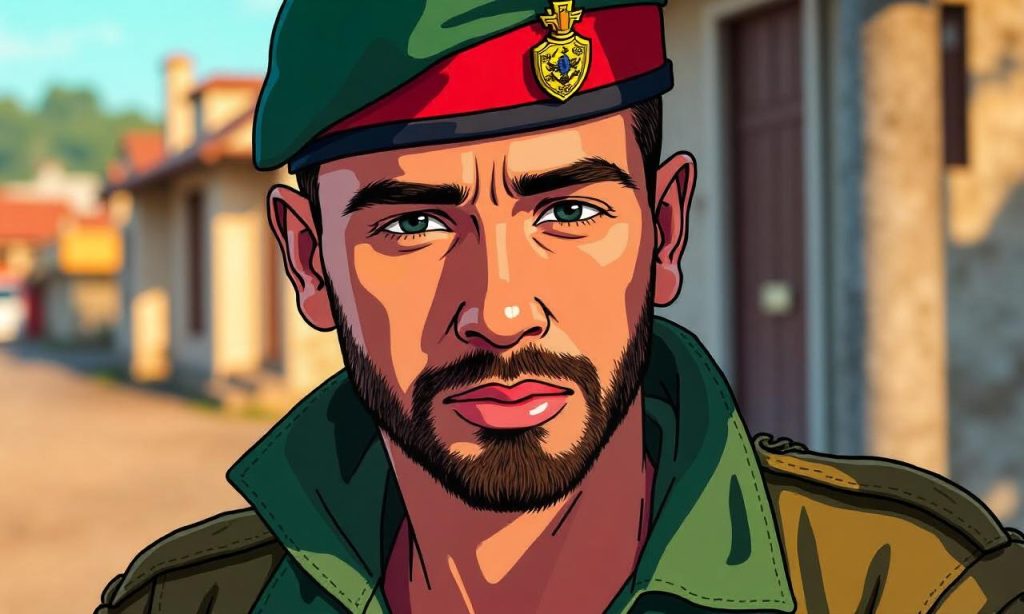
He’s Australia’s Most Decorated Soldier. Now He’s at the Centre of a Historic War Crimes Case
A pivotal chapter in Australia’s military history has emerged following the arrest of Ben Roberts-Smith, a decorated veteran, at Sydney airport. On Tuesday, he was quietly escorted from a plane into a police car, marking the start of a criminal trial that could redefine his legacy. Roberts-Smith, who left the Australian Defence Force (ADF) in 2013, is facing five murder charges linked to alleged war crimes during his time in Afghanistan. This development follows a high-profile civil case that found he had unlawfully killed several unarmed detainees, casting doubt on his heroic image.
A Hero Turned Controversy
Roberts-Smith, a former Special Air Service (SAS) corporal and Victoria Cross recipient, was once celebrated as a national icon. His single-handed actions during a Taliban attack earned him Australia’s highest military honor, leading to a surge of accolades, including the title of Father of the Year. However, in 2018, Nine newspapers published allegations of misconduct, including unlawful beatings, prisoner killings, and domestic violence. These claims sparked a legal fight that spanned seven years, costing millions, and was labeled Australia’s “trial of the century.”
“For Roberts-Smith to now be charged with war crimes—multiple ones—is a major cultural and social moment for a nation that has long revered its military heroes,” said Professor Donald Rothwell. “This challenges the narrative of Australian service members as paragons of virtue.”
Despite his defense, which called the accusations “egregious” and motivated by jealousy, a Federal Court in 2023 ruled that the four murders he was accused of were substantially true. The decision was upheld on appeal, leaving Roberts-Smith with life in prison as a potential outcome if convicted. He would become the first Victoria Cross recipient in Australia’s history to face war crime charges, a distinction that underscores the gravity of the case.
The Broader Implications
The prosecution of such a prominent figure is unprecedented globally, according to Deane-Peter Baker, a special forces ethics scholar. “We’ve never seen this before,” Baker remarked. The case has become a symbol of Australia’s reckoning with its actions in Afghanistan, where elite soldiers were implicated in the deaths of 39 civilians, per the 2020 Brereton Report. This report led to the creation of the Office of the Special Investigator (OSI), tasked with examining war crimes, though progress has been slow.
To date, the OSI has initiated 53 investigations, 39 of which have been concluded. Only one other individual, former SAS soldier Oliver Schulz, has been charged. Ross Barnett, the OSI’s director of investigations, highlighted the challenges: “We face difficult circumstances, including limited physical evidence and lack of cross-border cooperation.” Without access to Afghanistan’s crime scenes, photographs, or post-mortems, the team relies heavily on witness accounts from fellow soldiers.
The onus now rests on testimony from those who served alongside Roberts-Smith. This adds complexity to the case, as the credibility of these accounts becomes central to the trial. As the proceedings unfold, Australia’s military legacy is being tested in ways that challenge both its reputation and the stories it has long told about its warriors.