
Has Artemis II shown we can land on the Moon again?
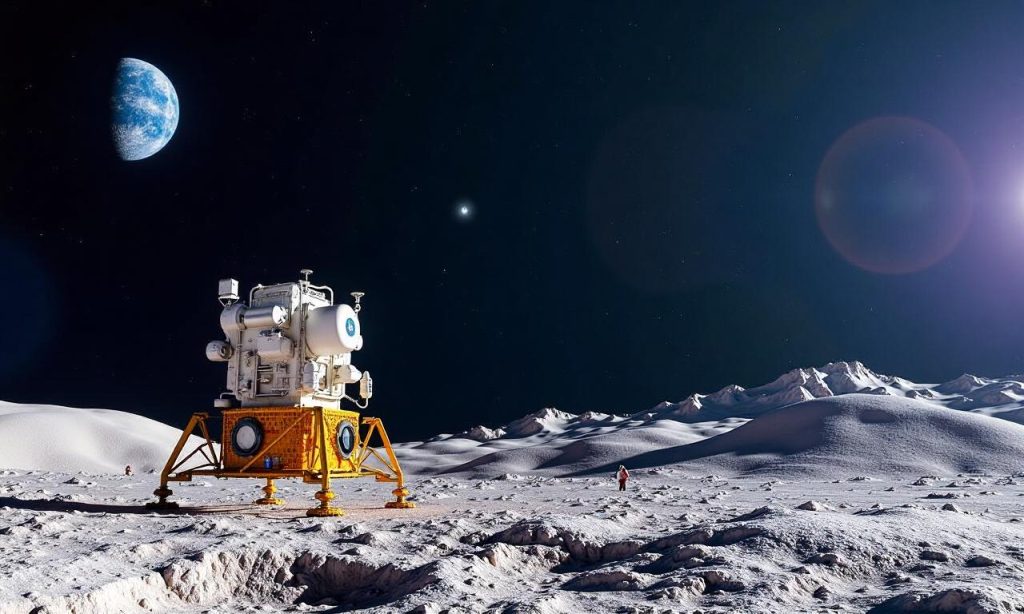
Artemis II: A Step Toward Lunar Return?
Since its April 1st launch, NASA’s Artemis II mission has cleared all major milestones, with its rocket, spacecraft, and crew exceeding expectations. The first six days of the journey confirmed that the Orion capsule operates as designed when carrying humans—a feat no simulation could fully replicate. This achievement has reignited optimism for a world in need of renewed momentum, as the crew’s actions underscored the mission’s broader significance beyond technical checks.
Technical Triumphs
The Space Launch System (SLS) generated 8.8 million pounds of thrust at liftoff, performing flawlessly according to every engineering metric. Each stage of the ascent was described by mission control as “nominal,” including maximum dynamic pressure, engine shutdown, and booster separation. Remarkably, two of the three planned course adjustments were omitted, as the trajectory proved precise enough to avoid them. Dr. Lori Glaze, head of the Artemis programme, called the critical translunar injection burn “flawless,” marking a pivotal moment 36 hours after launch.
“Credit to them—they got it right the first time,” remarked Dr. Simeon Barber, a space scientist at the Open University. “This is all about putting humans in the loop—these pesky humans that press buttons, breathe carbon dioxide, and want air conditioning and the use of the toilet.”
Human Factors in Spaceflight
While the mission’s primary goal was to test Orion’s systems with crew aboard, it also revealed how human presence impacts spacecraft operations. Minor issues, such as a water dispenser malfunction and a helium system redundancy loss, were addressed swiftly, demonstrating the team’s adaptability. Engineers monitored CO2 removal systems and thruster performance during rigorous tests, reinforcing confidence in Orion’s readiness for future lunar landings.
Scientific Insights and Broader Implications
NASA highlighted the mission’s scientific contributions, including real-time observations of 35 lunar geological features and color data that could hint at mineral composition. A solar eclipse viewed from deep space was described by pilot Victor Glover as “just looks unreal.” Yet, Professor Chris Lintott of Oxford, co-host of The Sky at Night, noted that the artistic appeal of these images surpasses their scientific utility. The success of Artemis II also raises questions about the feasibility of landing on the Moon by 2028, as envisioned by NASA and former President Trump.
Despite the challenges, the mission has shifted the narrative. After two delayed launches in February and March due to technical hiccups, NASA Administrator Jared Isaacman emphasized the need for a more consistent approach. “Launching a rocket as important and complex as SLS every three years isn’t a path to success,” he stated, signaling a commitment to reliability. With the data gathered, the next phase of lunar exploration now appears within reach.
Meanwhile, India’s Chandrayaan-3 mission successfully landed on the Moon, adding to the global effort to rekindle interest in space exploration. Artemis II’s accomplishments, however, remain central to the U.S. plan, offering both technical validation and a renewed sense of purpose for future missions.