
Who might replace Iran’s supreme leader? There’s no clear successor
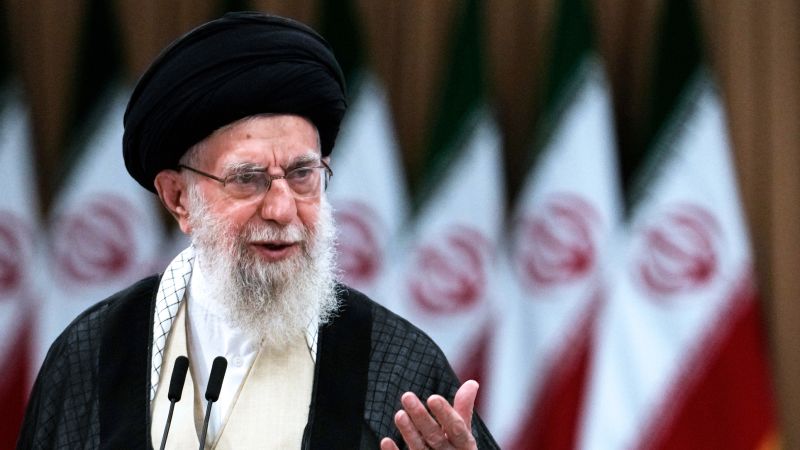
Iran’s Supreme Leader Replacement Uncertain Amid Political Uncertainty
The Islamic Republic of Iran is navigating a critical transition as it seeks to appoint a new supreme leader following the assassination of Ayatollah Ali Khamenei in a coordinated US-Israeli military operation. Unlike previous transitions, this time there is no formally designated heir, leaving the 88-member Assembly of Experts to shoulder the responsibility of selecting the next authority figure. This process, which has only occurred once since the regime’s founding in 1979, will be pivotal in determining the direction of Iran’s political and religious leadership.
US President Donald Trump has emphasized the need for sustained pressure on the Iranian regime, hinting that future strikes could further destabilize the country. This raises concerns about the Assembly of Experts’ ability to convene without risk of disruption. The constitution outlines strict criteria for the new leader: they must be male, a cleric with political acumen, moral standing, and unwavering support for the Islamic Republic. Reformist figures, who advocate for more open policies, may find themselves sidelined in favor of candidates who align with traditionalist values.
Contenders in the Succession Race
Mojtaba Khamenei, the supreme leader’s second son, is considered a potential candidate. While he holds significant influence and is affiliated with the Islamic Revolutionary Guard Corps (IRGC) and its Basij paramilitary force, his lack of formal clerical rank and absence of a prominent role within the regime pose challenges. He was also subject to US sanctions in 2019, adding another layer of complexity to his candidacy.
“Khamenei’s appointment of Arafi to key positions demonstrated his trust in the cleric’s administrative skills,” noted Alex Vatanka of the Middle East Institute. Arafi, a long-time confidant of Khamenei, currently serves as deputy chairman of the Assembly of Experts and has held a role in the Guardian Council, which oversees electoral processes and legislative oversight. Known for his academic contributions and multilingual abilities, Arafi’s soft-spoken nature and limited security ties may influence the selection process.
Another name in consideration is Mirbagheri, a hardline cleric representing the most conservative faction of the clerical elite. He has expressed strong opposition to Western powers and views ideological conflict as inevitable. In a recent statement, he defended the high casualties in Israel’s Gaza war, claiming that sacrificing half the global population is justified if it brings closer alignment with divine principles.
Khomeini, the grandson of the Islamic Republic’s founder, brings a legacy of revolutionary authority. As custodian of the Khomeini mausoleum, he has a symbolic connection to the regime’s origins. However, his lack of public office and limited engagement with the security apparatus suggest he may not be the most influential candidate. Meanwhile, Bushehri, a senior cleric and first deputy chairman of the Assembly of Experts, is closely tied to the succession machinery. While he was once a trusted advisor to Khamenei, his low public profile and absence of direct ties to the IRGC make his role uncertain.