
The Greens’ Gorton and Denton by-election win was about inclusion — not sectarianism
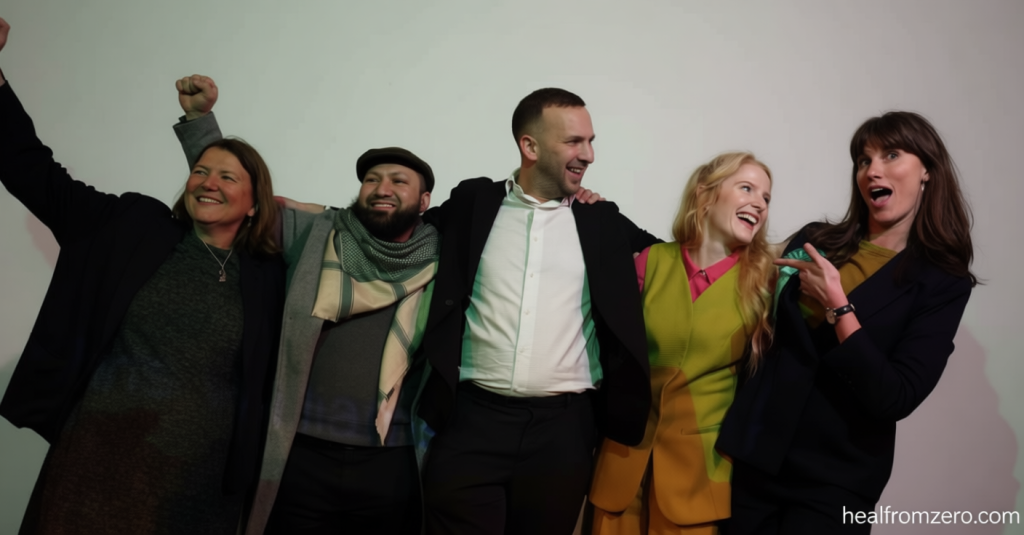
The Greens’ Gorton and Denton by-election win was about inclusion — not sectarianism
What an extraordinary evening that turned out to be. Not merely due to the Green Party’s triumph in securing their first parliamentary by-election victory in Gorton and Denton, but because they shattered a once unshakable Labour majority exceeding 13,000 votes. This wasn’t just a political milestone—it was a turning point in how communities perceive representation.
For the first time, a Green MP has been elected in the North of England, but this achievement extends beyond that. The result symbolizes a broader movement, signaling that a fresh political ethos can take root in the UK—one rooted in optimism, unity, and the recognition of shared values over division.
A language of hope
Last night, voters were reminded that politics can be a force for connection, not exclusion. The Greens demonstrated that it’s possible to rekindle faith in democratic processes by prioritizing empathy and inclusivity over rhetoric that fuels hostility.
Their campaign didn’t just focus on policies or the strength of their candidate, Hannah Spencer. It was the
way they spoke to people that made all the difference.
By embracing multilingual communication, they bridged gaps in a society where many feel unheard.
Breaking the Westminster mold
Traditional UK politics has often relied on a monolithic voice—a single, English-speaking narrative that overlooks the diversity of lived experiences. Reform’s Matt Goodwin, a Kent-based candidate, exemplified this narrow approach, using a language shaped by southern England’s elite.
Yet in Gorton and Denton, where nearly 40% of residents identify as Muslim and many households speak Urdu, Bangla, or Arabic, this style of communication fell short. The Greens adapted by delivering messages in the languages people actually use, ensuring their platform resonated with those whose voices had long been sidelined.
A global lesson in outreach
Campaigns abroad have long shown that multilingual engagement isn’t a strategy to fragment communities—it’s a way to draw people into the conversation. Take Zohran Mamdani’s success in New York, where Arabic, Spanish, and Urdu videos helped amplify dialogue in overlooked neighborhoods. His victory, praised by Labour allies, proves that inclusivity can be a unifying force.
For the Greens, this approach isn’t about dividing but about ensuring every voice is part of the story. Whether discussing healthcare, housing, or racial harmony, they framed issues in ways that connect with all residents—regardless of the language they speak at home.
The 26.5% shift toward the Greens in this election isn’t just about expanding parliamentary seats. It’s about showing that when people feel their experiences are acknowledged, their participation in democracy is valued. This isn’t just a win for a party—it’s a win for a vision of politics that sees everyone as part of the same community.
To view this video, JavaScript must be enabled, and a browser supporting HTML5 video is required.
This site is protected by reCAPTCHA, and the Google Privacy Policy and Terms of Service apply. Your information will be used in line with our Privacy Policy.