
Inside the growing police use and misuse of Flock’s license-plate reader cameras
Inside the Growing Police Use of Flock Cameras
Healfromzero.com – Inside the growing police use of automated surveillance technology has revealed both benefits and troubling patterns. Law enforcement agencies nationwide rely on Flock Safety’s license-plate reader cameras to track vehicles and solve crimes. Yet recent cases show officers exploiting these same systems for personal purposes, creating tension between public safety and privacy rights.
Milwaukee Cases Spark National Attention
At the center of this debate is Flock Safety, an Atlanta-based company operating one of the largest networks of automated license-plate readers in the United States. More than 5,000 law enforcement agencies across 49 states have adopted the technology, with over 120,000 cameras deployed throughout the country.
Last December, Milwaukee Police Department investigators launched an inquiry into officer Josue Ayala. According to a February criminal complaint, Ayala secretly monitored his romantic partner’s vehicle through the Flock system 124 separate times. He also tracked his partner’s former significant other on 55 occasions. Court documents indicate Ayala agreed to resign and plead guilty to attempted misconduct in public office.
Adding to the controversy, Detective Tehrangi Chapman—who had investigated Ayala—faced charges earlier this month. Chapman admitted to using the Flock system to monitor two individuals and secretly placing a GPS tracking device on one person’s car.
A Broader Pattern of Misuse
These Milwaukee incidents represent just a fraction of a broader trend. The Institute for Justice has documented at least two dozen cases in which officers resigned or were arrested for allegedly abusing automated license-plate reader systems to stalk romantic interests.
Recent developments include five police officers in Albany, Georgia, arrested and terminated last month for suspected misuse of Flock technology. Meanwhile, police in Greer, South Carolina, dismissed two officers for similar infractions involving the same surveillance product.
“This case represents an abuse of power and a misuse of power. It results in a lack of trust from our community,” Milwaukee County deputy district attorney Matthew Torbenson stated during Ayala’s sentencing hearing on Wednesday.
“That’s the story that is going to end and be printed today is about police misuse of the Flock system, when the truth of the matter is the vast majority of law enforcement appropriately uses that tool to investigate crime.”
How the Technology Works
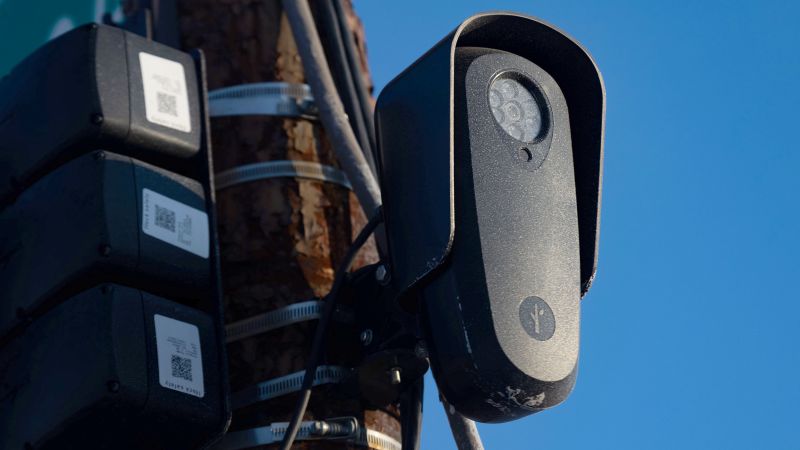
Automated license-plate readers, commonly referred to as ALPRs, function as cameras mounted either on patrol vehicles or fixed poles along public roadways. These devices capture images of vehicle license plates and other identifying characteristics, storing the data in centralized databases. When a vehicle appearing on a “hotlist”—such as those linked to criminal activity or missing persons—passes a camera, the system generates an alert for nearby officers. Police can also conduct searches for specific license plate numbers to review a vehicle’s recent movements. Additionally, departments have the ability to share collected information with neighboring agencies to improve coordinated responses.
In reaction to mounting concerns, Flock has implemented new safeguards. CEO and co-founder Garrett Langley explained to CNN that the company introduced an “audit assistance tool” last month designed to notify auditors when the system detects “abnormal” usage patterns.
“This is such a powerful tool, we don’t want to reduce the efficacy of the 99.99% of officers who go to work every single day and want to do good for their community,” Langley remarked.
Financial Scale and Real-World Impact
Flock’s market position has grown substantially since its founding in 2017. The company announced a valuation of $7.5 billion last March following a $275 million funding round led by prominent Silicon Valley investors, including Andreessen Horowitz and the Peter Thiel-backed Founders Fund.
Law enforcement officials consistently emphasize the technology’s utility in solving crimes, particularly cases involving stolen vehicles. One notable example occurred last year when police utilized Flock cameras to identify and apprehend the suspect responsible for a mass shooting at Brown University.
Frequently Asked Questions
How many Flock cameras are currently deployed in the United States? Over 120,000 cameras have been deployed throughout the country, operated by more than 5,000 law enforcement agencies across 49 states.
What is Flock Safety’s current valuation? The Atlanta-based company announced a valuation of $7.5 billion in March following a $275 million funding round.
How does Flock detect misuse of its cameras? The company introduced an “audit assistance tool” that notifies auditors when the system detects “abnormal” usage patterns by officers.
What types of cases have involved Flock camera misuse? The Institute for Justice has documented at least two dozen cases where officers abused automated license-plate reader systems to stalk romantic interests.