
His restaurant put edible ants on the menu. Now he could face one year in prison
South Korean Chef Faces Legal Trouble for Serving Ants on Dessert
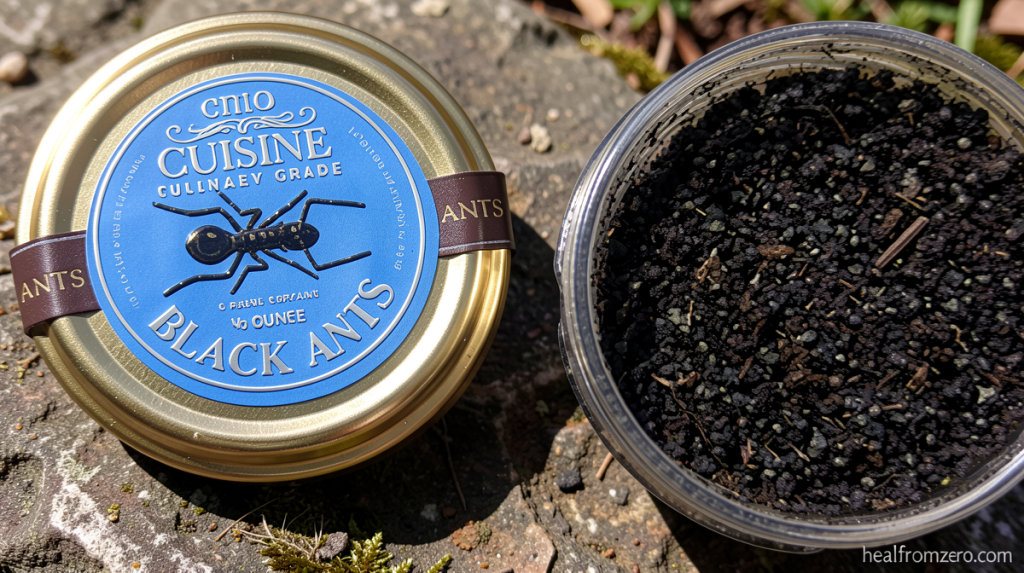
Healfromzero.com – A prominent two-Michelin-starred dining establishment in South Korea is now confronting substantial financial penalties and potential imprisonment for its unconventional dessert garnish. The culinary venue could see its owner sentenced to twelve months behind bars, alongside significant monetary sanctions, after prosecutors determined that the restaurant violated national food regulations by serving edible ants. The controversy centers not on the mere inclusion of insects in the menu, but rather on South Korea’s intricate food legislation. This law strictly governs which specific insect varieties may be consumed by the public. In keeping with local legal tradition, authorities have declined to publicly identify either the restaurant or its proprietor. According to statements provided to CNN, the establishment has been incorporating dried ants sourced from both Thailand and the United States into its offerings since 2021. Prosecutors allege that the restaurant distributed approximately 49,000 individual ants across 12,200 sherbet servings during this period. Although the chef is responsible for preparing the dish and introducing it to the menu, legal action has been directed at the restaurant’s owner for breaching the Food Sanitation Act. It remains uncertain whether the chef and owner are the same individual.
Heavy Metal Concerns and Financial Penalties
According to government officials, the problem extended beyond the simple presence of ants in the food. The Ministry of Food and Drug Safety reported that investigators discovered the ants used by the restaurant contained heavy metal concentrations reaching up to 55 times the maximum permissible level established for other edible insects. Legal representatives have petitioned the court to levy a penalty of 20 million won, equivalent to roughly $13,580, against the restaurant. This request is based on documented profits of 120 million won, or approximately $81,470, accumulated over the preceding four years. The final judgment is anticipated to be revealed during September.
Global Context: Insects as Sustainable Protein
Supporters across South Korea and internationally have been increasingly vocal about the nutritional value of insects, arguing they provide protein quality comparable to conventional animal products. Because insects require fewer resources to raise and harvest compared to traditional livestock, they represent a promising solution for addressing climate concerns. South Korean culinary traditions already embrace insect consumption. Beondegi, a popular street food consisting of steamed silkworm pupae served in paper cups, exemplifies this cultural acceptance. However, the Food Sanitation Act currently permits only ten insect species for human consumption, including grasshoppers and silkworms. Any other insect variety, such as ants, demands special authorization from regulatory bodies. Lawyers defending the restaurant maintain that their chef employed ants to introduce acidity to the dessert, unaware that this recipe, commonly used in the United States and Europe, is legally prohibited in South Korea. They further noted that ants were served to approximately 60 percent of patrons and were clearly labeled on the menu as an ingredient.
Insects Around the World
A 2013 publication by the United Nations Food and Agriculture Organization revealed that at least two billion individuals worldwide consume insects on a daily basis. The most frequently eaten insect categories globally include ants, beetles, bees, caterpillars, cicadas, crickets, dragonflies, flies, grasshoppers, leaf bugs, locusts, scale insects, termites, and wasps. This practice has experienced considerable growth in Europe and the United States over recent years. A previous analysis by Global Market Insights estimated that the American edible insect sector would expand to nearly $80 million by 2024, with European markets also demonstrating positive growth trajectories. Among enthusiastic advocates for insect consumption in Western markets is Joseph Yoon, a New York City-based chef and executive director of Brooklyn Bugs. This organization aims to shift public attitudes toward edible insects. Yoon has created dishes featuring tarantula tempura and caramel popcorn containing grasshoppers through his work as both a guest chef and industry promoter. In Copenhagen, Alchemist—a two-Michelin-starred venue currently positioned at number five on The World’s 50 Best Restaurants ranking—collaborated with researchers to ferment dairy products using both live and frozen ants. This innovation produced a celebrated “ant-wich,” consisting of ice cream enclosed between ant-shaped cookies alongside an ant-infused gel.
The Ministry of Food and Drug Safety said investigators “found the ants from this restaurant contained heavy metal levels up to 55 times the maximum limit allowed for other edible insects.”