
Old Cairo inspired these sisters to create handbags worn by Beyoncé and Gigi Hadid
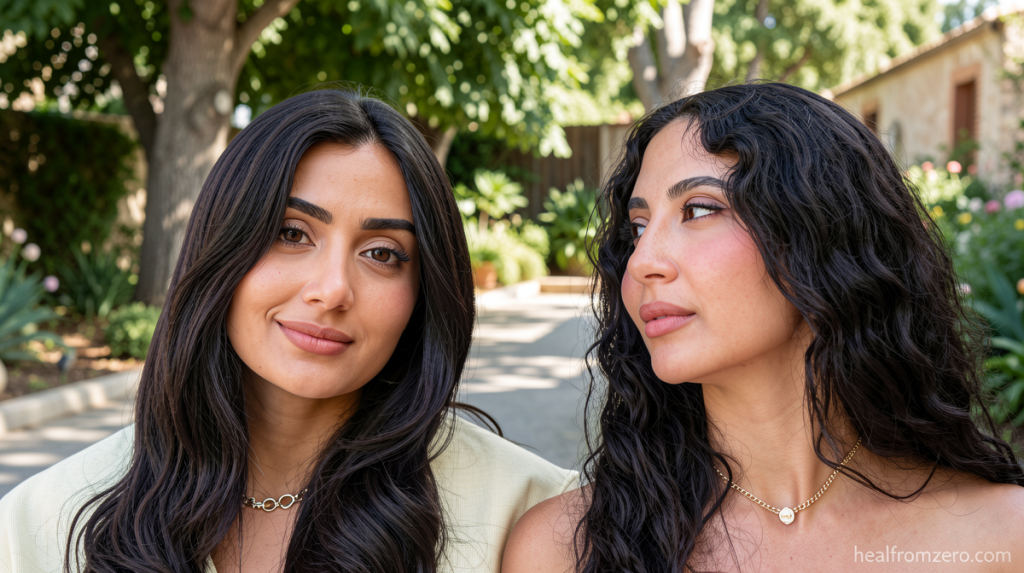
From Ancient Alleys to Celebrity Wardrobes: The Okhtein Story
A Sisterly Vision Rooted in Egyptian Heritage
Healfromzero.com – When Aya and Mounaz Abdelraouf first wandered through the narrow streets of Old Cairo, they experienced something extraordinary. More than ten years ago, the Egyptian sisters found themselves transported to another era entirely. “We felt like we were living at a different time,” Aya Abdelraouf remembered. “It was as if the world had stood still.” What captivated them most was witnessing generations of brass artisans passing down their craft, creating intricate lamps, decorative jewelry, and elegant tableware that would eventually spark a luxury brand.
That transformative visit became the foundation for Okhtein—meaning “two sisters” in Arabic—a label that weaves together Egypt’s rich artisanal traditions with contemporary handbag design. The sisters’ signature pieces prominently feature brass, either engraved or stripped, combined with complementary materials such as leather. “Brass is always the main element,” Mounaz Abdelraouf explained. “That’s why our bags are like collectibles.”
Architectural Inspiration Meets Modern Design
One of Okhtein’s most recognizable motifs is the palmette—a fan-shaped palm leaf pattern that appears on many of their creations. This design originated from a specific wall behind the Gothic-style facade of the Madrasa of Ibn Qalawun, a religious school and mausoleum constructed in the thirteenth century. The symbol carries deeper meaning beyond aesthetics. “Historically, palmette motifs were used as stoppers (signifying a pause or used as a divider) in poetry and in the Quran,” Aya Abdelraouf noted.
The brand has garnered international attention, with high-profile figures including Beyoncé, Gigi Hadid, and Emma Watson spotted carrying Okhtein bags. Rather than relying on obvious Egyptian clichés, the sisters prefer subtle nods to their homeland’s layered identity. “It’s not a pyramid-shaped bag staring you in the face,” Aya Abdelraouf observed. Her sister expanded on this philosophy: “Egypt is not just (ancient) Egypt. It’s a North African country, it’s a Middle Eastern country, it’s an Arab country, it’s a Coptic country, it’s a Muslim country.”
Expanding Beyond Cairo
Okhtein’s physical presence continues to grow. In addition to locations in Cairo, Dubai, and Riyadh, the brand recently established a boutique within the Grand Egyptian Museum near the Giza pyramids. This museum, one of the largest globally dedicated to a single civilization, features a store designed by architect Walid Zeidan. The interior layout and display cabinet placement mirror the ancient route pharaohs traveled in feluccas—wooden vessels with triangular sails—along the Nile River’s winding course.
“The museum holds a glimpse of what Egypt has to offer in terms of civilization,” Mounaz Abdelraouf reflected. “To be part of this glimpse is just insane. To be right in front of the statue of Ramses (Ramesses II) is very humbling.” She views this location as providing visitors with an opportunity to carry home a fragment of contemporary Egyptian culture. “All these visitors, tourists coming in and out, they get to take a piece of Egypt home,” she added.
A Family Legacy of Fashion
Since debuting in 2014, Okhtein has evolved beyond handbags to encompass fine jewelry and accessories. The sisters now collaborate with international craftspeople, sourcing embroidery work from India and crafting closing panels in Italy. Their younger brother manages the brand’s daily operations and expansion efforts.
Fashion runs through the family’s history. Long before Okhtein existed, Aya and Mounaz’s grandfather operated a fabric store, importing textiles from across the globe. His trade frequently brought him and his wife to fashion capitals like Paris and Milan. “Our grandmother was very stylish; she looked like a model,” Aya Abdelraouf recalled. “We would spend hours in her closet. It felt like stepping into a vintage world before vintage was even a thing.” She nurtured their passion for fashion and introduced them to leather, which would later become central to Okhtein’s aesthetic.
Today, the sisters are reviewing their grandmother’s photographs to develop a collection for winter 2027, honoring her memory and celebrating her distinctive style. As with every Okhtein creation, they draw inspiration from the past to forge something entirely new. “If you’re wearing an Okhtein piece, it’s actually the piece that found you—not the other way around,” Aya Abdelraouf said. “It’s the same feeling you get when you thrift a one-of-a-kind piece.”