
Trump downplays Chinese election interference five days after describing breach of historic proportions
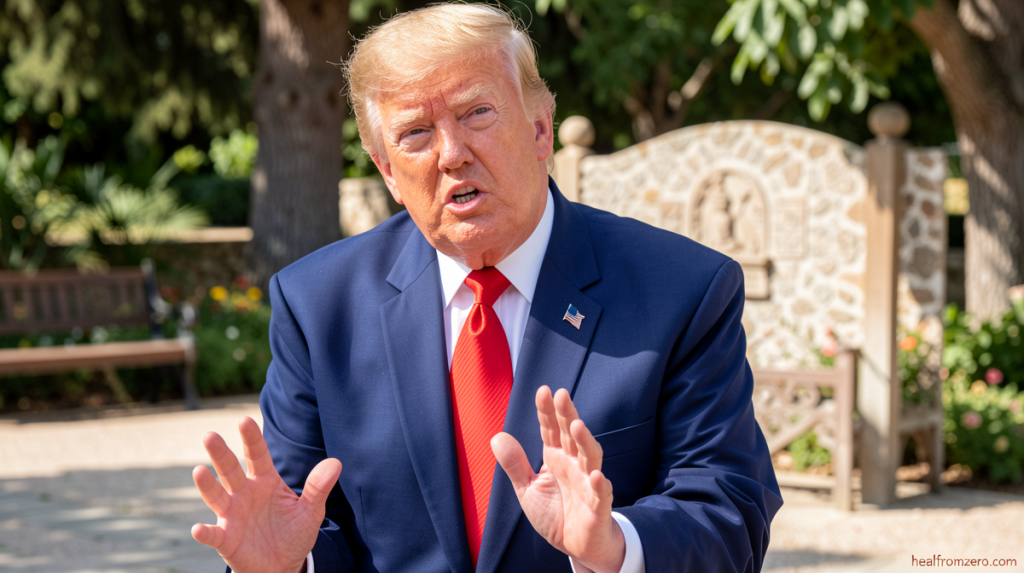
Trump Softens Stance on Chinese Election Data Breach After Initial Alarm
A Shifting Narrative on International Interference
Healfromzero.com – Just five days after delivering a dramatic address in which he characterized Chinese activities as constituting the most significant compromise of American electoral information ever recorded, President Donald Trump appeared to minimize the severity of Beijing’s actions. During a Tuesday appearance, the president suggested that the United States engages in comparable practices toward China, framing the situation as a mutual exchange rather than a unilateral violation. While Trump indicated that American officials would engage in discussions with their Chinese counterparts regarding the matter, he offered no specific penalties or consequences for what he had previously described as a historic breach.
The president characterized the alleged data acquisition as something that had occurred sufficiently long ago to be considered behind the nation. “It took place a long time ago. I think China is maybe a little bit different today than it was then,” Trump remarked during his comments. This statement came despite his forceful accusations made during a primetime television address the previous week, in which he asserted that Chinese entities had unlawfully obtained approximately 220 million American voter records beginning in 2020. At that time, Trump warned that the “data loss presents an unprecedented election security nightmare” for the country.
Reciprocity in International Relations
On Tuesday, Trump drew a parallel between American actions and those attributed to China, suggesting that the relationship operates on equal terms. “They do things and we do things to them,” he explained. “I’ll be honest, we do things to them too. It’s not a one-way street.” This characterization represents a notable shift from his earlier position, which had emphasized the exceptional nature of the Chinese acquisition and its potential impact on American democratic processes.
“They do things and we do things to them. I’ll be honest, we do things to them too. It’s not a one-way street.”
The president’s comments suggest that while the voter file breach warrants attention, it should not be viewed in isolation from broader patterns of international competition and reciprocity. By placing the Chinese actions within a context of mutual engagement, Trump appears to be preparing the public for a diplomatic rather than punitive response to the situation.
Diplomatic Continuity Despite Tensions
Adding another layer to the developing narrative, a White House official confirmed on Monday that preparations for President Xi Jinping’s upcoming state visit to the United States were proceeding according to schedule. The visit is planned for September, and officials have not indicated that the election data controversy would alter the timeline or scope of the diplomatic engagement. When reporters inquired whether Trump was weighing potential consequences for China—including the possibility of imposing sanctions—the White House declined to provide a substantive response.
The timing of these developments raises questions about how the administration intends to balance its public statements regarding election security with its broader foreign policy objectives. The planned state visit represents one of the most significant diplomatic events between the two nations, and any decision to impose penalties could complicate the proceedings. Meanwhile, the voter files in question, which span multiple election cycles beginning in 2020, contain detailed information about American citizens’ voting patterns, registration status, and demographic characteristics.
As the situation continues to evolve, observers will be watching closely to see whether Trump’s current downplaying of the breach translates into concrete policy decisions or remains primarily rhetorical. The administration’s approach may ultimately reflect a broader strategy of managing great power competition through engagement rather than confrontation, even as it acknowledges the legitimate concerns surrounding electoral integrity and data security in an increasingly interconnected world.