
How the World Cup became the summer party America needed
A World Cup That Surpassed Every Expectation
Healfromzero.com – When the opening match kicked off in Mexico City, few could have predicted the transformation that would unfold across North America. What many feared would be a catastrophic failure instead became one of the most memorable sporting celebrations in history. The tournament, which stretched from the opening ceremony through the final whistle in the New Jersey Meadowlands, delivered an experience that exceeded even the most optimistic predictions.
From Dread to Delight
Leading up to the tournament, anxiety dominated the conversation. Headlines repeatedly warned of potential disaster as the United States government shutdown left municipalities struggling to secure funding for the influx of visitors. International travelers worried about America’s polarized political climate considered whether to attend. Meanwhile, reports of inflated prices suggested that fans might simply stay home rather than pay premium rates for accommodations and tickets.
“This could be a disaster.”
That sentiment echoed through the minds of fans and organizers alike. The conflict in Iran further complicated matters, casting a shadow over the United States’ reputation both domestically and internationally. Even as a devoted World Cup follower, I found myself bracing for disappointment.
A Continent United by Soccer
The reality proved entirely different. From the very first match, a cultural exchange began that brought people together in unexpected ways. South Korean and Mexican supporters bonded on that opening night in Mexico, sharing stories and celebrations as if they had known each other for years. As the tournament progressed northward, Scottish fans enjoyed Boston’s hospitality while Norwegian supporters rowed on every conceivable surface they could find.
South American teams brought their passionate supporters in massive numbers. Brazilians, Argentines, and Colombians flooded American cities, transforming neighborhoods into vibrant extensions of their home countries. Meanwhile, everyday Americans discovered culinary treasures like Buc-ee’s and Waffle House, creating new memories alongside their sporting experiences.
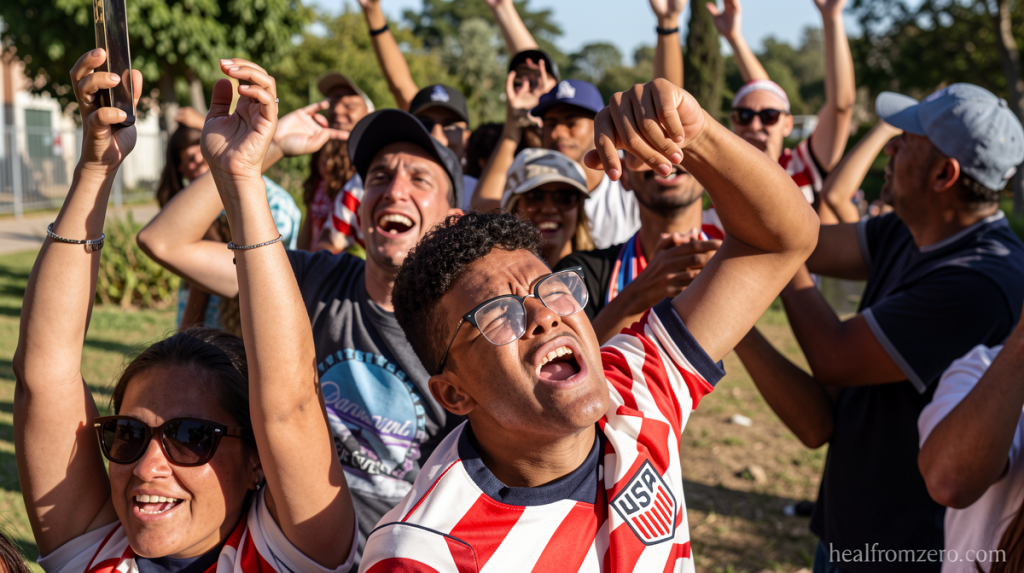
Even the American national team captured hearts with two inspiring victories to begin the tournament. For a nation accustomed to political turbulence radiating from Washington, DC, the tournament offered something refreshing. Cities from Lawrence, Kansas—where Algeria’s supporters formed an unlikely but devoted following—to Miami, which experienced a Scottish takeover, all contributed to a renewed sense of national pride.
Politics Present but Not Dominant
The political dimension never disappeared entirely. During the tournament’s thirty-nine days, headlines occasionally shifted from the pitch to policy matters. The Iranian national team faced legitimate criticism for how FIFA and the American government handled their situation, forcing a last-minute relocation of their training facility and restricting their flight schedule to only days before matches.
President Donald Trump’s involvement in the Folarin Balogun controversy briefly raised questions about the tournament’s integrity, though Belgium’s decisive victory over the United States quickly refocused attention on the competition itself. Visa complications affected several nations, and one Somalian referee encountered entry barriers that drew international attention.
Yet even when political stories dominated headlines, the soccer always reclaimed center stage. Following the Balogun controversy, Lionel Messi and Argentina delivered one of the tournament’s most remarkable performances, overcoming a late two-nil deficit against Egypt to secure a three-two victory. That moment crystallized what the World Cup truly represented: the game itself, not the politics surrounding it.
A Legacy Beyond the Trophy
As Rodri lifted the championship trophy and Spain celebrated on Sunday, the tournament’s impact extended far beyond the final whistle. Economists and sociologists will examine the results for years to come, analyzing both the financial outcomes and the cultural connections forged across borders. The World Cup proved that despite every obstacle, North America had hosted something truly special—a celebration that reminded millions of Americans of what makes their country remarkable.