
Warehouse workers among 8 dead in deadliest Ukrainian attacks inside Russia for two years
Warehouse Workers Among 8 Dead in Ukrainian Drone Strikes on Russian Facilities
Deadliest Ukrainian Attacks Inside Russia in Two Years
Warehouse workers among 8 dead in deadliest – Warehouse workers among 8 dead in a series of devastating Ukrainian drone attacks that targeted Russian logistics facilities, according to regional officials. The coordinated strikes on Saturday killed at least eight people at warehouses located in Russia, marking the most lethal Ukrainian operations reported inside Russian territory in more than two years. Seven of those killed were working at a distribution center at Kotovsk in the Tambov region, while the eighth fatality occurred at a similar center in Elektrostal in the Moscow region.
Both facilities struck belonged to Wildberries, a major Russian online retailer that has become an unexpected target in Ukraine’s expanding aerial campaign. Ukraine has stated that these facilities were being used in drone manufacture, making them strategic military targets despite their commercial appearance. The attacks represent a significant escalation in Ukraine’s ability to strike deep inside Russian territory, reaching targets hundreds of kilometers from the front lines.
Extensive Damage and Casualties Reported
The human toll from the attacks was substantial, with twenty-five people injured in the Tambov strike alone, seven of them critically, according to the region’s governor, Yevgeniy Pervyshov. The drones “were equipped with warheads designed to cause a greater number of casualties,” Pervyshov claimed, adding that 28 had been shot down during the assault. In addition to the man killed at the plant in Elektrostal, 37 people were injured, eight seriously, according to Andrey Vorobiev, governor of the Moscow region.
“Two major logistics facilities were hit – in the Moscow and Tambov regions, more than 500 and nearly 700 kilometers from the front line,” Ukrainian President Volodymyr Zelensky said Saturday.
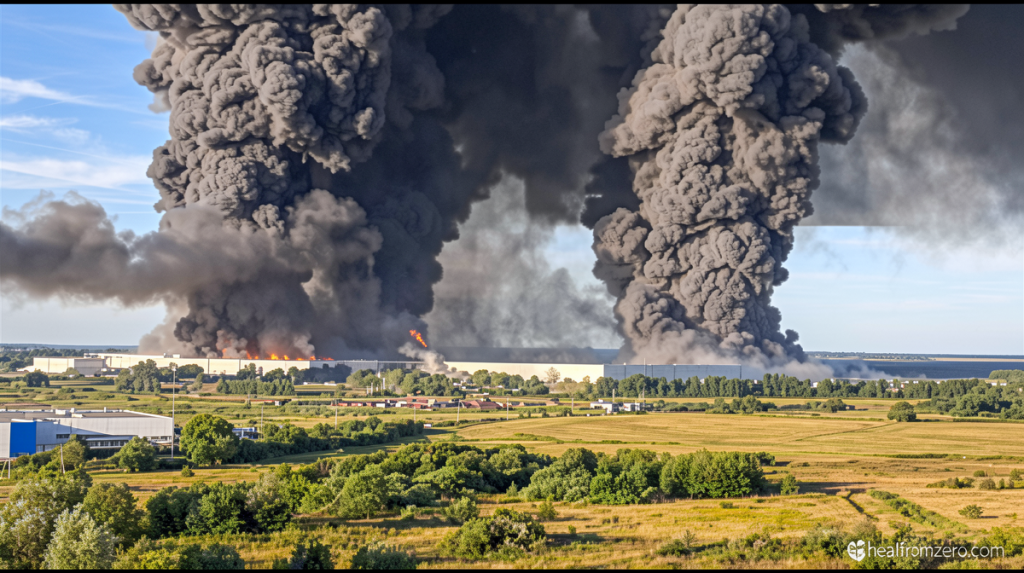
Ukraine has acknowledged carrying out the attacks, providing detailed explanations of their strategic objectives. The facilities were being used “to supply sanctioned components for drone production and navigation equipment,” according to Zelensky’s statement. A Ukrainian military statement described the scene vividly: “A huge Wildberries warehouse covering 188,000 square meters is blazing brightly, and black smoke can be seen for kilometers.” Video footage from both sides showed large plumes of grey smoke billowing into the sky, visible from considerable distances.
Broader Context of Ukrainian Drone Campaign
Wildberries said the fire at the Kotovsk site had been contained following the intense attacks. Ukraine has until now focused its long-range drone attacks primarily on Russian energy infrastructure and factories making weapons and military hardware, as well as Russian shipping operations. Zelensky said that in addition to the warehouse attacks, an oil facility was also struck Saturday, as were additional targets in the Sea of Azov, the gateway to the Black Sea.
The warehouse attacks come amid an intensifying Ukrainian campaign against Russian maritime assets. In the past two weeks, Ukrainian drones have struck 172 vessels belonging to Russia’s shadow fleet in the Black Sea and the Sea of Azov, according to Robert Brovdi, commander of Ukraine’s Unmanned Systems Forces. This maritime campaign has disrupted Russian shipping routes and damaged significant portions of their naval capabilities.
The targeting of warehouse workers among 8 dead represents a notable shift in how Ukraine is conducting its aerial operations. By striking commercial logistics centers that serve military purposes, Ukraine is demonstrating its ability to identify and exploit vulnerabilities in Russian supply chains. The attacks have sent shockwaves through Russian business communities and raised questions about the security of commercial facilities that support military operations.
International observers note that the warehouse attacks could have significant economic implications for Russia. Wildberries, as one of Russia’s largest e-commerce platforms, operates an extensive network of distribution centers across the country. The disruption to these facilities could affect both civilian consumers and military supply chains that depend on the same infrastructure.